

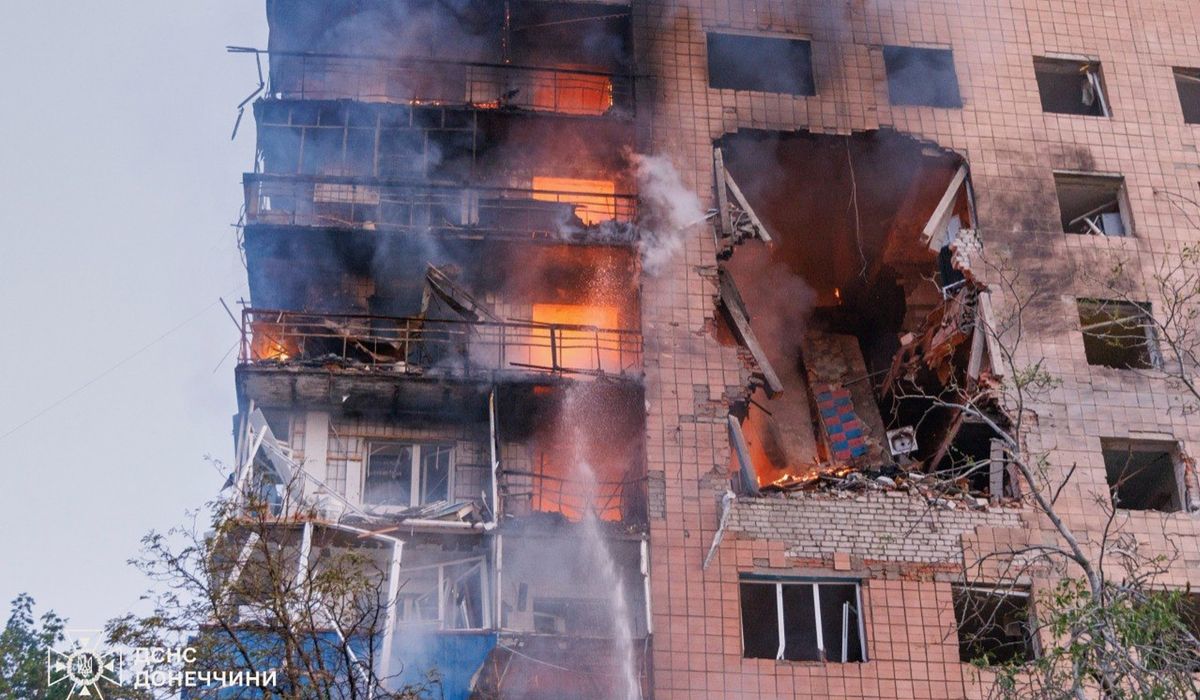
Moscow’s mayor said Monday that Ukraine launched more than 400 drones at the Russian capital in its latest major strike, a move that underscores how drone warfare is changing the battlefield and testing both Russian defenses and Western policy responses.
Officials in Moscow described a unprecedented barrage that sent hundreds of small, armed aircraft toward the city, raising fresh questions about how urban centers can shield themselves from cheap, swarm-style attacks. The scale alone — more than 400 drones — made this incident stand out from prior strikes and prompted a swift security response. That statement from the mayor set the tone for how authorities and foreign observers framed the event.
Moscow’s authorities reported activating air defenses and mobilizing emergency services as the situation unfolded, emphasizing civilian protection and the need to limit damage. Independent verification remains limited in the fog of conflict, but the sheer number of devices launched at one time suggested a coordinated effort. For residents, the attack was a stark reminder that major cities are no longer immune to the tactics once reserved for front lines.
From a Republican viewpoint, this episode is a clear signal that authoritarian aggression needs rigid, predictable deterrence and that allies must stay sensible about hard power. Weakness or mixed signals invite escalation, and cheap, effective weapons like drones change the risk calculus for both attackers and defenders. Republicans tend to argue that standing firm — with military aid and sanctions — preserves long-term stability better than hedging or half-measures.
Technologically, the drone wave highlighted how low-cost platforms can deliver strategic effects when used en masse, forcing militaries to adapt quickly. Complex layered defenses that worked in the past can be strained by a flood of small, maneuverable targets that confuse radars and interceptor systems. That dynamic pushes defense planners to invest in electronic warfare, directed energy and smarter countermeasures rather than relying only on traditional interceptors.
The strike also complicates the diplomatic ledger. When a capital is targeted, domestic politics in dozens of countries react, shaping votes and aid decisions back in Washington. Republicans often point to such moments to press for clear policy: increase support for partners, accelerate production of defensive systems, and keep pressure on regimes that ignore international norms. The message is straightforward — deterrence depends on credibility and capability.
There is an acute risk of escalation, and that risk travels in both directions. Moscow can respond with forceful reprisals, and Kyiv’s use of long-range tools raises questions about proportionality and future targeting choices. Republicans frequently argue that escalation is best prevented by making the costs of aggression obvious, not by withdrawing support; that means shoring up Ukraine’s ability to defend itself without dragging other countries directly into wider conflict.
For everyday civilians, these attacks are unnerving. Cities built for peacetime routines are now dealing with a combat reality that can arrive without warning. Emergency planners and municipal leaders must rethink shelters, warning systems and critical infrastructure protections to cope with a threat environment that has shifted rapidly in scope and scale.
On the strategic industrial side, the event will likely accelerate procurement cycles for counter-drone technologies and spur private sector work on resilient systems. Republicans typically favor leveraging the defense industrial base and private innovation to outpace adversaries, arguing that American and allied firms can build superior defenses if given clear demand signals. Investment decisions made now will shape capabilities for years.
In short, the reported drone barrage over Moscow is a tactical episode with wide political and technological fallout, and it will be cited repeatedly in policy debates. Expect lawmakers and strategists to use the incident as evidence in arguments over aid, sanctions, and defense spending. The basic fact — that hundreds of drones were directed at a major capital — is already reshaping how leaders talk about risk, response, and resolve.

