

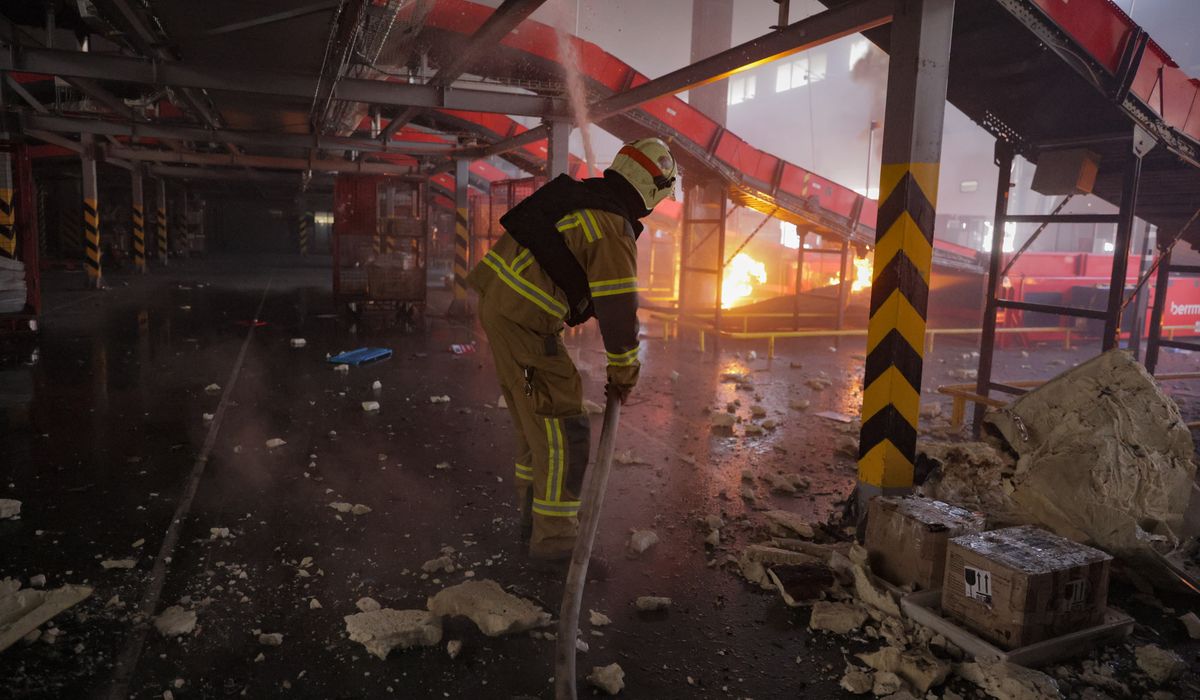
Ukrainian drone strikes killed at least five people across Russia and struck industrial sites and a further warehouse belonging to Russia’s e-commerce giant Wildberries, local officials said.
The strikes that crossed into Russian territory mark a sharp escalation in how the conflict is being fought, with precision drones hitting targets well beyond the frontline. Local officials said the attacks killed at least five people and damaged facilities that support industry and logistics. This is not just battlefield action; it reaches into the economic veins of Russia.
Reports indicate the strikes were aimed at warehouses and industrial complexes that move goods and materiel, suggesting an effort to disrupt supply chains. Local officials said those sites included a warehouse tied to Russia’s e-commerce giant Wildberries, underlining how commercial infrastructure has become part of the contest. Targeting logistics is a classic military move to degrade an opponent’s capacity without massed ground battles.
Civilian deaths are always a hard reality in this kind of cross-border campaign, and “at least five people” killed is the officially reported toll so far. Local officials said authorities on the Russian side were treating the incidents as serious security breaches and were investigating the damage and casualties. Public reaction inside Russia tends to tighten political control and rally patriotic messaging in the short term.
From a Republican viewpoint, these events underscore the need for a clear, decisive strategy that deters further aggression while supporting partners who defend themselves. Weak or muddled policies encourage adversaries to test limits and expand operations into neighboring states. The priority should be robust support that balances practical defense aid with sharp diplomatic pressure on bad actors.
Wildberries, as Russia’s e-commerce giant, plays a major role in the domestic economy and in supply chains that reach consumers and businesses alike. Striking such a site sends a signal about the vulnerability of commercial networks during sustained conflict. It also raises questions about how private companies operating in wartime will manage risk and protect employees and assets.
There is also a legal and moral dimension to strikes that hit industry and warehouses rather than purely military targets. International law draws distinctions between military objectives and civilian infrastructure, and those lines can blur in modern warfare where enemy materiel moves through civilian channels. Officials and analysts will be parsing whether the strikes met thresholds for legitimate military action.
Russian officials are likely to respond by beefing up air defenses, increasing patrols, and stepping up internal security measures near high-value industrial zones. Those reactions can include tougher restrictions on movement and expanded surveillance, which could create broader hardships for ordinary citizens. Historically, governments facing external threats consolidate power and lean on national security narratives.
For Western policymakers and arms suppliers, the strikes are a reminder that modern conflict increasingly relies on unmanned systems and precise, low-cost platforms. Supplying or denying certain technologies influences the character of the fight, and choices made now reverberate on both the battlefield and global markets. Leaders will weigh the risks of escalation against the need to ensure partners can defend themselves effectively.
Economic implications ripple out from damaged logistics hubs and disrupted commerce, affecting local employees, vendors, and regional trade partners. Insurance, shipping costs, and investor confidence can all move quickly when warehouses and factories are no longer secure. Companies working in contested regions must reassess exposure and contingency plans in light of rising cross-border risks.
Media coverage of incidents like these often becomes a battleground for narratives: who was responsible, what was the intended target, and how many were harmed. Local officials said their counts and damage reports will likely be updated as more information arrives, and independent verification can be hard in active conflict zones. The public conversation will shape international responses and domestic policies in the weeks ahead.
The human toll and the economic fallout are both immediate and long-term concerns that complicate any simple policy response. Local officials said their initial statements reflect the chaos of a fast-moving situation, but they also set the tone for how authorities manage fallout. The coming days will show whether the strikes change the operational tempo or push both sides toward different tactics and strategies.

