

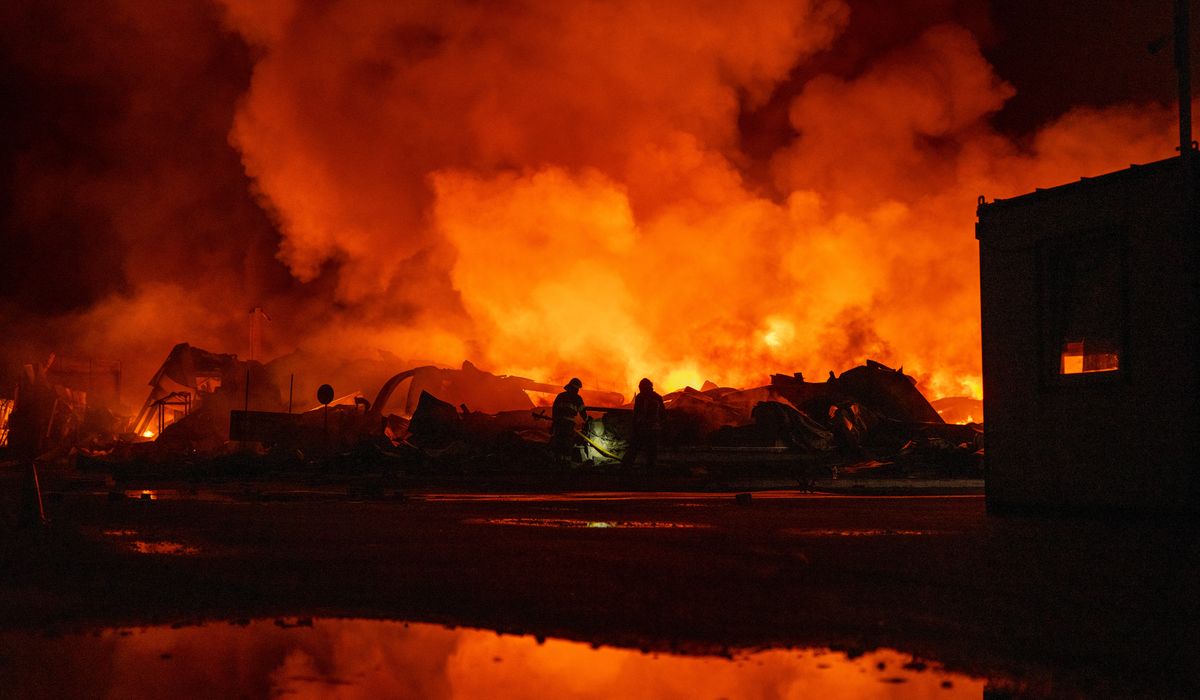
Ukrainian long-range drones struck a warehouse in the Ural Mountains belonging to Russia’s biggest online retailer, a target located more than 2,000 kilometers (1,200 miles) from the two countries’ border, showing the conflict’s reach into Russia’s interior and testing Moscow’s ability to safeguard critical logistics far from the front.
The strike landed at a distribution hub tied to Russia’s largest e-commerce company and it was clearly not a trivial incident. The facility is deep inside Russian territory, well over 2,000 kilometers (1,200 miles) from the frontier, which makes the attack a striking demonstration of reach and precision. Local reports described fires and damage at the site, and the incident has triggered questions about how secure vital supply chains really are inside Russia.
This kind of strike alters the equation. When a warehouse for a major online retailer is vulnerable hundreds of miles from the fighting, it undercuts the assumption that rear areas are safe. That reality forces Russian planners to stretch defensive resources, and it creates pressure on the economy and civilian infrastructure that national leaders would rather keep intact. It also sends a message that modern drone systems give weaker actors new options to strike value targets at distance.
From a Republican perspective, the episode underscores a straightforward point about strength and deterrence. If adversaries can project power into another country’s interior, the only reliable way to stop that behavior is to make it costly and unsustainable for the attacker. That can mean shoring up defenses, improving intelligence and investing in technologies that blunt stand-off attacks, while also ensuring partners are equipped to defend themselves so regional aggression does not spread unchecked.
The human and commercial fallout matters beyond headlines. Warehouses and distribution centers are nodes in modern life, and damage to them affects workers, local service levels and the flow of goods. Even if civilian casualties are limited, disruptions ripple through employment and commerce, and they create pressure on municipal services and emergency responders. For a country already under strain, losses at logistics hubs add a new layer of economic stress and public frustration.
Militarily, the strike highlights the evolving nature of conflict where drones and loitering munitions reduce the advantage of sheer geography. Long-range systems can operate at ranges that make rear areas contestable, forcing a reassessment of what constitutes a safe depth. Russia will have to decide whether to accept more dispersed defense footprints, to harden infrastructure, or to attempt responses that risk escalation. Each option carries costs and political consequences Moscow will have to weigh.
The wider implications reach beyond this single attack because they touch on deterrence, supply security and the credibility of long-range strike capabilities. Allies and rivals alike will watch how Russia adapts and whether international players treat such incidents as isolated or part of a pattern that requires a strategic response. The presence of modern, affordable long-range tools means future clashes will look different, and that reality will shape political and military choices across the region without offering simple or risk-free fixes.

