

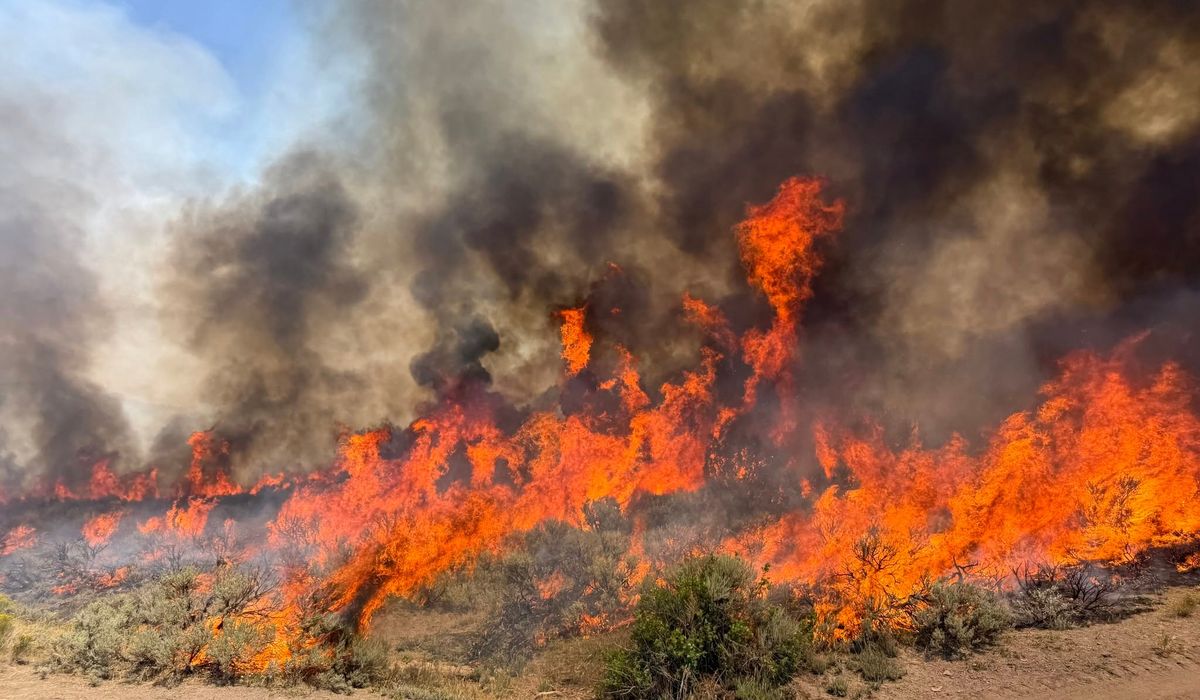
A large wildfire in Utah prevented emergency teams from safely reaching a remote helicopter crash site on Saturday while multiple wildfires burned across the Western states, forcing closures, stretching firefighting resources, and disrupting local access and response efforts.
A large Utah wildfire kept emergency responders from safely reaching the remote site of a helicopter crash on Saturday. Thick smoke, unstable conditions, and active firelines made traditional ground access unsafe for crews, leaving the scene isolated. Local agencies prioritized firefighter and public safety while managing limited windows for travel and investigation.
Across the West, other wildfires were active at the same time, pushing equipment and personnel to the limit. Those concurrent incidents meant air support, heavy equipment, and specialized crews were often committed elsewhere or staged far from the crash area. When multiple events compete for the same resources, response times lengthen and options narrow for incident commanders.
Terrain and weather compounded the problem in Utah, where steep canyons and narrow roads complicate movement. Smoke reduces visibility for both ground teams and helicopters, and shifting winds can make any approach unpredictable. In remote regions, even short delays can stall critical steps like securing the scene or conducting initial assessments.
Incident managers had to balance the urgency of reaching the aircraft with the immediate danger posed by the wildfire. Safety protocols limit movement into active fire zones until conditions are deemed controllable, which can delay both rescue and investigative efforts. Those decisions are always difficult but are aimed at preventing additional injuries and loss of life among responders.
Fire crews also face the challenge of protecting nearby communities and infrastructure while responding to accidents that occur within or near burn zones. Road closures and evacuation orders can disrupt normal travel and complicate logistics for mutual aid teams arriving from other counties or states. Officials often set up staging areas well away from the blaze to coordinate equipment, medevac options, and supply distribution under safer conditions.
When air operations are possible, they bring their own limitations. Helicopters and air tankers are sensitive to visibility, turbulence, and the presence of smoke columns, and they may be grounded quickly if conditions worsen. That makes it harder to rely on aerial reconnaissance or transport when terrain would otherwise make ground access lengthy or dangerous.
Coordination among local, state, and federal agencies is crucial in these multi-incident situations, because each event can affect the priorities and availability of shared resources. Communication between dispatch centers, incident commanders, and support units helps determine the safest path forward for responders and the public. Officials typically emphasize safety, public notifications, and the careful allocation of assets until conditions allow full access to affected sites.

