

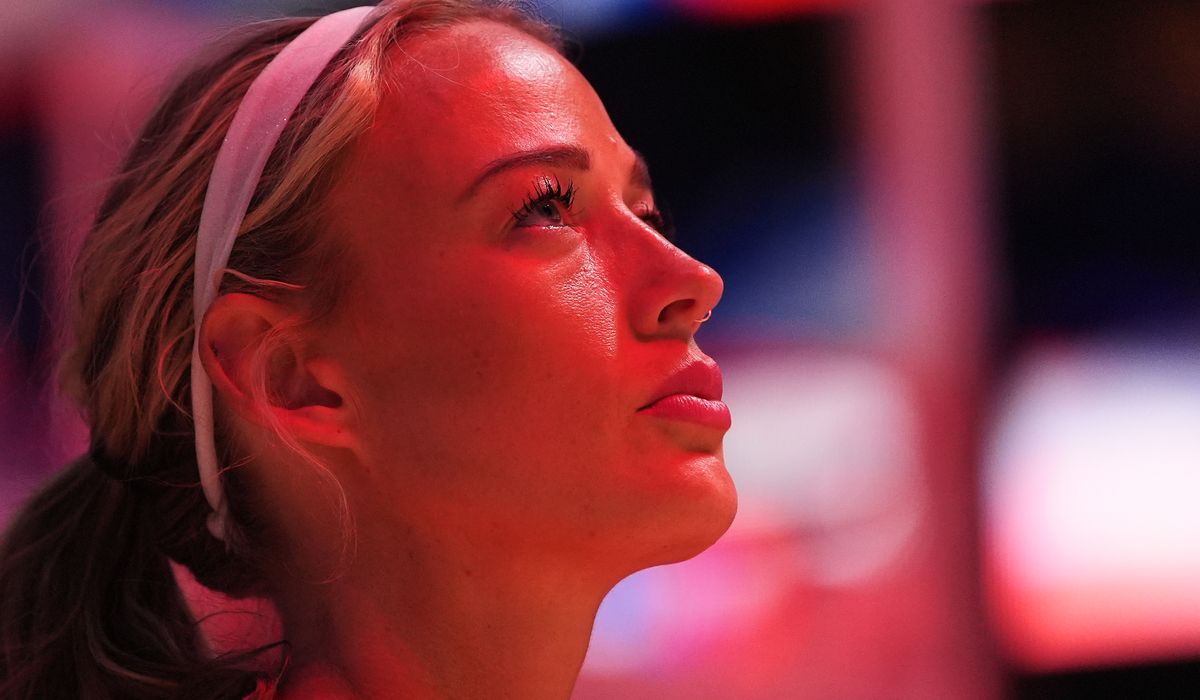
The WNBA fined and suspended Seattle Storm co-owner Celeste Keaton for five home games, according to the league, after she allegedly cursed at two teenage fans of Indiana Fever guard Sophie Cunningham.
The league announced a punishment that combines both a monetary fine and a multi-game suspension for a team owner, an action that highlights how professional sports organizations are policing conduct at games. Fans and team officials noticed the incident during a recent matchup, and the WNBA opened an inquiry that led to the penalty. The decision underscores the league’s stated commitment to maintaining a safe and respectful environment for players and spectators alike.
Details reported about the episode indicate the altercation involved two teenage spectators who were supporting Sophie Cunningham, a guard for the Indiana Fever, and Celeste Keaton, identified as a Seattle Storm co-owner. The league’s statement made clear that the penalty covers five home games, and it also included a financial sanction. Those specifics were central to the league’s public discipline, showing the WNBA used a defined consequence rather than a private reprimand.
When ownership becomes directly involved in disputes with fans, leagues face a tricky balance between protecting customer safety and maintaining owners’ access to events. The WNBA framed its response as necessary to enforce conduct policies uniformly, regardless of a person’s position. That approach is meant to send a signal that team affiliation does not exempt anyone from the standards applied to players, coaches, or other staff.
Public reaction to the punishment varied, with some observers praising the league for taking decisive action and others questioning whether the discipline fit the alleged behavior. The specifics of what was said during the incident remain described as alleged, and local discussions have focused on de-escalation and accountability in crowded arenas. Those debates are typical when a well-known figure faces a public sanction for conduct toward fans, particularly minors.
Teams and leagues routinely review game footage, security reports, and eyewitness accounts to decide on penalties, and the WNBA noted its investigative process before issuing the fine and suspension. That procedure is intended to maintain credibility for disciplinary decisions and to ensure consistent application of rules across situations. In high-profile cases, transparency about the process can be as important to public trust as the penalty itself.
Beyond the immediate punishment, the incident raises questions about the role of fan behavior and the responsibilities of venue staff to intervene when tensions escalate. Security protocols and staff training are often highlighted as part of the solution, with an eye toward preventing confrontations before they turn into formal complaints. Leagues also typically emphasize education for team representatives and owners on how to handle provocative circumstances while avoiding confrontation.
For the players involved indirectly, such episodes can be distracting, drawing media and fan attention away from on-court performance. Sophie Cunningham and her teammates were not central to the league’s disciplinary announcement, but the fact that the fans were supporting her brought the player into the narrative. Teams must manage those side effects while keeping focus on competition and player welfare.
The WNBA’s action adds to a broader trend of sports leagues imposing fines and suspensions for conduct that affects the fan experience and the safety of minors. Whether future policies will involve new educational requirements, expanded sanctions, or enhanced security measures remains to be seen. In the meantime, owners, staff, and spectators are all reminded that behavior at games can carry significant consequences, both financial and reputational.

