

Ukrainian troops improvised with Cold War trainers, Russian and Ukrainian strikes escalated across borders, and U.S. politics and policy — from Trump to Graham — shaped the diplomatic and military backdrop.
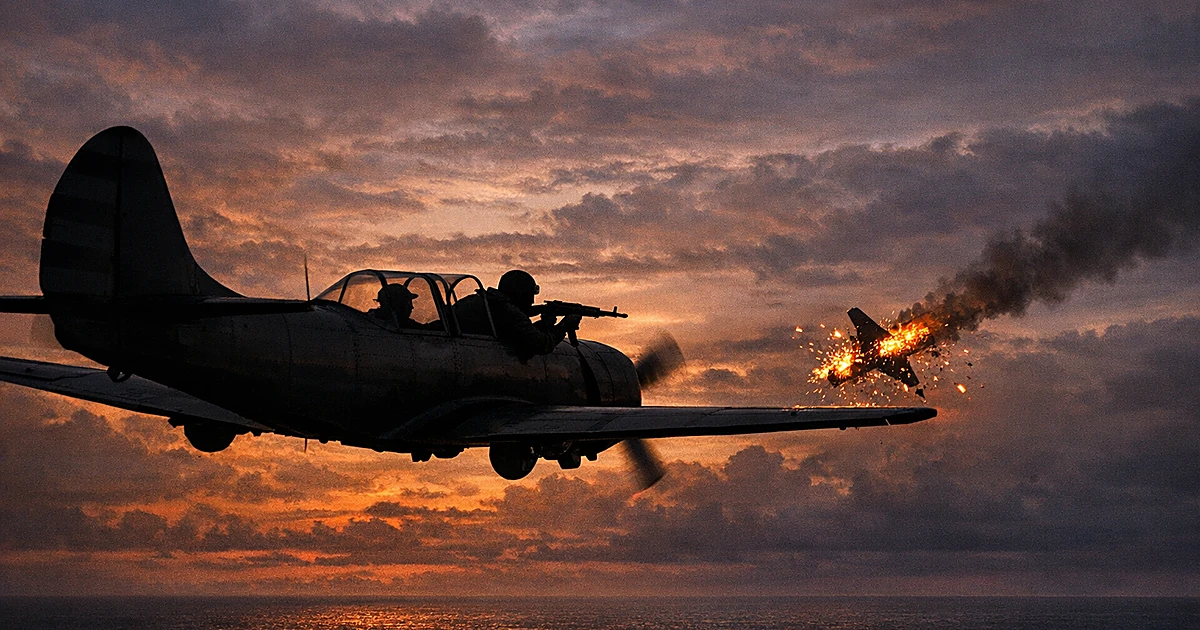
Video released by Ukraine’s 11th Separate Army Aviation Brigade shows a soldier firing from the rear cockpit of a Yak-52 trainer to take down Iranian-designed Shahed attack drones over Odesa. The two-person crew used a piston-engine, open-cockpit plane decades old, with the pilot identified only as “Stanislav” in the front seat while a soldier leaned out and engaged incoming unmanned threats.
The footage underlines a hard truth: when missiles cost far more than the targets they chase, improvisation steps in. A propeller plane and a rifle are not high-tech answers, but they can be effective against low-flying, slow drones when cost and availability constrain options.
Ukraine’s 11th Separate Army Aviation Brigade, called “Kherson,” has refitted trainers and even Mil Mi-8 helicopters to blunt drone attacks. The Yak-52’s slow speed and maneuverability make it oddly well suited to intercepting Shahed drones, and previous clips showed gunners shooting a Shahed-136 from an Mi-8, illustrating a pattern of creative, low-cost countermeasures.
“The best feelings, after completing a combat mission, are not experienced in the sky. The true realisation comes when you return to the home airfield and see a clear sky, and hear over the radio: there are no more aerial targets. That is when you feel satisfaction and peace.”
The adaptation says a lot about resource imbalance: Kyiv is trying to protect its skies with what it can field while pushing for advanced systems from partners. Turning trainers into drone hunters is a stopgap born of necessity, but it also shows a willingness to improvise under pressure that no planning spreadsheet can capture.
The rifle-from-a-cockpit footage arrived as strikes intensified on both sides. Moscow reported hundreds of incoming drones in a single night, with local officials and Russia’s defense ministry providing differing tallies — roughly 390 reported by one source and 356 by another — highlighting confusion amid fast-moving attacks and counterattacks.
Authorities in the Moscow region reported housing damage in Chekhov and Vaulovo, while Ukrainian territory saw strikes on logistics and civilian sites, including a petrol station in Izium. The cross-border damage makes clear the war’s grim rhythm: long-range strikes and retaliations that hit infrastructure and civilians on both sides.
President Zelensky warned that Moscow might be planning a large covert mobilization, alleging a plan to draft up to 500,000 troops after State Duma elections. He also claimed that Russia provided Iran with satellite imagery of U.S. bases in the Gulf, a claim Zelensky framed starkly.
“The purpose is clear. None of us in the world should turn a blind eye to one very simple fact: Evil always seeks ways to make things worse and spread further.”
President Trump, speaking to reporters, played down the satellite-imagery claim and said he doubted significant Russian assistance to Iran on that front, adding he would raise the matter with Putin. That exchange highlighted a real divide: Zelensky urging deeper U.S. engagement and Trump favoring direct lines to Moscow and measured diplomatic judgment.
Senator Lindsey Graham’s final legislative push centered on sanctions against major buyers of Russian oil and other punitive measures targeting senior Russian figures and projects. Graham secured bipartisan backing for a sanctions package intended to pressure Russia economically and to penalize the biggest importers of its energy.
Laura Loomer’s on-the-ground visit to Ukraine produced a notable shift in her tone, from skepticism to strong support after witnessing attacks and meeting leaders. Her public reversal adds a wrinkle to conservative debates about backing Kyiv and signals that firsthand exposure to the conflict can change perspectives among influential voices.
At NATO, the U.S. indicated a willingness to license Patriot production in Ukraine so Kyiv can build air-defense systems domestically. The move aims to reduce dependence on foreign deliveries and speed up battlefield availability, though actually standing up production quickly enough to matter remains an open challenge.
The contrast is stark: a country seeking Patriot production licenses from allies is also sending pilots up in open-cockpit planes with rifles to stop drones. Both realities are true, and both show that the fight combines high-end policy moves with gritty, improvised defenses on the front lines.

