

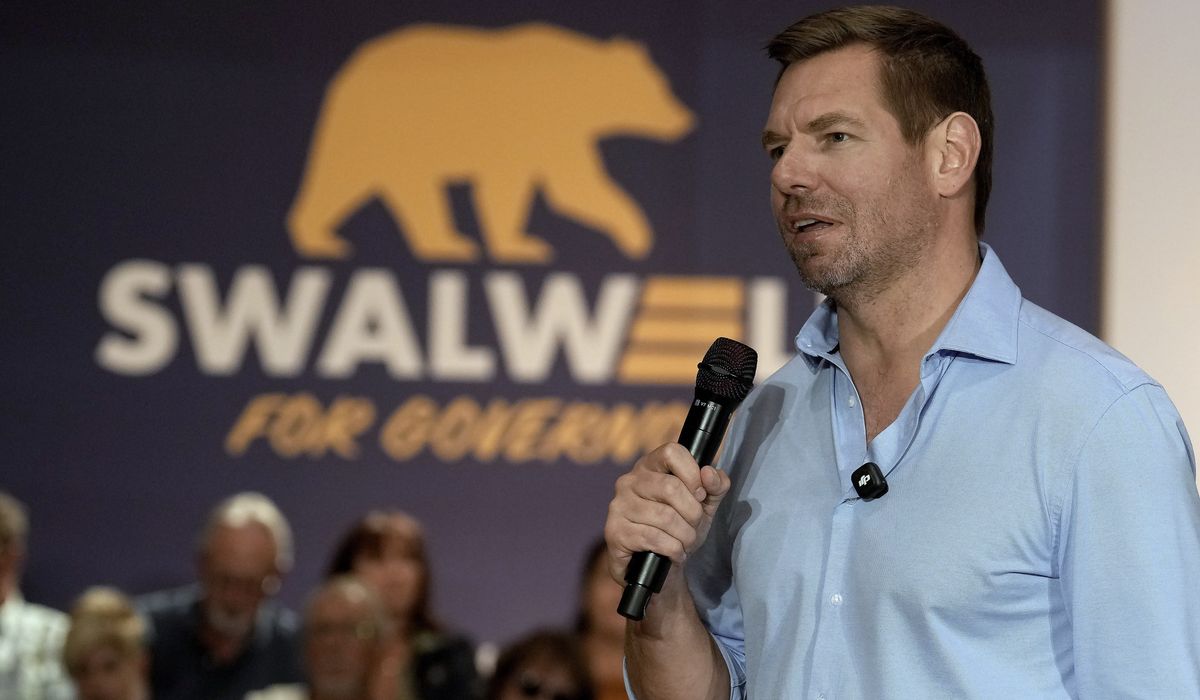
California Rep. Eric Swalwell, a Democrat running for governor, has denied allegations that he sexually assaulted a woman twice, including when she worked for him.
The allegation landed in headlines fast and forced questions about character, judgment, and accountability for a public official seeking higher office. Voters deserve clear answers and transparency when a candidate faces serious claims about misconduct. That demand for clarity is what critics from the other side and undecided voters are pressing for now.
The core reported fact is simple and unsettling: California Rep. Eric Swalwell, a Democrat running for governor, has denied allegations that he sexually assaulted a woman twice, including when she worked for him. He has publicly rejected the accusations, but denials alone do not erase the need for an independent look at the circumstances. In contested races, voters should weigh both the accusations and the response from the accused.
From a Republican viewpoint, the focus is on holding public officials to a consistent standard, not on partisan score-settling. The question is whether the system of checks and accountability is working, and whether elected leaders are held to the same rules they argue others should follow. That scrutiny has to be clear, firm, and fair, because credibility matters in campaigns and governing alike.
Timing matters in politics, and allegations during a campaign complicate both the political and legal landscape. Incumbents and challengers alike have to address accusations promptly and transparently, or risk losing public trust. For Republicans watching closely, this is a reminder that scrutiny should be relentless and impartial, regardless of party affiliation.
Investigations and public statements both shape how the story unfolds, and neither should substitute for the other. A thorough, impartial inquiry is what the public needs, whether that comes from ethics committees, law enforcement, or other independent bodies. Meanwhile, the media and opponents will parse every word for advantage, so accuracy in official responses is crucial.
Swalwell’s campaign will try to control the narrative, and his allies will push counterarguments to discredit the accuser or shift the focus. That is standard political defense, but it cannot replace transparent answers or a credible investigative process. Republicans argue that standards must not bend when political stakes are high; we should demand the same rigor we expect for our own candidates.
Voters should also consider the broader record of any candidate under fire, looking at past behavior, workplace culture, and how they’ve handled allegations previously. Patterns matter, and a single incident is viewed differently than a recurring pattern of behavior. Republicans will point to consistency, accountability, and how swiftly a candidate addresses problems when evaluating fitness for office.
Campaigns often try to minimize damage with talking points and rapid-response teams, but the long-term effect comes down to trust. If voters feel a candidate hasn’t been forthcoming, that gap can be decisive in a tight race. Republicans will use such moments to argue for higher ethical standards and to press for reforms that prevent abuse and protect victims.
At the same time, maintaining the presumption of innocence in legal contexts remains important, even as political judgment is fair game. Balancing legal fairness with political accountability is messy, and that tension plays out painfully in public contests for statewide office. For Republicans, the emphasis is on a system that treats everyone equally while ensuring elected officials answer tough questions without delay.
As the story develops, expect continued calls for documentation, witness statements, and independent review. The campaign trail rarely pauses for nuance, so the candidate and investigators need to move deliberately and transparently. Whatever follows, voters will remember how the parties handled this moment when casting their ballots.

