

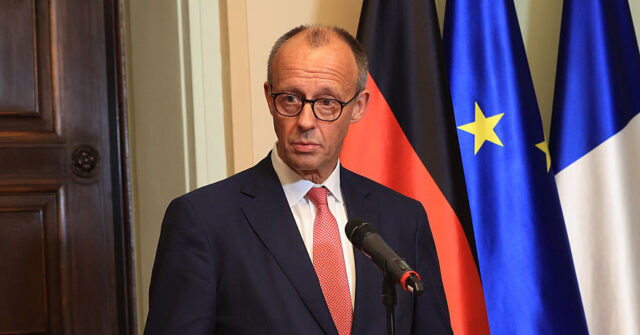
Germany has announced a halt to military equipment exports that could be used in Gaza, following a decision by Chancellor Friedrich Merz. This comes after Israeli Prime Minister Benjamin Netanyahu’s Cabinet decided to take over Gaza City, a move that has sparked significant international debate. Germany, a longstanding ally of Israel, is taking a stand that might further isolate Israel amidst global criticism.
Chancellor Merz has emphasized Israel’s right to defend itself against Hamas, which he describes as a terrorist organization. The focus remains on the release of Israeli hostages and the pursuit of a ceasefire in the ongoing conflict, now almost two years old. Merz has made it clear that Hamas should not have any role in Gaza’s future governance.
The escalation of military actions in Gaza, as approved by the Israeli Cabinet, has raised concerns in the German government. Chancellor Merz indicated that such actions complicate Germany’s ability to support Israel’s goals in the region. Consequently, Germany will refrain from authorizing military exports to Gaza, aiming to prevent further conflict escalation.
Germany’s decision aligns with a growing unease about civilian suffering in Gaza, a concern echoed by Merz. He pointed out that the Israeli government’s offensive increases its responsibility to address humanitarian needs. While Germany stands by Israel’s security, the humanitarian aspect of the conflict cannot be ignored.
The United Nations and several international bodies have criticized Israel’s military plans, urging restraint and emphasizing diplomacy. Germany’s move might signal a shift in how European allies perceive Israel’s strategies. Despite this, Germany maintains its commitment to Israel’s security while also calling for a balanced approach.
This development has added complexity to the already strained relations between Israel and some of its European allies. Germany’s decision, seen as a potential pivot, could influence other countries’ policies regarding military support to Israel. The focus remains on balancing security interests with humanitarian concerns.
The halt on military exports is not a total withdrawal of support for Israel, rather a strategic pause. Chancellor Merz’s statement underscores the importance of negotiations and diplomacy in resolving the conflict. The German government is keen on ensuring that its actions reflect a commitment to peace and stability in the region.
Israeli hostages’ release remains a pressing issue, with Germany advocating for purposeful negotiations. Chancellor Merz’s statement reflects a desire for a peaceful resolution that prioritizes human life and safety. The path forward, according to Germany, lies in dialogue and compromise.
Chancellor Merz has reiterated that Hamas should not be part of Gaza’s future, aligning with broader international sentiments. The German government’s decision underscores its commitment to peace but also highlights the complexity of regional politics. This stance might influence future European policies on the Middle East.
The international community is closely monitoring these developments, with Germany’s decision seen as significant. The halt in military exports is part of a broader strategy to encourage peaceful solutions. Germany remains steadfast in its support for Israel’s security while advocating for humanitarian considerations in conflict resolution.
Chancellor Merz’s decision reflects a nuanced approach to a complex issue, balancing support for Israel with calls for humanitarian responsibility. This move might inspire other countries to reevaluate their positions on military support to conflict zones. Germany’s stance emphasizes the importance of diplomacy in addressing regional challenges.
Germany’s approach could potentially serve as a model for other nations grappling with similar foreign policy dilemmas. By prioritizing both security and humanitarian needs, Germany aims to contribute to a more stable and peaceful Middle East. The decision aligns with conservative values of security and responsibility.
This action by Germany indicates a shift towards a more cautious engagement with military exports, particularly in volatile regions. The decision reflects a growing recognition of the interconnectedness of security and humanitarian issues. As the situation evolves, Germany’s stance will likely remain focused on fostering peace and stability.
Chancellor Merz’s emphasis on diplomacy and negotiations highlights a commitment to peaceful conflict resolution. Germany’s decision to halt military exports is a strategic measure aimed at encouraging dialogue. The move reflects a broader effort to align foreign policy with ethical considerations.
Germany’s decision not to authorize military exports to Gaza underscores the complexity of international relations. The focus remains on supporting Israel’s right to self-defense while advocating for humanitarian responsibility. This balanced approach reflects conservative values and a commitment to ethical foreign policy.
The halt in military exports is part of a broader strategy to address the humanitarian crisis in Gaza. Germany’s decision highlights the importance of considering civilian needs in conflict resolution. Chancellor Merz’s statement indicates a commitment to ensuring that foreign policy decisions prioritize human life and safety.
Germany’s approach to the Gaza conflict emphasizes the importance of balancing security interests with humanitarian concerns. Chancellor Merz’s decision reflects a commitment to ethical foreign policy and international responsibility. The halt in military exports aims to encourage peaceful solutions and address humanitarian needs.
Chancellor Merz’s focus on negotiations and diplomacy underscores Germany’s commitment to peaceful conflict resolution. The decision to halt military exports to Gaza aligns with conservative values of security and responsibility. Germany’s stance reflects a nuanced approach to a complex regional issue.

