

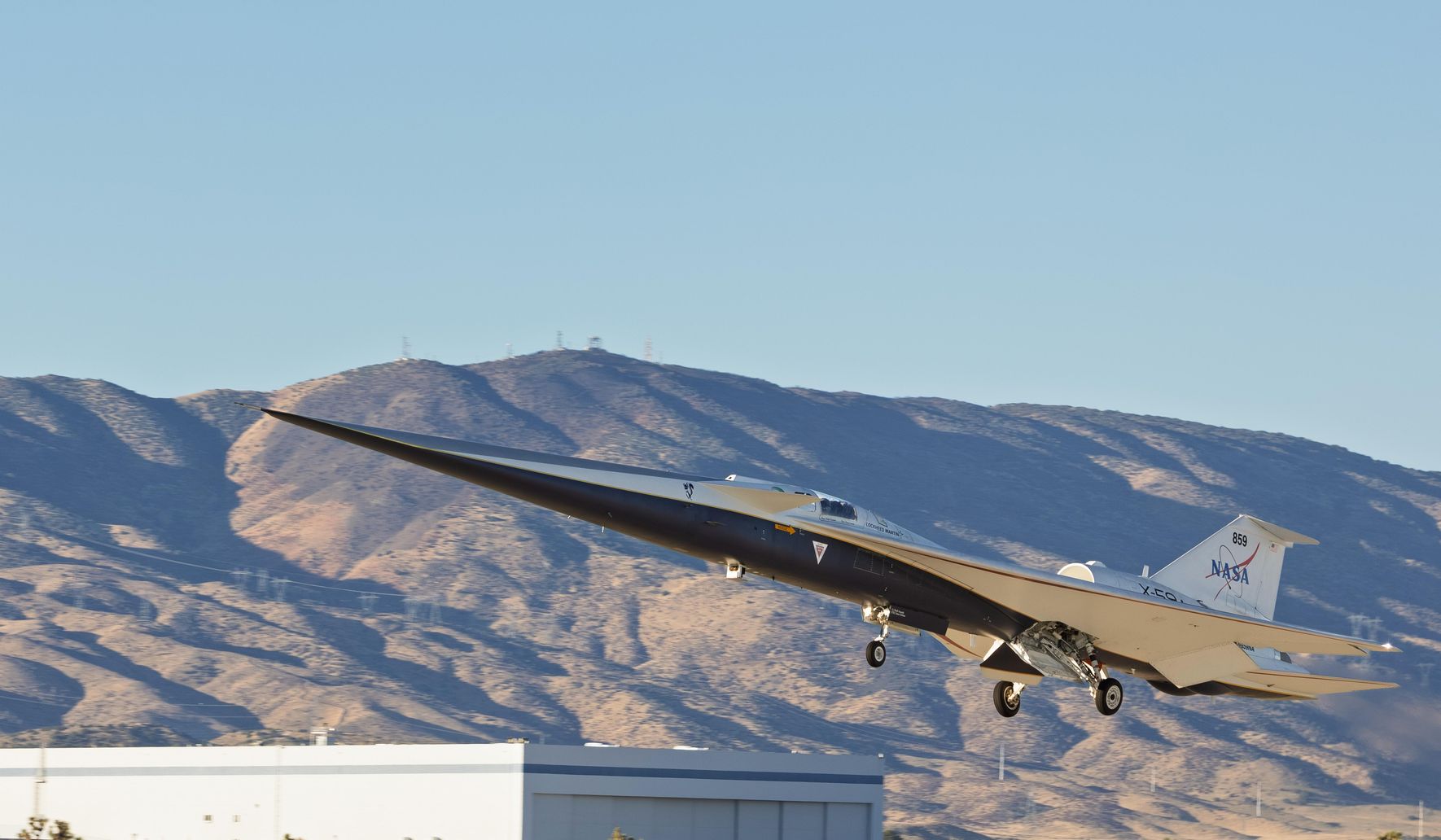
The aircraft made a first flight last week over the southern California desert just after sunrise, and the milestone could mark the start of a quieter era for supersonic travel. Engineers tested a jet built specifically to reduce noise and tame the sonic signature that once limited overland supersonic operations. The takeoff and cruise were aimed at proving new shapes, engine placements, and flight profiles that promise to change what regulators and communities will tolerate.
The company behind the jet has spent years focusing on noise as the central technical and social barrier to supersonic service over populated areas. Instead of pushing speed first, designers prioritized low acoustic impact through both aerodynamic shaping and novel engine integration. The result is a clean-wing silhouette with ducts and inlets positioned to shield turbine noise from the ground during typical cruise altitudes.
On this inaugural sortie pilots executed a carefully scripted climb and acceleration profile intended to gather detailed measurements of sound levels and pressure waves. Instrument pods and ground sensors recorded signatures at multiple locations across the desert corridor, combining audio, pressure, and flight-data telemetry. That dataset will drive iterations in flight control laws and structural tweaks before larger, noisier milestones are attempted.
Noise reduction efforts rely on several practical tactics that engineers have refined since the Concorde era, including low-noise turbofan cores, variable geometry inlets, and tailored exhaust mixing to lower jet noise. Aerodynamic shaping — particularly long, slender noses and fuselages with gradual cross-section changes — helps control how pressure waves form and coalesce into a perceived boom. By preventing a sharp, concentrated pressure jump, the aircraft can travel faster than sound while spreading acoustic energy so the boom becomes less intrusive or even barely noticeable.
Regulators will be watching these test results closely because current rules largely ban supersonic flights overland where boom impacts could disturb people and animals. Demonstrating measurable, repeatable reductions in ground-level noise is the only credible path to reopening continental routes for supersonic service. The company will need both hard acoustic proof and transparent procedures to earn conditional approvals and public trust.
Environmental concerns extend beyond noise to include fuel consumption and emissions, so developers are pairing acoustic advances with efficiency gains. Lighter composite structures, higher bypass ratios in powerplants, and optimized cruise altitudes all aim to improve miles-per-gallon metrics. The economic case hinges on striking a balance between higher operating costs and premium fares that business and leisure travelers will accept for dramatic time savings.
Commercial prospects depend on market appetite and infrastructure readiness, such as airport slots, ground handling, and emergency procedures tailored to new aircraft geometries. If regulators permit expanded routes, airlines will pilot phased service that starts with select transoceanic and limited overland corridors where noise impacts are manageable. Fleet economics and maintenance cycles will determine whether supersonic travel becomes a niche luxury or a sustainable segment of mainstream aviation.
Community outreach and transparent noise reporting will be essential as testing moves to more populated test ranges and potential passenger routes. Local residents, environmental groups, and municipal leaders often shape the speed and scope of adoption through permitting and public hearings. Clear, independently verified data coupled with visible mitigation commitments will be required to overcome skepticism born from past supersonic controversies.
This first flight is a technical checkpoint, not a commercial launch, but it sets in motion regulatory reviews and additional flight campaigns aimed at proving both safety and acceptability. The company must translate these early acoustic wins into repeatable, documented performance before realistic passenger operations can be scheduled. If those pieces come together, supersonic travel might finally arrive with sound that communities can live with and regulators can approve.

