

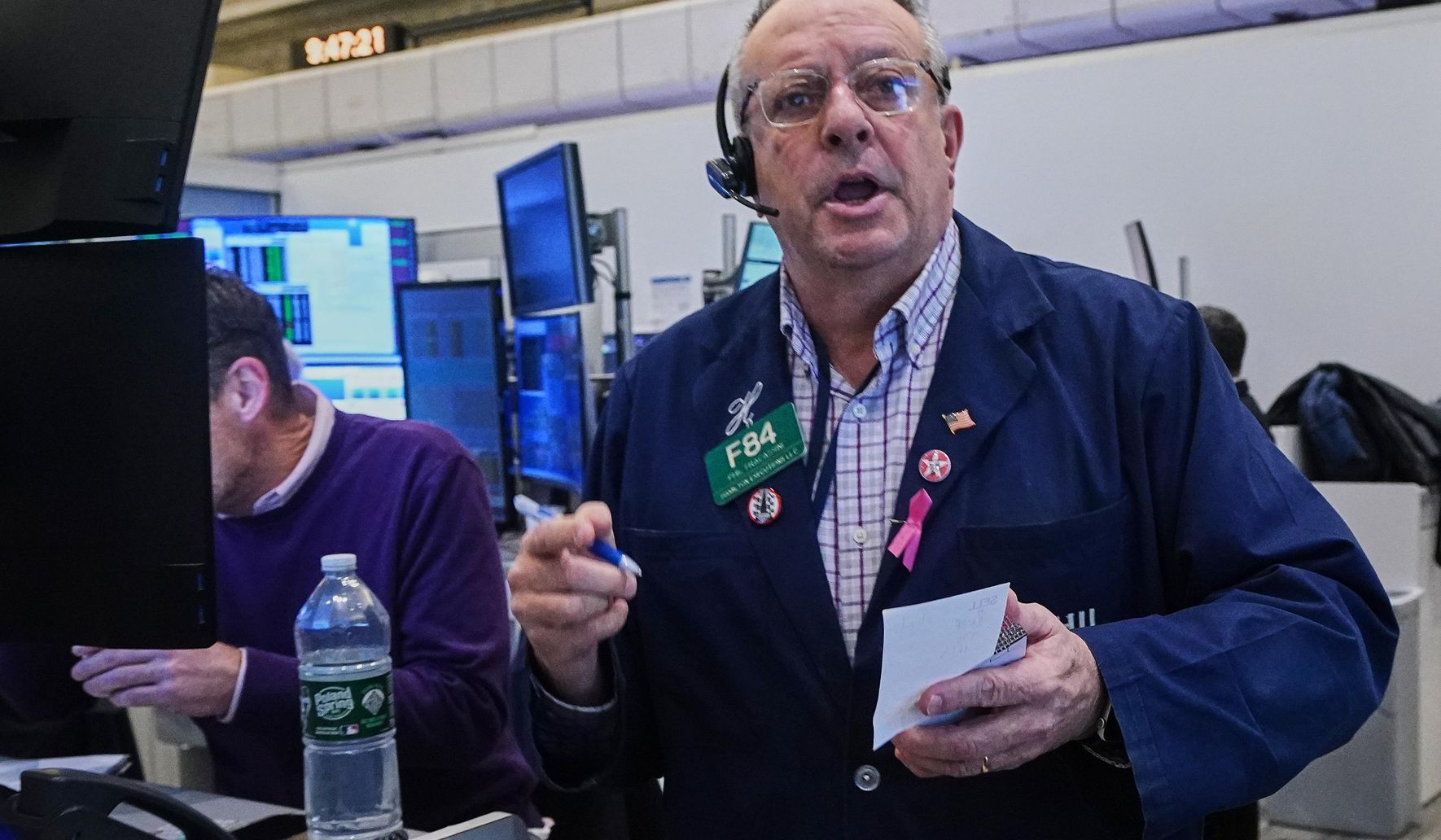
Wall Street settled into a calmer rhythm on Friday after several weeks of wild swings sparked by the rapid rise — and sudden doubts — around AI-focused stocks and cryptocurrencies.
Trading was more measured after episodes of heavy volatility that left investors questioning valuation extremes and how long the rally could last. Stocks that led recent gains pulled back from their highs, while other sectors caught a second look from traders. The shift was less about a single event and more about collective reassessment of risk.
AI names had driven a lot of the recent momentum, drawing huge flows and sky-high expectations about revenue and margins. Those lofty expectations created a fragile structure: when any disappointment or profit-taking hit, moves were amplified. The result was a market that swung from euphoric to defensive over a short stretch.
Cryptocurrencies added fuel to the volatility story as price surges stirred talk of speculative excess and prompted sharp retracements. That kind of action often pulls risk appetite out of equities as well, because traders reprice correlations and liquidity. When crypto jumps or tumbles, it tends to ripple through risk-on and risk-off behavior across asset classes.
Interest rate expectations and bond yields were another major factor behind the market wobble and the Friday calm. Investors are juggling the path of the Federal Reserve against stubborn inflation readings and resilient employment data. Any hint that rates stay higher for longer can tighten valuations, especially for long-duration growth stocks.
Volatility metrics and breadth readings reflected the uncertainty, with spikes in short-term measures followed by a temporary drop as calm returned. That pattern is typical after a flurry of headline-driven trading: the VIX or other quick indicators pop, then fade once immediate pressure subsides. Still, the elevated baseline suggests traders remain ready to react to fresh news.
Corporate earnings and forward guidance played into the mix, as quarterly reports exposed which businesses could justify stretched multiples and which could not. Companies that delivered above-consensus results saw less pressure, while those with cautious outlooks faced sharper selling. Earnings season can either validate a rally or expose its weak points, depending on the mix of results.
Risk management tools like options strategies and hedges were more in play during the swings, and many institutional desks adjusted positioning to limit downside. That behavior can exaggerate moves on both the way up and the way down, because liquidity providers step back or demand higher premiums. Retail participation also mattered, amplifying momentum in certain names and sectors.
Sector rotation was another theme as investors reassessed which parts of the market offer durable growth versus those priced on optimistic scenarios. Value-oriented and cyclicals occasionally outperformed during pullbacks, while the high-flying growth cohorts tested their staying power. That rotation reflects a classic search for safer entry points after a run-up in headline winners.
Looking ahead, traders said they would be watching incoming economic data, Fed commentary, and corporate updates for cues on durability of the rally and the risk-dashboard. Market participants expect more episodic spikes rather than a smooth trend, given the inventory of risks and the speed of recent moves. For now, Friday’s steadier trade was a pause, not a declaration that volatility is gone for good.

