

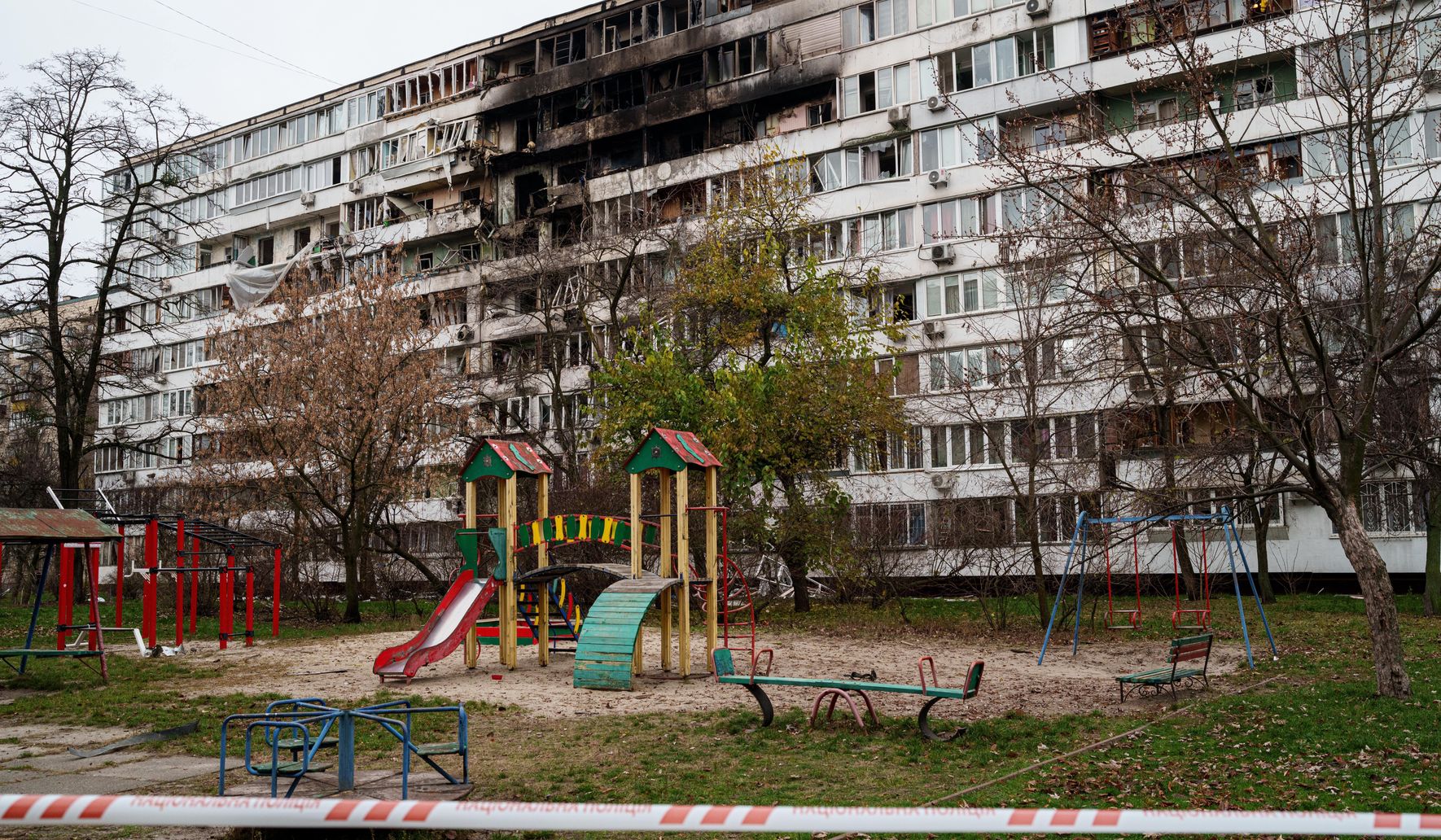
Russia launched a wave of attacks on Ukraine’s capital, Kyiv, overnight, with at least seven people killed and strikes striking city buildings and energy infrastructure.
The attacks left neighborhoods in the capital shaken and lights flickering as emergency crews moved through damaged streets. Officials reported damage to energy systems and civilian structures, creating immediate needs for repairs and support. Local responders and volunteers worked under blackout conditions to reach affected residents.
Air raid alerts sent people into shelters and forced a scramble to protect essential services across the city. Hospitals had to triage patients while backup generators kicked in to keep critical care running. Utility managers faced the dual task of restoring power and assessing risks of further strikes on infrastructure.
Scenes from the night showed burned-out facades and shattered windows in residential blocks where families had been sleeping. Citizens described moments of panic followed by a resolve to help one another, with neighbors organizing to share supplies and check on the elderly. The scale of damage across multiple districts made clear this was not an isolated incident.
Beyond immediate human costs, the blows to energy systems threatened longer-term hardships during cold months, when heat and electricity are vital. Repair crews must work quickly but cautiously to avoid stepping into dangerous structures or unexploded ordnance. The interruption of services also complicates medical care, food distribution, and communications for people already under stress.
From a Republican perspective, this kind of attack reinforces the need for firm deterrence and robust support to partners who face aggression. When adversaries target civilians and critical infrastructure, a clear, decisive response is required to protect shared security. That response includes supplying defensive capabilities and shoring up resilience to blunt the effects of future strikes.
Western aid channels and logistical networks were tested overnight as governments and NGOs coordinated emergency shipments and technical assistance. The immediate focus centered on generators, medical supplies, and materials to restore power lines. Rapid delivery of those items matters less than ensuring they reach trained teams who can install and secure systems under dangerous conditions.
Information coming out of conflict zones often changes quickly, and officials stressed that casualty figures and damage assessments could rise as crews gain access to more areas. Independent verification remains a challenge in active combat environments, so early numbers should be treated with caution. Still, the reported toll of at least seven people killed underscores the human price already paid.
Energy experts warn that repeated strikes on infrastructure can have cascading effects, damaging supply chains and shortening the window for normal life to resume. Businesses that rely on steady power saw operations stall, while schools and public services struggled to keep running. The economic disruption compounds the humanitarian strain faced by residents who now need shelter, warmth, and basic utilities.
On the diplomatic front, allies are watching how responses are calibrated between condemnation, sanctions, and military assistance. Choosing measures that increase cost to the aggressor while limiting escalation risk requires steady judgment. Republican voices in policy circles argue for measures that combine strong political signaling with practical help that improves survivability and defense capacity.
Civil defense remains a practical priority in cities under threat, with authorities urging residents to maintain emergency kits and to follow shelter guidance. Training and preparedness reduce casualties and free up emergency services to handle those who need urgent care. Community networks also proved vital, with neighbors and local volunteers stepping in for first-line assistance.
For the people of Kyiv, recovery will be slow and often painful, focused on repairing damaged homes and restoring basic services as swiftly as possible. International and domestic support will matter, but so will resilience built by communities themselves who have weathered past attacks. The immediate hours and days will determine how quickly hospitals, power systems, and daily life can stabilize.
The strikes underscore broader strategic questions about how to deter future attacks and how to protect civilian infrastructure in conflict zones. Strengthening air defenses, hardening critical systems, and improving rapid repair capabilities are practical steps with real payoff. Policymakers on the right argue that a combination of military assistance and hardened resilience sends a clear message: attacks on civilians and essential services carry unacceptable costs.

