

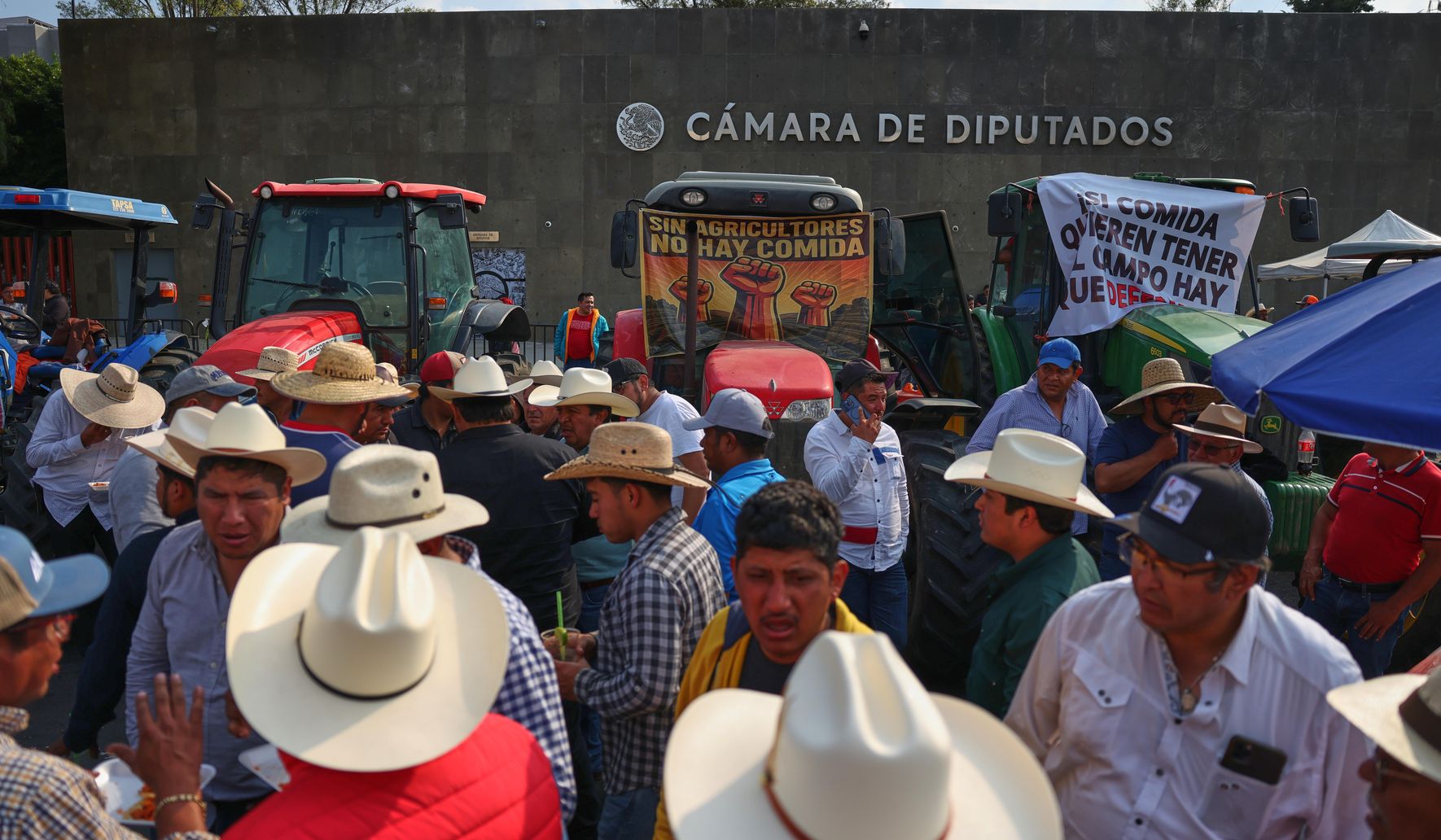
Dozens of farmers drove their tractors into Mexico City and blocked an entrance to Mexico’s Congress on Wednesday to protest a new national water law that imposes stricter controls on. This piece walks through what happened, why the farmers pushed back, and the broader questions the move raises about centralized power and rural livelihoods.
Dozens of farmers drove their tractors in a caravan to Mexico City and blocked an entrance to Mexico’s Congress on Wednesday to protest a new national water law that imposes stricter controls on. The scene was raw and direct: tractors lined up, engines idling, faces set against a law many saw as an overreach. That act of blocking access to the legislative building was both symbolic and practical, forcing lawmakers to see the people affected by their decisions up close.
The farmers who came to the capital carried a message that resonates beyond any single bill: decisions made far from the fields have real costs for those who grow the food. For years, rural communities have dealt with changing weather patterns, aging infrastructure, and a sense that regulation often arrives without local input. Bringing tractors to Congress is a blunt reminder that policy isn’t abstract when it touches water and land.
At the heart of the protest is a basic fight over who calls the shots on scarce resources. A national water law that tightens controls concentrates authority in national agencies and can override longstanding local arrangements. From a Republican viewpoint, centralizing control risks weakening property and usage rights that farmers rely on to plan seasons and investments, making it harder for them to secure credit or manage risk.
There are practical consequences to consider. When farmers face tighter, unclear rules, they can’t operate with the certainty lenders and buyers expect, and supply chains feel the ripple effects. Rural economies are fragile, and added regulatory burdens without clear benefits often mean smaller margins, delayed planting, and harder choices for families who depend on the land. Policy should account for those trade offs rather than assume top-down rules automatically help.
Protests like this also illuminate a political disconnect. Lawmakers in a distant capital may prioritize technical fixes or climate objectives, but the people turning up at the gates want their everyday needs respected. The optics of tractors blocking Congress are powerful because they show ordinary citizens taking a stand against decisions that alter how they work and live. That tension between experts in the capital and producers in the provinces is where real dialogue is needed.
From a governance angle, there’s a case to be made for protecting users’ rights and strengthening local water management institutions rather than simply expanding centralized permits and penalties. Republican thinking tends to favor subsidiarity: let local actors manage local resources when they can, and use national rules sparingly and transparently. That approach tries to preserve incentives for stewardship while avoiding one-size-fits-all mandates that ignore varied conditions across regions.
The farmers’ caravan also underscored how protest remains a tool of last resort when formal channels feel closed. Rolling into the capital with tractors is disruptive by design, because disruption forces attention. Yet the goal isn’t chaos; it’s a reset of the conversation so legislators understand the stakes and consider adjustments that protect families and farms without sacrificing necessary planning for water security.
Ultimately, the image of tractors parked at the entrance to Mexico’s Congress is a clear signal that water policy touches basic livelihoods. The debate over stricter controls on will continue in legislative halls and local meetings alike, and the outcome will shape how rural communities plan and prosper. Lawmakers who want durable solutions should factor in local voices, secure usage rights, and keep regulatory burdens proportionate to the problems they aim to solve.

