

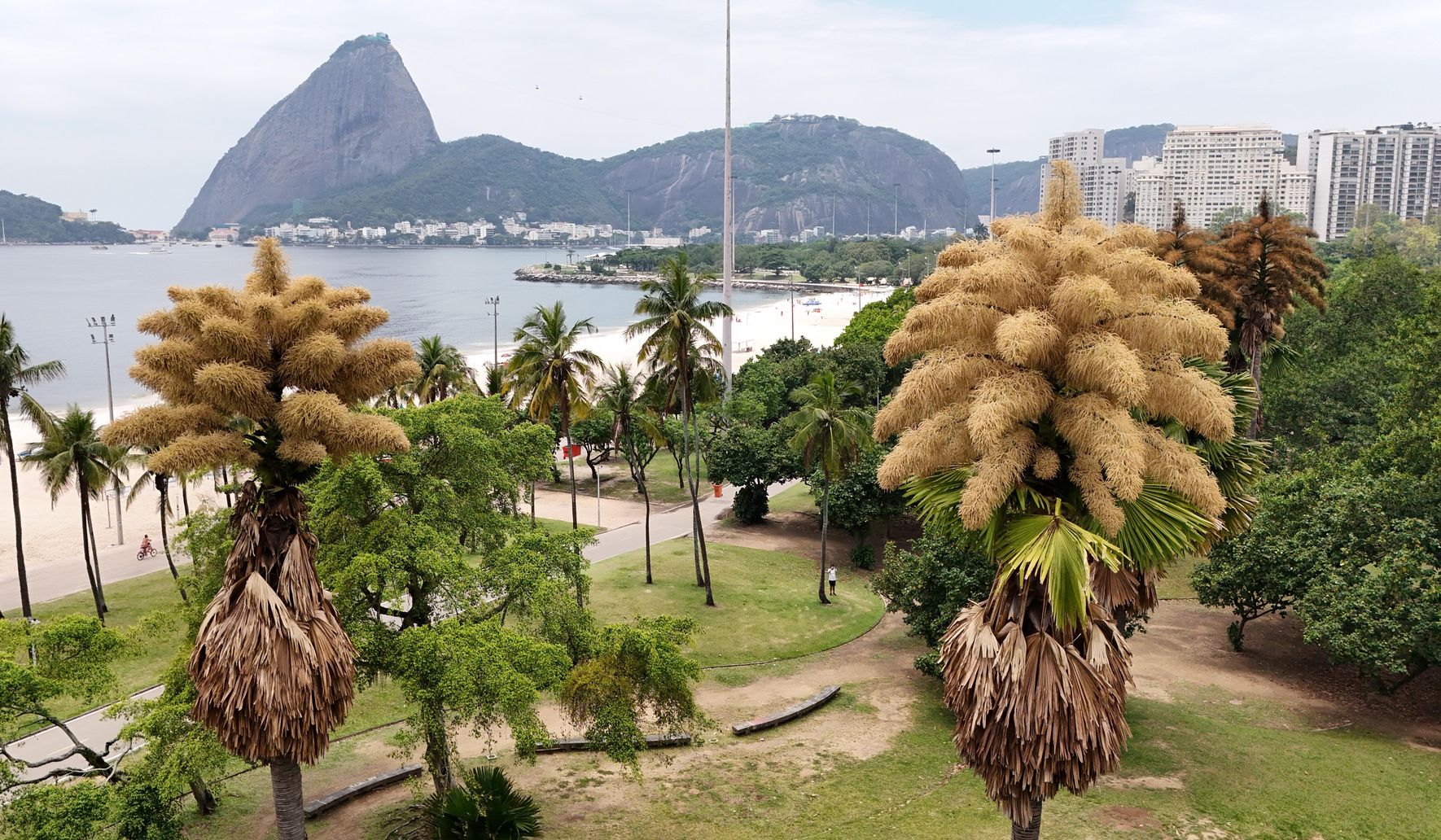
Towering talipot palms in a Rio de Janeiro park are flowering for the first and only time in their lives, decades after famed Brazilian landscape architect Roberto Burle Marx introduced them in the 19.
A rare botanical spectacle is unfolding in one of Rio de Janeiro’s public green spaces as talipot palms push up a single, massive flowering stalk that will mark the end of their life cycle. These trees are known for a once-in-a-lifetime bloom, and the scene has turned a quiet section of the park into an unavoidable destination for residents and visitors alike. The contrast between the tall, fan-shaped leaves and the enormous flower structure makes for dramatic photographs and quiet, reflective visits from people who never expected to see such an event in this city park.
Talipot palms are dramatic by design: they spend many years quietly building reserves of energy, then suddenly produce a gigantic inflorescence that can carry thousands of tiny flowers and later many fruits. After that single reproductive burst the parent palm dies, leaving behind seeds and a legacy of striking visual impact. The temporary flowering period can last several months, which gives botanists, gardeners, and curious onlookers a chance to study and appreciate the process before the trees fade.
The palms in question stand as a living connection to an earlier era of Rio’s landscape design, when Roberto Burle Marx shaped parks and promenades with bold plantings and a modern eye. He introduced exotic and tropical species into public spaces to create sweeping, sculptural plantings, and these talipot palms trace their presence back to that design vision—Burle Marx introduced them in the 19. Seeing them reach this dramatic endpoint decades later underscores how long-term planning in urban planting can produce moments that surprise generations.
Locals have responded with a mix of celebration and quiet awe, gathering to photograph the flowering stalks, to sketch the shapes of leaves and blossoms, and to linger under shaded fronds that will not long remain. Park staff and plant specialists have been fielding questions about what will happen next and what the bloom means for the surrounding vegetation. While the death of the parent palms is inevitable after flowering, the seeds they release can start new life cycles, so this event is both an ending and the start of potential regeneration in the park.
From a horticultural standpoint, the timing reflects a long life history rather than a single-season event, with many talipots reaching maturity only after several decades of steady growth. That slow trajectory is part of their appeal to people who care for living landscapes: they reward patience by producing a spectacle that no annual planting could match. The scale of the inflorescence also attracts attention from wildlife; when fruits develop they may feed birds and other animals that will, in turn, help disperse seeds around the area.
Urban planners and conservationists watching the bloom are taking notes on how these long-lived specimens fit into modern park management and biodiversity goals, and the episode is prompting conversations about preserving mature trees that deliver rare ecological and cultural value. For a cityscape that often changes quickly, a talipot palm’s slow lifetime and dramatic finish offer a reminder that some landscape choices play out over generations, not election cycles or short-term budgets. In practical terms, the park will likely document the flowering, collect seeds where appropriate, and look for ways to honor the visual and ecological contribution these palms have made.
As the flowering period progresses, the park becomes a temporary classroom and gallery, inviting people to watch a natural cycle that is both brutal and beautiful: a single explosive reproductive effort followed by decline. That duality—spectacle and mortality—resonates with visitors who come for the photo and stay for the quiet sense of continuity that a tree can give a city. In the weeks and months after the bloom, caretakers and citizens will observe how the site evolves, how new seedlings emerge, and how a landscape shaped decades ago continues to influence Rio’s public life.

