

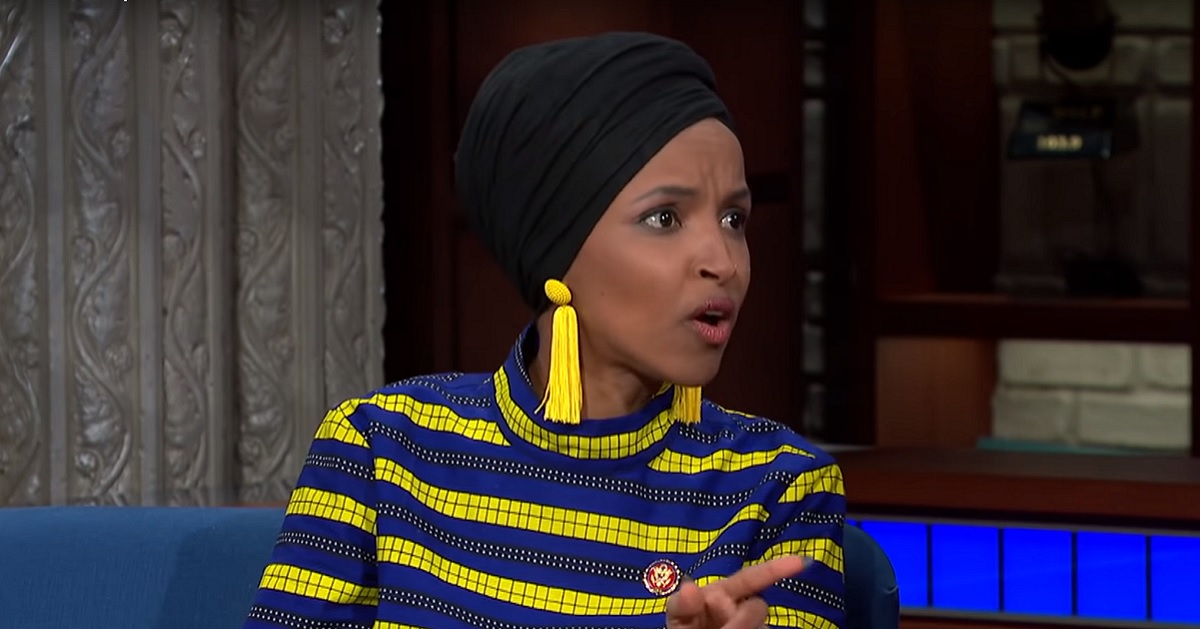
President Donald Trump used a recent cabinet meeting to sharply criticize Rep. Ilhan Omar and to spotlight the Feeding Our Future fraud in Minnesota, tying a sprawling misuse of taxpayer money to broader concerns about immigration, accountability, and local leadership.
At a Tuesday cabinet meeting, Trump named Rep. Ilhan Omar while lambasting what he called failures tied to Somali immigrants in Minnesota. His remarks framed the Feeding Our Future scandal as evidence of broken oversight and a broader problem with how some organizations and officials handle taxpayer funds.
The Feeding Our Future fraud scheme is alleged to have siphoned off nearly $1 billion meant for social services, and watchdogs say entire programs meant to help vulnerable people were never delivered. That scale of alleged theft has left voters angry and lawmakers scrambling to explain how state systems were bypassed or ignored.
The Department of Justice just charged the 78th defendant connected to the case, and at least 59 people have already been convicted for roles in the alleged scheme. Those numbers underline how deep the investigation has gone and why critics are demanding tougher oversight and criminal accountability.
Trump tied some of the implicated people to Minnesota’s Somali community and used that connection to question whether elected leaders have been doing enough to protect taxpayers. He pushed the point that policy and enforcement failures have real victims when fraud drains public resources meant for kids and families.
He also spoke bluntly about the community, saying, “They contribute nothing. I don’t want them in our country.” That line reflects a raw, uncompromising stance that many conservatives share when they see taxpayer money wasted, even as others warn against broad generalizations about entire communities.
Turning to Rep. Ilhan Omar, Trump did not hold back: “Hates everybody, hates Jewish people, hates everybody,” and he called her “a real terrible person.” Those words were aimed at painting Omar not simply as a policy opponent but as a symbol of what he and his allies view as divisive political behavior that distracts from governance failures.
Minnesota’s political leaders are feeling the heat, and Gov. Tim Walz has faced questions about how this level of fraud went unchecked under his watch. Conservatives argue that leadership must focus on accountability rather than ideology, and that taxpayers deserve clear answers about how programs were administered and audited.
Omar, one of the first Muslim women elected to the House along with Rep. Rashida Tlaib, has a record that mixes sharp criticisms of the right with occasional bipartisan gestures. Rep. Anna Paulina Luna recalled a meeting in April where Omar defended Trump against a foreign diplomat’s criticism, a moment that stood out for its unexpected cross-aisle tone.
The controversy adds fuel to an already tense debate over immigration, assimilation, and fiscal responsibility, and it will likely shape how conservatives press for reforms at both state and federal levels. What happens next in Minnesota — legal outcomes, audits, and policy adjustments — will be watched closely by voters who want their public dollars protected.

