

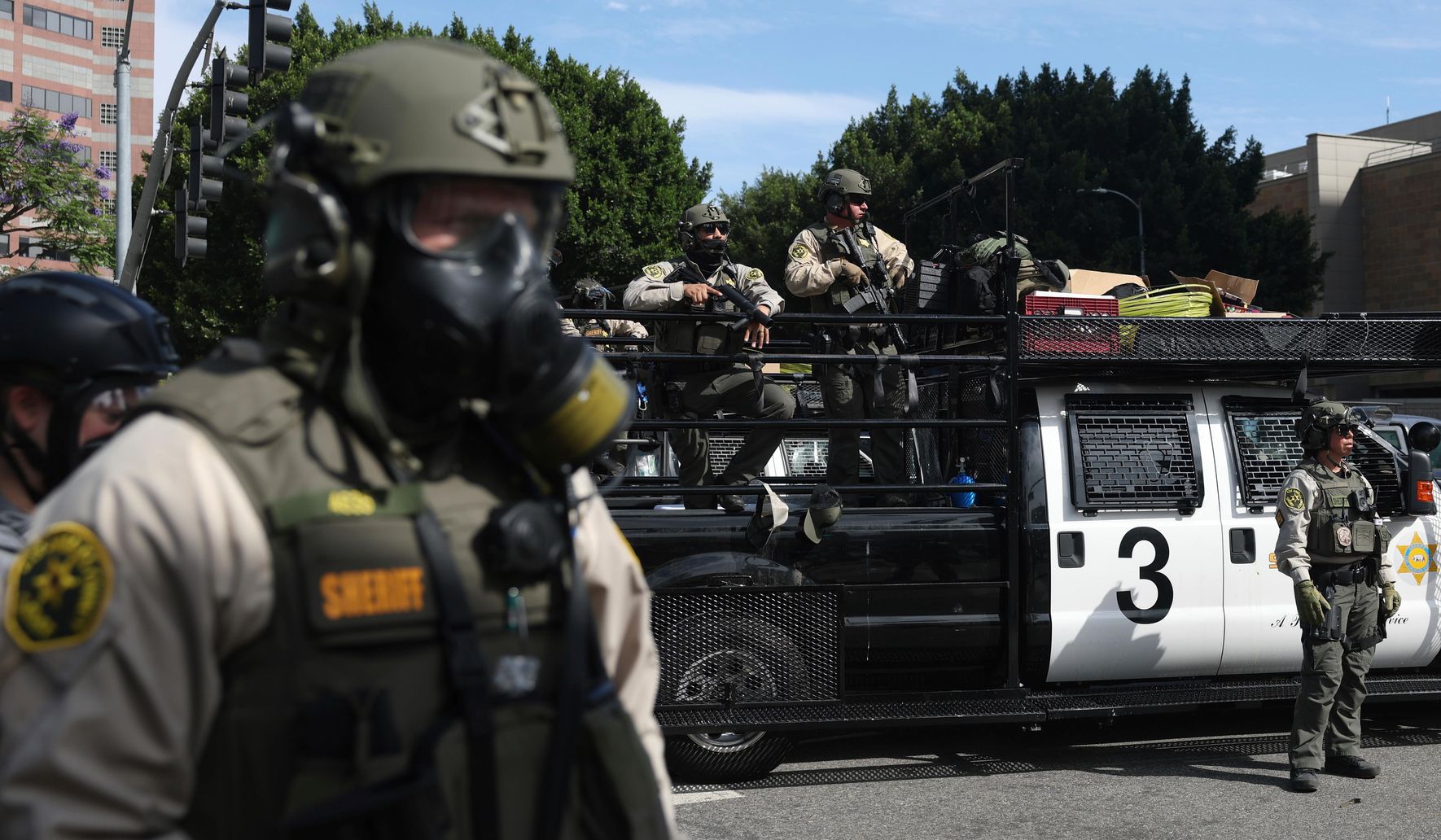
A federal appeals court on Thursday temporarily blocked California’s law that would force ICE and other federal officers to display identifying marks on their uniforms, pausing the measure while legal challenges move forward.
The appeals court’s temporary hold came amid a flurry of litigation arguing that the state law intrudes on federal authority. California said the requirement was meant to increase transparency when federal immigration agents operate inside the state, but the court paused enforcement while it examines constitutional and statutory questions. The stay signals a broader clash between state policy experimentation and federal supremacy.
Republican critics quickly framed the ruling as a necessary defense of the constitutional division of power. They warn that state attempts to regulate how federal agents perform core duties threaten national uniformity in law enforcement. For conservatives, the underlying issue is simple: the federal government must be free to enforce immigration laws without a patchwork of state rules that can undermine operations and safety.
Legal arguments center on preemption and the scope of state interference with federal operations. The government argues that immigration enforcement is entrusted to federal authorities and that state laws cannot impose conditions that frustrate those responsibilities. Opponents of the stay counter that accountability and local oversight are legitimate state interests when federal actions affect residents, but that debate will now proceed through the courts.
Practical concerns also figured into briefs and filings, particularly around officer safety and undercover work. Federal agents frequently operate in ways that rely on discretion and anonymity to build cases and protect investigators. Requiring visible badges or other markings, critics say, could jeopardize investigations, expose officers to retaliation, and make cooperation with local partners more complicated.
California framed the statute as a transparency measure aimed at informing the public about who is conducting enforcement in their communities. Proponents argued that residents have a right to know when federal immigration actions are taking place nearby. The state still faces the task of showing how that interest can coexist with federal operational needs without crossing constitutional lines.
The appeals court’s pause is temporary, but it buys time for higher courts to sort out the competing legal theories. Expect sharpened arguments on both sides about whether the state requirement directly conflicts with federal law or improperly regulates federal personnel. If the case moves up the judicial ladder, it could produce a major opinion clarifying the limits of state interference in federal law enforcement tactics.
Beyond the legal technicalities, the dispute has political overtones and immediate practical consequences. Conservative voices see the hold as a win for rule of law and centralized enforcement of immigration policy, while progressives view the underlying law as an attempt to rein in federal power and protect communities. That political split will likely shape legislative reactions and future state-level experiments aimed at controlling federal activities on local soil.
For now, federal agencies can continue operating under existing practices without being forced to add visible identification under the California statute. The temporary injunction preserves the status quo while the courts weigh constitutional claims and statutory interpretation. Whatever the outcome, the case will be an important reference point for future conflicts between state lawmaking and federal enforcement prerogatives.

