

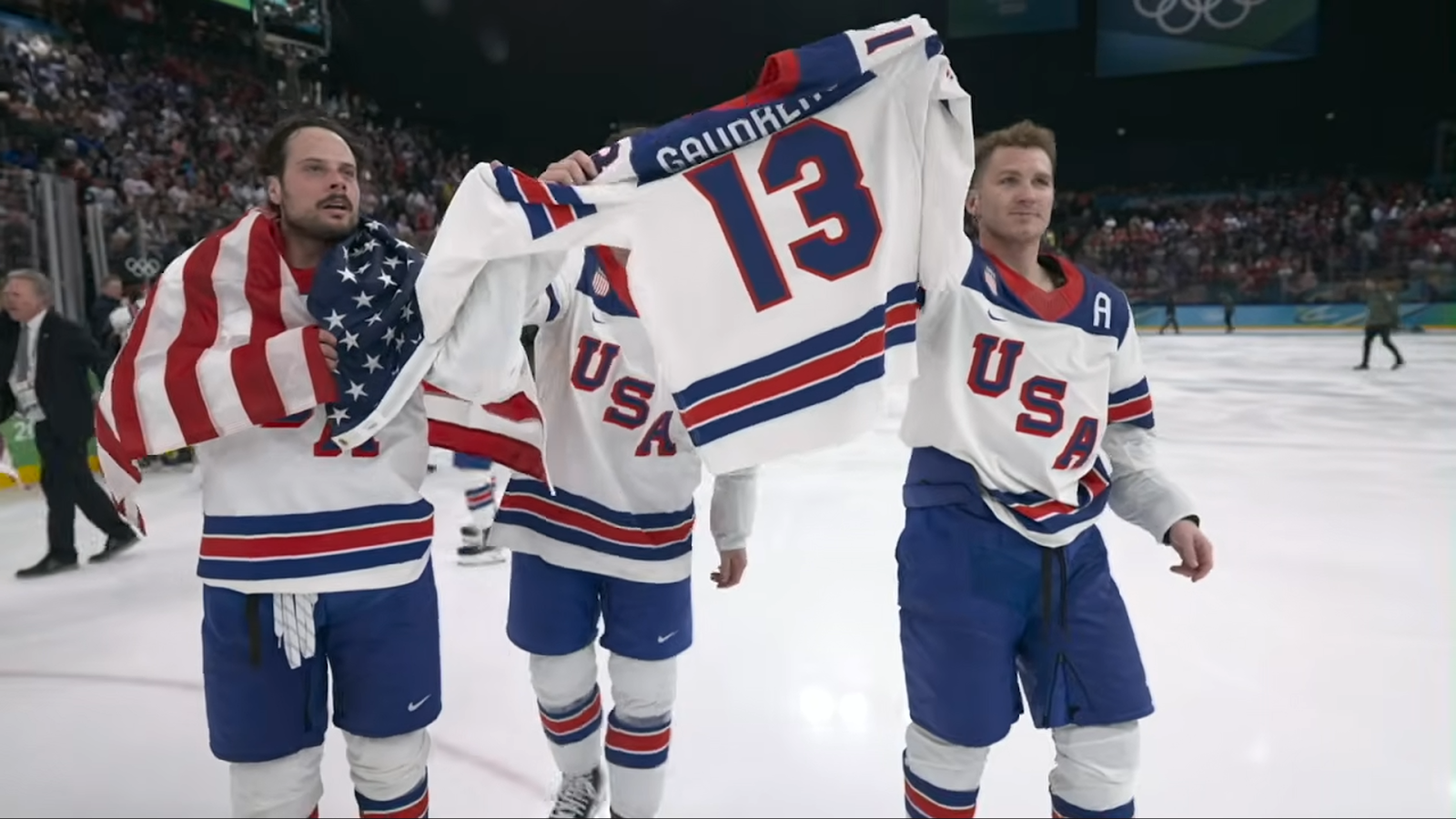
The U.S. men’s national hockey team beat Canada for Olympic gold on a night loaded with history and symbolism.
The U.S. men’s national hockey team defeated Canada to earn Olympic gold, on the 46th anniversary of the ‘Miracle on Ice.’ That single line carried immediate weight, tying a fresh championship to one of the sport’s most mythic moments. Fans and observers noticed the parallel right away, and the win rippled beyond the rink into conversations about legacy and national pride.
Beating Canada for Olympic gold is a rare, headline-making feat in world hockey, and doing it on an anniversary of a legendary upset sharpened the moment. The comparison to 1980 is unavoidable; the original “Miracle on Ice” is shorthand for underdog triumph and national drama. This new victory doesn’t erase the past, but it creates its own chapter in the story of American hockey.
For players, coaches, and staff, the pressure and the opportunity arrive together at the Olympics. Teams are built with a blend of veteran leadership and younger energy, and that mix often shows up in clutch moments. The way a group responds under Olympic lights is as much a test of character as of skill.
Crowds and casual viewers tuned in expecting intensity, and they got it. When rivals with deep hockey traditions meet for the gold, the stakes feel larger than the game, and the buildup becomes part of the spectacle. Fans on both sides remember previous battles, and every play gets measured against a long history of competition.
Media narratives were quick to latch onto the anniversary angle, which framed the win in a broader cultural context. Sports stories often rely on links to the past to make sense of the present, and this result offered a tidy, emotionally resonant storyline. Still, the players on the ice created the final image, and their actions will be the ones replayed in living rooms and highlight reels.
Beyond headlines, there will be practical implications: the medal ceremony, the parade of accolades, and the personal milestones for athletes who reached the sport’s peak. Olympic gold changes careers and opens doors, from professional contracts to coaching opportunities and endorsements. For many on that roster, this is the defining moment they will carry forward.
Youth programs and grassroots clubs will feel the impact, too, as young skaters see a clear, contemporary example of success at the highest level. Inspiration often travels in waves; a big international win can boost registration at rinks and fuel a generation’s ambitions. Communities that support local hockey often point to national triumphs as proof that hard work pays off.
Commentators will debate the tactical details for weeks, breaking down line changes, power plays, and penalty kills. Those technical conversations help explain how a game was won, but they rarely capture the emotional texture of the night. Still, coaches and analysts will mine every moment to understand what differences made the decisive plays possible.
In the end, Olympic gold has a way of anchoring memories for players and fans alike. The date, the opponents, and the feelings after the final horn combine into a lasting image. For this U.S. team, the timing alongside the ‘Miracle on Ice’ anniversary adds a layer of historical resonance that will be referenced whenever future teams chase similar glory.
Long after medals are displayed and ceremonies archived, conversations will turn to how this victory fits into the broader arc of American hockey. Championships stack up and stories grow, and each remarkable night strengthens the sport’s presence in national life. For now, the accomplishment stands on its own: a decisive win against a storied rival, sealed on a night heavy with meaning.

