

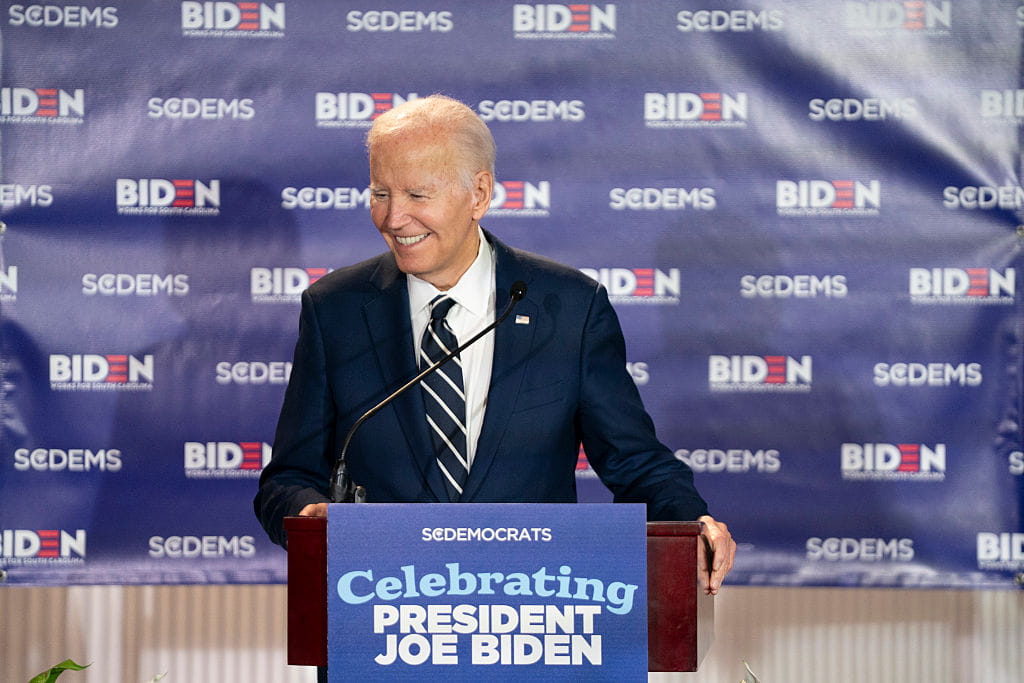
Former President Joe Biden held a small, tightly controlled event at an art museum in downtown Columbia, South Carolina, drawing mainly state Democratic operatives and anyone willing to pay $125 for a ticket, with organizers setting up a cordoned stage to create the appearance of a crowd.
The setting was an art museum in downtown Columbia, where seating and access were clearly limited and curated. Attendees included a number of South Carolina Democratic Party members along with ticket buyers who could afford the $125 price. The arrangement felt less like an open public rally and more like a closed fundraising stop.
What stood out was the staging: barriers and placement designed to make a modest turnout look fuller than it actually was. The venue was cordoned off to appear as if there were a crowd, and the visual carefully framed the former president in the spotlight. For voters watching on TV or social media, optics matter as much as message.
From a Republican perspective, the image reinforces a recurring critique about elite politics and managed events. When a campaign leans on paid-access stops and insider audiences, it fuels the impression of distance from everyday voters. The ticket price and curated setting suggest the emphasis was as much on donor relations as on genuine outreach.
Pay-to-attend appearances are a standard part of modern campaigns, but they carry political costs when they replace large, spontaneous gatherings. Grassroots energy often shows up in open-air rallies and mass events that politicians use to demonstrate momentum. A museum stage behind velvet ropes does the opposite, signaling a premium, invitation-only experience.
That premium feel also raises questions about messaging. When an event looks manufactured, critics will point to performative optics rather than policy or substance. Voters who want direct engagement can see through cordoned presentations and may choose to tune out if they feel their access is mediated by tickets and party lists.
The practical effect is twofold: the campaign secures a controlled environment for media and donors, but it risks alienating undecided or skeptical voters who prize authenticity. Political operatives from both parties understand how images travel, and this kind of setup can become a talking point for opponents. For now, the museum stop will likely be remembered less for remarks and more for how the scene was staged.

