

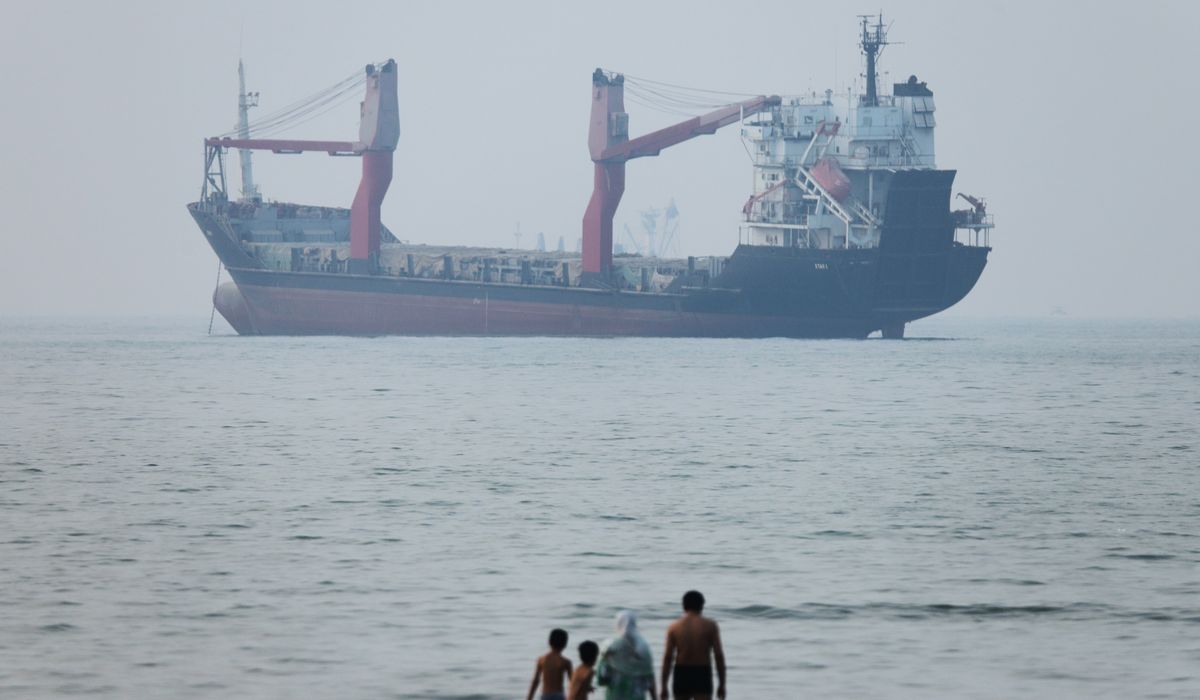
President Trump said Wednesday he considered the ceasefire between the U.S. and Iran to be effectively over after the two sides traded strikes again over access to shipping in the Strait of Hormuz.
The recent exchanges in the Strait of Hormuz have made it clear that the region remains volatile and that talk of a durable pause was overly optimistic. From a Republican viewpoint, that volatility demands clarity and resolve, not weak apologies or muddled diplomacy. Protecting commercial shipping and American interests in international waters must be treated as a top priority. The moment threats to freedom of navigation resume, leadership should respond with forceful deterrence.
History shows Iran has used maritime harassment as a pressure tool, testing whether the United States or its partners will flinch. When seizures, drone shadowing, or missile strikes threaten ships, commercial traffic and insurance costs rise and allies worry. Republicans contend that only credible deterrence and visible readiness will stop these patterns. That means preserving the right to defend vessels and crews and ensuring Iran understands the cost of escalation.
Certain voices push for extended ceasefires or reliance on international panels while adversaries regroup. That approach risks rewarding bad behavior and encouraging further bold moves. A Republican stance favors clear conditions for any pause and insistence on verifiable steps before de-escalation. If a truce is to hold, it must be backed by capability and willingness to act, not by wishful thinking.
Strategically, the Strait of Hormuz is vital because so much global trade flows through it and because small disruptions can have outsized economic effects. American allies in the region look to the United States for security guarantees, and a perception of hesitancy undermines those relationships. Republicans argue that demonstrating strength preserves both immediate security and long-term stability. Leadership on this issue reassures partners and deters opportunistic attacks.
On the tactical level, protecting shipping calls for better coordination with allies, clearer rules of engagement, and optimized naval presence. The point is not to provoke conflict but to prevent it by making aggression unattractive and costly. Diplomacy still has a role, but it cannot replace credible military posture when adversaries test boundaries. Effective deterrence blends diplomatic pressure with readiness to act when necessary.
Domestically, voters expect their leaders to keep trade lanes open and American commerce safe without needless entanglement or open-ended commitments. That balance is what many Republicans emphasize: defend vital interests decisively while avoiding prolonged ground wars. The focus should be on measured, targeted responses that do not escalate into mission creep. Policy must align with national interest and with clear rules that guide action.
As events unfold in the Strait of Hormuz, messaging matters as much as movements of ships and aircraft. Words that signal resolve, paired with tangible steps, reduce the chance of miscalculation. That is the core of a Republican approach: deter aggression by making the cost plain, preserve freedom of navigation, and stand with partners who share these goals. Washington should act with confidence and clarity when vital maritime routes are threatened.


1 Comment
President Trump needs to STOP playing games with this EVIL COUNTRY and take them out!