

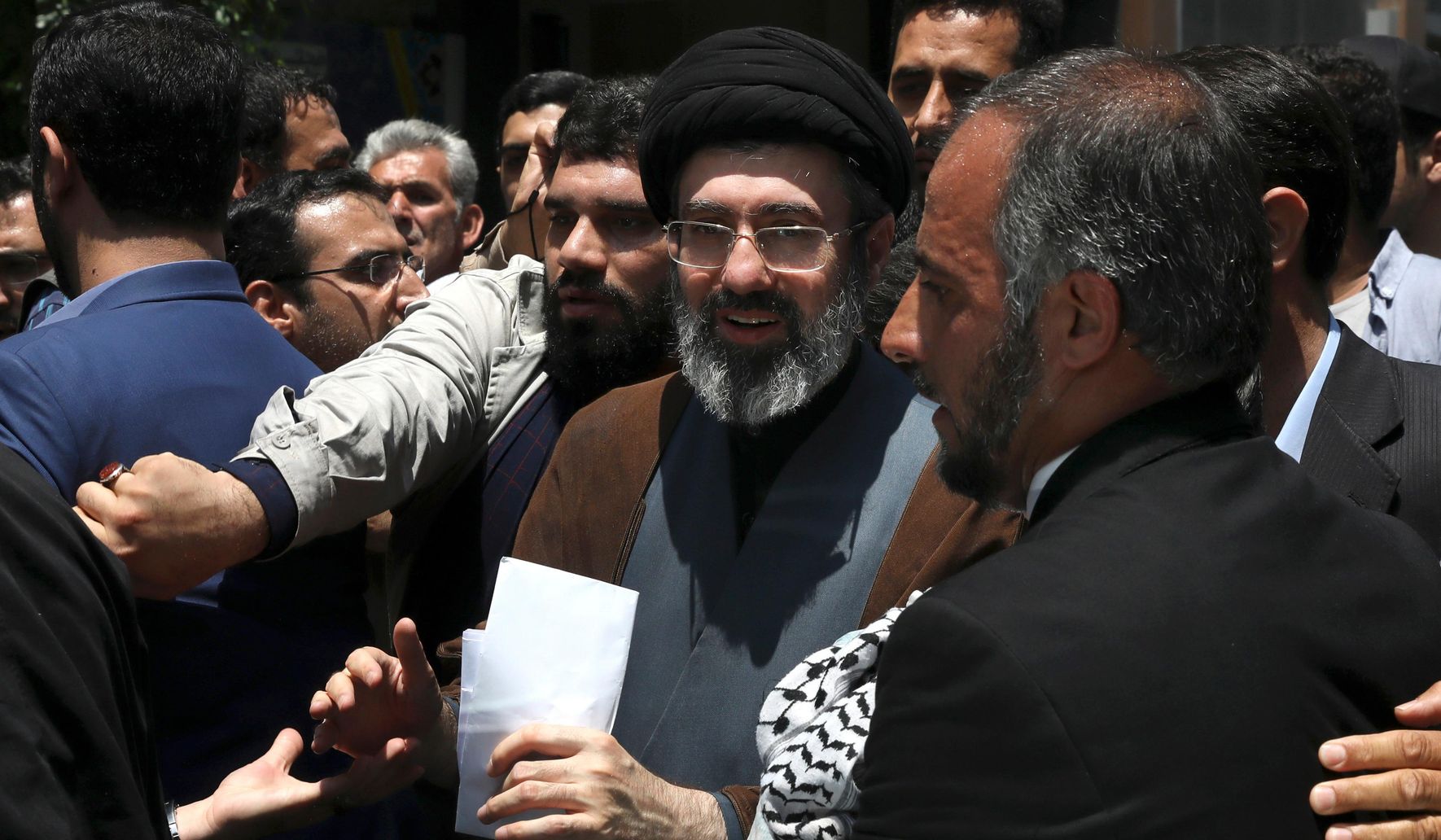
Mojtaba Khamenei, son of the late supreme leader Ayatollah Ali Khamenei, was announced by Iranian state television as his father’s successor, a move that signals a dynastic consolidation at the top of Iran’s theocratic system and raises immediate strategic concerns for the United States and its allies.
The announcement that Mojtaba Khamenei has been named to succeed his father landed on state television Sunday and was framed as a steady hand transition inside Tehran. This is not a routine leadership change in a republic; it is a transfer within a tightly controlled clerical power structure that blends religion, family ties and the instruments of coercion. Americans watching should recognize this as a deliberate choice by Iran’s ruling class to keep authority concentrated and predictable on their terms.
For Republicans, the basic instinct is to read this through the lens of national security and deterrence. A hereditary succession in Tehran strengthens the hand of hardliners who have little interest in liberalization or in curbing Iran’s regional ambitions. That matters because it reduces the chance for moderating influences inside Iran to push for restraint on nuclear development, missile proliferation, or backing for proxy forces across the Middle East.
Mojtaba’s elevation reinforces the influence of Iran’s security apparatus, especially the Islamic Revolutionary Guard Corps, which has long been central to power plays inside the regime. The intertwining of family and security elites makes policy changes less likely and more opaque, leaving Washington and partners with fewer diplomatic levers. The consequences are practical: predictable hostility coupled with fewer openings for negotiation or verification.
This succession also complicates the ballast that once existed between Tehran and regional actors. With a new supreme leader groomed within the inner circle, Iran’s proxies may feel emboldened, believing Tehran will accept higher levels of confrontation without risking internal fracture. That dynamic raises the odds of miscalculation in places like Lebanon, Iraq, Syria and Yemen, where Iran-backed groups already test U.S. resolve and push local conflicts toward escalation.
Economically and politically, the regime will likely double down on narratives that require external enemies to justify internal repression. Expect tighter control over information, more aggressive suppression of dissent, and the use of foreign threats to cement domestic loyalty. From a Republican standpoint, that pattern demands clear-eyed policies that do not reward bad behavior with concessions while keeping pressure on Tehran’s leadership circle.
On the nuclear front, a succession that cements hardline authority reduces confidence that negotiations would yield durable safeguards. If the new leadership prioritizes regime survival above all, it will treat nuclear capability as a deterrent to external interference rather than a bargaining chip. That makes verification and enforcement mechanisms all the more critical if diplomacy resumes in any form.
Military planners should take note: a predictable, tight leadership means Tehran can pursue long-term strategic initiatives without worrying about sudden political swings at the top. That allows Iran to invest consistently in missile programs, asymmetric warfare, and regional proxy networks. The United States and its allies must therefore assume a more patient and resolute posture when shaping deterrence and alliance strategies.
Politically, the succession is a messaging moment for the West. The optics of dynastic transfer undercut Tehran’s claims to revolutionary legitimacy and could further alienate populations inside Iran who want more freedom and accountability. Yet the regime’s security-first instinct will likely deepen repression, making internal opposition riskier and limiting the effectiveness of external pressure campaigns focused solely on regime change narratives.
In short, Mojtaba Khamenei’s installation is not just a personnel update; it is an institutional signal that Iran will remain a strategic competitor for the foreseeable future. That reality calls for policies that combine firm deterrence, targeted pressure on the regime’s key enablers, and support for regional partners to maintain stability. The focus should be on shaping a long-term posture that protects U.S. interests without underestimating the coherence and resolve of Tehran’s newly consolidated leadership.

