

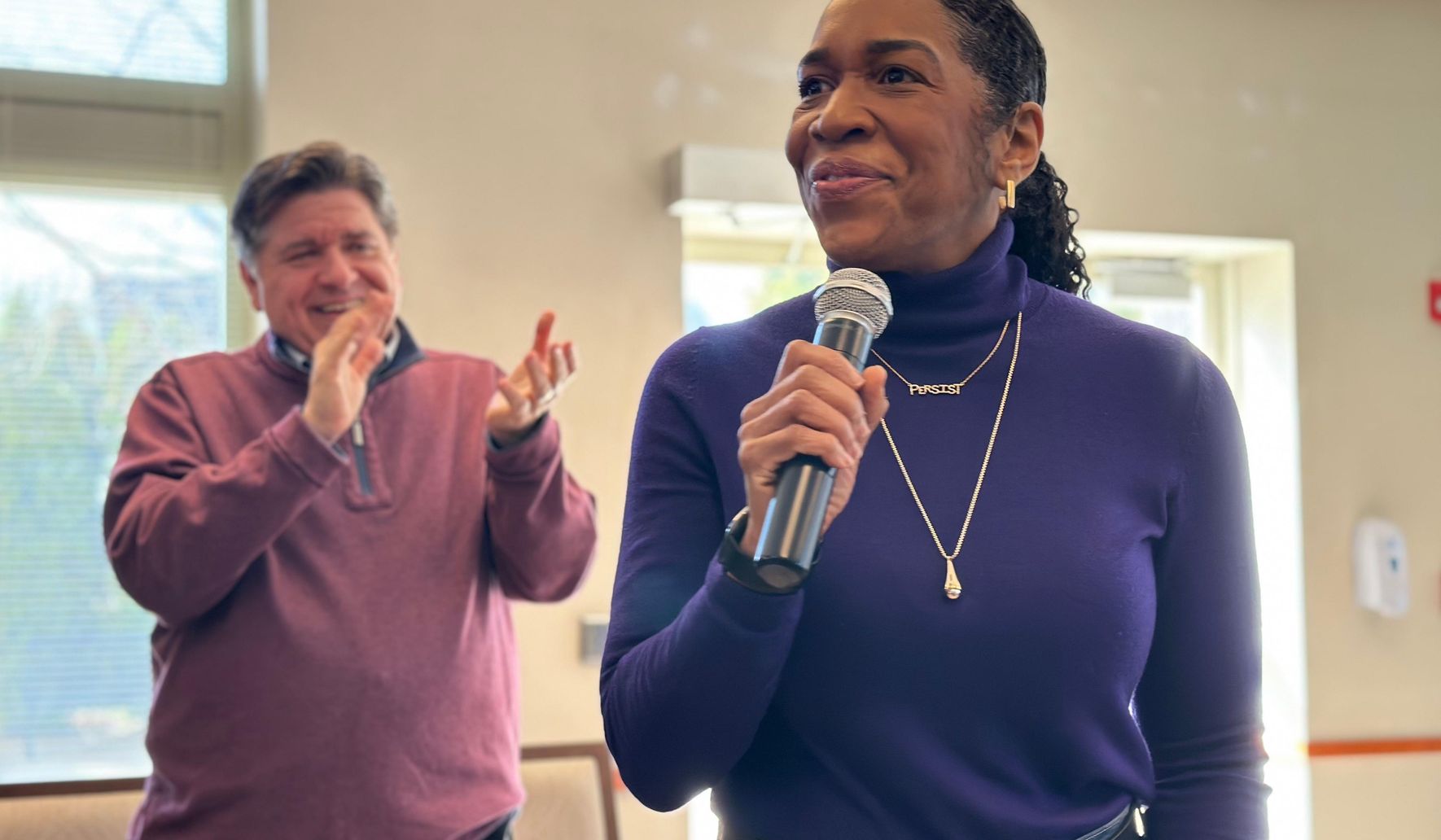
Illinois Lt. Gov. Juliana Stratton won Tuesday’s Democratic primary for U.S. Senate, edging out two sitting members of the U.S. House and now heads to a November general election against a Republican.
Juliana Stratton’s primary victory closes a bruising intra-party fight and hands Democrats a unified nominee for the fall. Her rise from state lieutenant governor to Senate candidate underlines how state-level officeholders are moving into national races. For Republican voters, the outcome sets a clear target and a familiar contrast heading into November.
The primary featured several established figures, including two sitting U.S. House members, who split votes in various regions. That split allowed Stratton to consolidate support among key Democratic constituencies and avoid a runoff. Republicans will note that contested primaries often leave governing coalitions strained going into a general election.
Campaign messaging mattered, with Stratton leaning on executive experience in Springfield and a narrative about statewide leadership. Democratic strategists pitched unity and continuity after the primary result, while Republican strategists are already highlighting policy differences. Expect the GOP to frame the matchup around fiscal responsibility, crime, and the cost of living.
On the ground, voter turnout patterns showed the usual urban strength for Democrats, with suburban areas remaining competitive. Republicans see an opening where independent and swing voters could decide the race if the campaign becomes a contrast of priorities. Grassroots organizing and turnout will likely be decisive in closely divided precincts across Illinois.
Stratton’s campaign will emphasize statewide name recognition and a folder of policy priorities shaped by her time as lieutenant governor. That gives her a ready platform, but statewide office-holders also carry records that can be tested in debates and ads. The GOP will probe those records and push messaging designed to peel away undecided voters.
Fundraising and media strategy will be central over the summer and into the fall, as both parties try to define the terms of the race early. Illinois has proved to be competitive in pockets even when statewide trends favor one party, and a disciplined spending plan can swing tight contests. Republicans will aim to outwork and out-message by turning local concerns into practical contrasts with Stratton’s proposals.
Republican operatives will emphasize practical issues that resonate with everyday voters, like taxes, public safety, and job growth, rather than inside-the-Beltway debates. That approach aims to put Stratton on defense and keep nationalized themes from dominating the conversation. Local messaging coupled with targeted media buys often makes the difference in statewide contests.
Legal challenges and last-minute recounts are always a possibility in tight races, but the primary wrapped without visible contestation over the result. Moving forward, both sides will prioritize vetting and rapid response teams to handle any surprises. The November matchup will test which narrative—experience in office or calls for change—carries more weight with Illinois voters.
For conservative voters and activists, the race is an opportunity to present a clear alternative in a state where national Democrats have had structural advantages. That means translating national GOP themes into local terms and demonstrating a credible path to victory. Republicans will also stress accountability and practical solutions rather than partisan rhetoric.
Media coverage will play an oversized role, so controlling the message early matters for both campaigns. Expect paid advertising, earned media, and opposition research to increase sharply as the general election season begins. The side that can keep its narrative consistent while responding effectively to attacks will hold an advantage.
Ultimately, Illinois voters will decide whether they prefer a Democratic nominee with statewide executive experience or the Republican alternative offering different priorities. The general election promises to be competitive, driven by turnout and the ability to persuade independents. Republicans see this as a winnable contest they can campaign on clear, practical issues without sacrificing conviction.

