

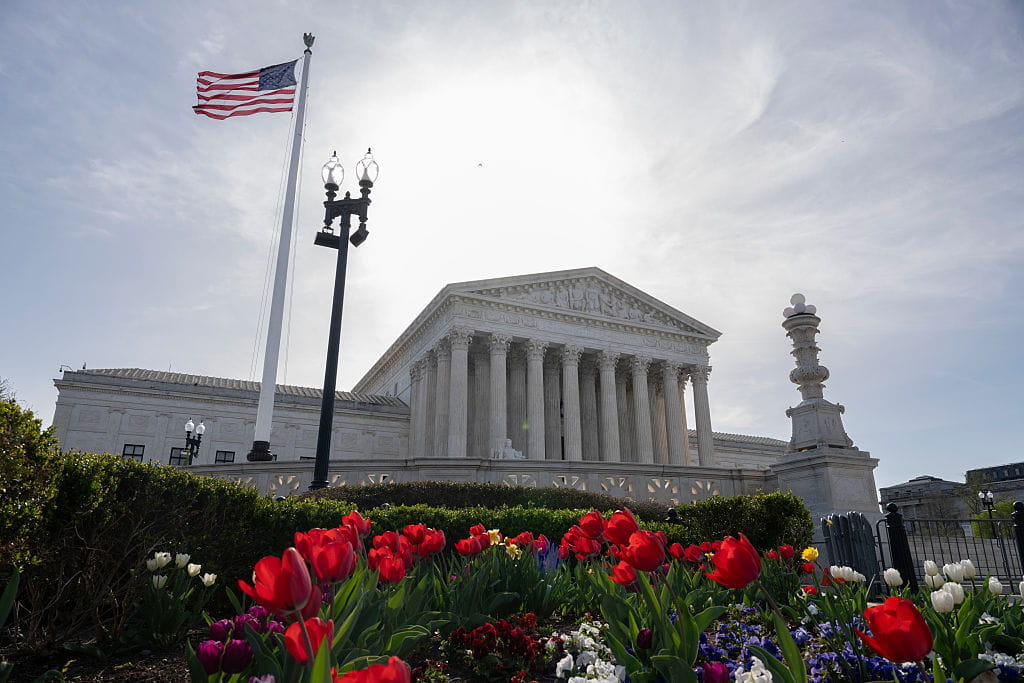
Today, April 1, the Supreme Court will hand down a decision that could reshape how courts treat long-standing precedents and the scope of President Donald Trump’s executive authority.
The case arriving at the high court brings questions that have simmered for years about how much space the presidency legitimately occupies inside our constitutional structure. Lower courts disagreed and the dispute escalated until the Justices had to step in. The ruling will clarify whether established doctrines stay intact or are reined in.
This litigation tests the boundaries between settled law and evolving judicial interpretations, forcing a close look at how precedent should guide modern decisions. Conservatives have long argued that some precedents stray from the Constitution and invite instability. The Court now has the chance to either reaffirm older frameworks or redraw the lines.
At the heart of the fight is executive power and how far a president can act without running afoul of other branches. That is a central concern for anyone who wants a functioning administration that can make and carry out policy. For Republican-leaning observers, a clear, robust executive role protects national interests and prevents bureaucratic paralysis.
On the legal side, justices face the tension between adhering to stare decisis and correcting what they see as doctrinal mistakes. Originalist judges tend to prefer textual and historical anchors over modern reinterpretations. The resulting opinion will show which approach guided the majority.
The political stakes are immediate and practical. If the Court tightens restraints on executive reach, future presidents could find their toolkit narrowed by new judicial rules. If the Court gives the executive more room, administrations will regain flexibility to act decisively on national priorities. Either way, the decision will steer the next round of disputes about presidential authority.
Republican commentary frames this moment as overdue clarity: partisan weaponization and murky standards have made governance harder. From this view, courts must avoid ad hoc expansions that let judges substitute policy preferences for constitutional text. The ruling offers a chance to restore predictable boundaries that respect both the presidency and the separation of powers.
Critics warn that too much deference invites unchecked power, but Republican legal thinkers counter that stable, accountable authority requires defined privileges for the executive. That balance matters when crises demand swift federal action and when the nation needs a clear chain of accountability. The Court’s language can either enable decisive leadership or lock officials into second-guessing at every turn.
The majority’s reasoning will be carefully parsed for doctrinal markers that lower courts will follow for years. Lawyers and judges watch for tests, standards, or categorical rules that transform case-by-case disputes into repeatable precedent. Those signals will shape litigation strategy and the government’s legal posture moving forward.
The composition of the Court matters to the outcome, and conservatives on the bench have repeatedly signaled a willingness to revisit past rulings they view as out of step with the Constitution. That context makes a conservative-leaning ruling plausible and will energize supporters who favor stronger executive latitude. Opponents will seize on any expansion of power as a political turning point.
Beyond the immediate parties, the decision will influence how Congress reacts and whether lawmakers see a need to legislate clearer boundaries. Congress can choose to harden or soften any judicial reinterpretation through statutory fixes, but that requires political will and compromise. In the meantime, the executive branch will adjust its posture based on legal signals from the Court.
Public reaction will be polarized, predictable, and intense, because the ruling touches on accountability and authority—two ingredients that fuel modern political debate. For Republicans, clarity that protects the presidency from endless litigation is a welcome outcome. For opponents, any expansion of executive reach will be framed as a threat to checks and balances.
Legal scholars will immediately sift through the opinion for passages that matter most: majority holdings, narrow rationales, or broad tests that invite future challenges. Those textual choices determine whether the ruling becomes a durable guide or a narrow fix. The practical upshot will depend on how the Court framed its limits and instructions for lower tribunals.
The decision also carries institutional consequences for the judiciary itself, because overruling or modifying precedent shapes how the public perceives the Court’s role. A clear, principled opinion can restore confidence that judges follow the Constitution rather than political winds. Conversely, a muddled ruling will leave litigants guessing at the next move.
Whatever line the Court draws, the politics and the law will not quiet down. Analysts, practitioners, and elected officials will spend months unpacking the text, testing its reach, and testing its limits in new disputes. The next chapter in separation-of-powers debates starts with this opinion and will be written in courts and legislatures alike.

