

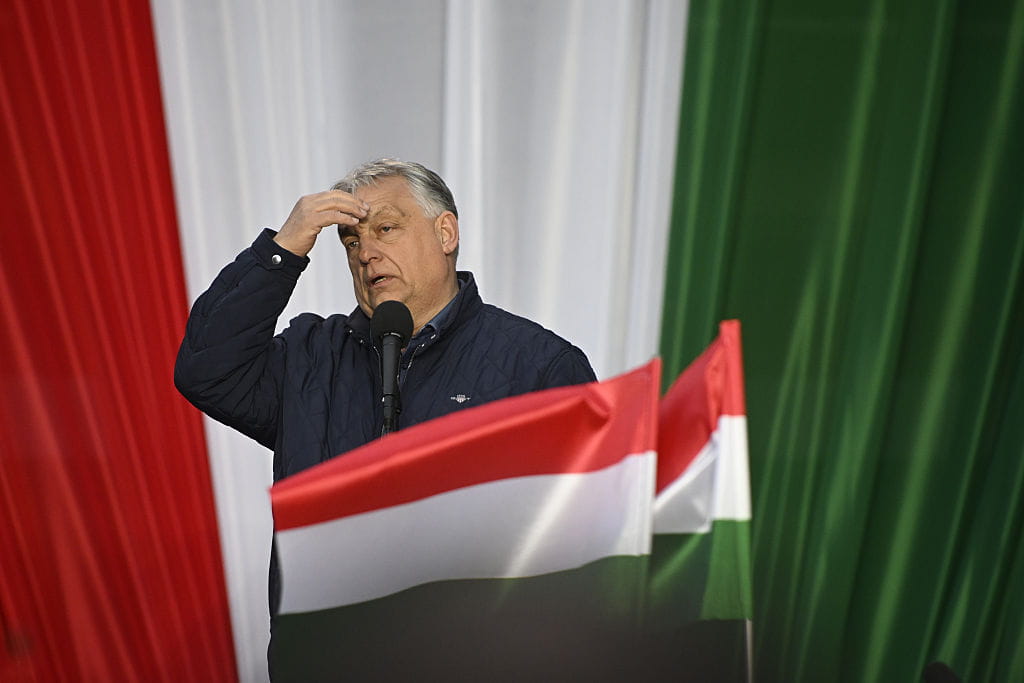
Viktor Orbán conceded after 16 years in power as projections showed Péter Magyar of the opposition Tisza party winning a roughly two-thirds parliamentary majority, a result that promises major shifts in Hungary’s political direction and its handling of domestic and international issues.
After 16 years as prime minister, Viktor Orbán conceded defeat following Sunday’s parliamentary election. The concession underscores a clear change in voter sentiment and ends a long stretch of uninterrupted leadership. It also hands significant authority to the new parliamentary majority.
Péter Magyar, leader of the opposition party Tisza, was projected to secure about a two-thirds majority in parliament. That scale of victory gives Magyar a strong mandate to reshape policy and pursue substantial reforms. Two-thirds control can affect constitutional and institutional changes.
The size of the majority matters more than many people appreciate. With supermajority power, Magyar can move faster on legislative priorities without the usual need for broad cross-party deals. That reality raises both expectations and concerns about the balance of power in Hungary’s democracy.
Domestically, a change at the top could shift how Hungary handles economic policy, judicial reform, and public administration. Magyar’s team will face immediate pressure to deliver on promises that won votes. Rapid action is politically tempting but also risky if institutional checks are sidelined.
On foreign policy, the result could alter Budapest’s posture toward the European Union and neighboring countries. Orbán’s tenure was defined by a combative but sovereign-minded approach to Brussels. The new leadership may either recalibrate relations or double down on national priorities, depending on political incentives.
For Republicans watching from abroad, the core takeaway is simple: voters made a decisive choice and leaders respected the outcome. Peaceful transitions, even when they remove long-serving figures, reinforce the legitimacy of democratic institutions. That matters more than ideological victory.
The scale of Magyar’s win will test both his policy vision and his political discipline. Large majorities can pass sweeping laws quickly, but governing effectively requires coalition-building and competent administration. The real test will be translating campaign promises into workable policy without eroding institutional integrity.
Concerns raised by international observers during Orbán’s years — about court independence, media plurality, and civil society — will now be on Magyar’s agenda, whether he addresses them directly or not. Fixing systemic issues takes time and political courage. Voters will watch whether reforms strengthen the rule of law or merely rearrange power.
Economic questions are front and center as well, from fiscal management to investment attraction and labor market challenges. Businesses want predictability; investors want clear rules that stay in place across administrations. Magyar’s ability to deliver stability will shape Hungary’s growth prospects over the coming years.
Immigration and border security remain hot-button topics across Europe and in Hungary specifically. Expect Magyar to stake out positions that appeal to national concerns while seeking practical approaches to migration pressures. The new government will balance security with the need to maintain trade and regional cooperation.
Political tone will be important as Magyar moves from campaigning to governing. Campaign rhetoric that wins elections does not always make for good governance. A transition that emphasizes respect for institutions and transparent policymaking will help calm domestic and international nerves.
With a strong parliamentary majority, Magyar faces a window of opportunity to pursue bold steps. That window also invites scrutiny and responsibility; how those steps are taken will define his tenure. The coming months will reveal whether this election marks a constructive reset or a risky concentration of power.

