

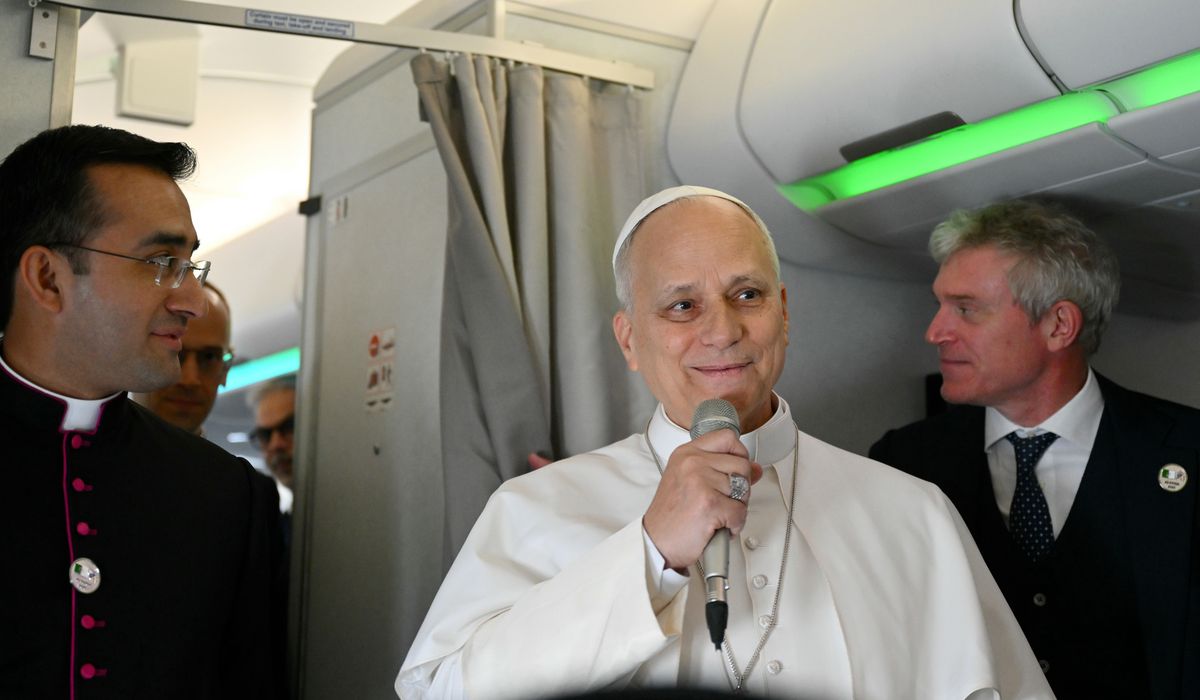
U.S.-born Pope Leo XIV pushed back Monday on President Trump’s broadside against him over the U.S.-Israel war in Iran, and the exchange laid bare the gap between Vatican appeals and a Republican view of hard national security choices. The confrontation has set off a debate over whether moral urgings from Rome help or hinder an American president pursuing clear strategic aims. The clash has a simple frame: spiritual calls for reconciliation versus a political calculation that force and deterrence protect allies and American interests.
The Pope’s comments found quick traction among international audiences, and President Trump returned fire in a way that underscored his readiness to mix moral criticism with blunt policy demands. From a Republican perspective, the president’s frank tone reflects a refusal to let moral posturing slow down measures meant to deter Iran and secure Israel. That stance treats the Vatican’s statements as well-intentioned but not decisive in high-stakes security calculations.
Vatican appeals for peace and reconciliation carry weight in religious and diplomatic circles, and they matter to millions who seek stability in the region. Still, Republicans argue that such appeals cannot substitute for credible deterrence when adversaries like Iran act aggressively and pursue destabilizing programs. The argument is simple: moral pressure is useful, but it must be backed by policy instruments that change behavior.
President Trump’s critics say his rhetoric risks escalating tensions, yet his supporters counter that deterrence has a practical logic that peace talk alone rarely achieves. The U.S. must protect partners such as Israel, and that responsibility sometimes requires clear readiness to act. Republican thinking emphasizes outcomes over symbolism; if stronger postures prevent broader war, they are worth pursuing despite vocal rebukes from abroad.
Religious leaders should be free to press for reconciliation and to remind officials of ethical constraints, and Republicans generally respect that role. At the same time, those leaders should recognize the limits of moral suasion when facing regimes that calculate power in military and proxy terms. In this view, the Pope’s interventions are moral contributions but not policy prescriptions.
The exchange also highlights the political theater of modern diplomacy, where public statements shape domestic perception as much as foreign policy. President Trump uses sharp language to signal resolve to voters and to allies who expect firm backing. That communication strategy is intentional: it aims to reduce the chance of miscalculation by adversaries and to reassure partners that the U.S. will act to defend its interests.
Practical risks remain on both sides of this argument, and Republicans do not deny the human cost that military confrontations produce. The goal, however, is to keep conflicts limited and avoid wider conflagrations through credible deterrence and diplomatic pressure. Officials who reject that mix in favor of pure appeals risk leaving adversaries unshaken and friends exposed.
There is also a soft power element here: America’s moral standing benefits when it combines firm defense with restraint and a clear plan for post-conflict stability. Republicans argue that credibility in defense strengthens the hand of statesmen and clerics alike when they later press for reconciliation. Put another way, strength can create the space in which genuine peace becomes possible.
The debate over the U.S.-Israel war in Iran is a live test of that balance, and the exchange between U.S.-born Pope Leo XIV and President Trump has magnified it. Expect both sides to keep speaking to their constituencies: religious leaders to conscience and world opinion, and elected officials to voters and security planners. The underlying question remains whether moral appeals and hard power can be woven together into a strategy that avoids failure and protects allies.

