

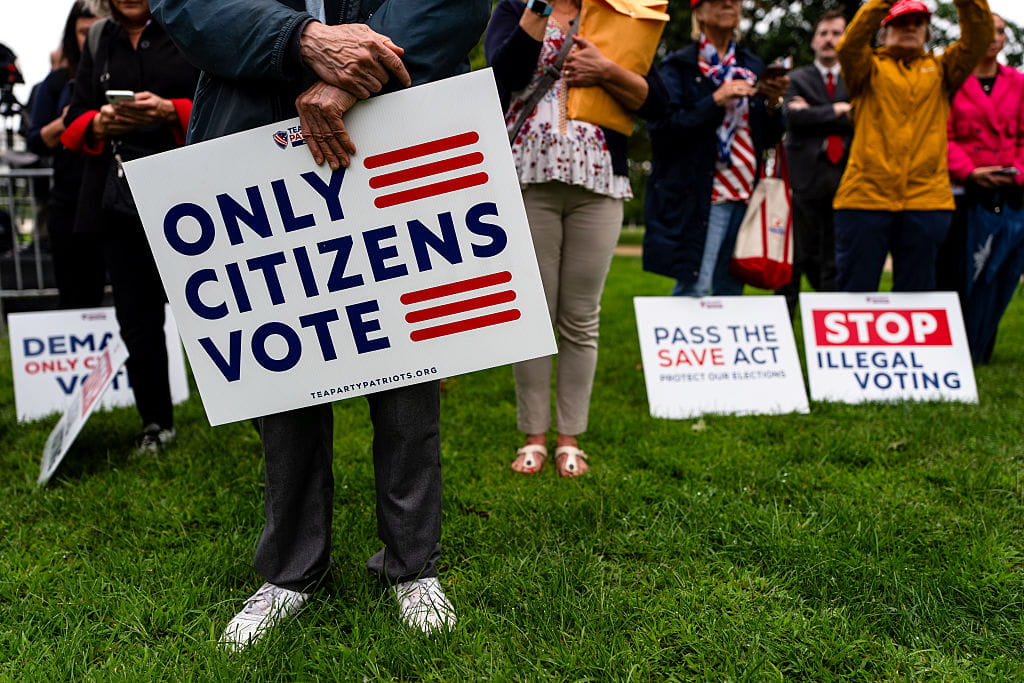
The Justice Department says voter rolls carry significant deadweight — a large number of inactive, duplicate, or out-of-date records — and is preparing steps to get those lists in better shape.
Agency gears up to administer some house cleaning. The Justice Department surfaced this finding publicly on Apr 21, 2026, and officials are framing the effort as a move to restore accuracy to voter lists. Republicans view the push as overdue enforcement of basic election integrity while urging careful safeguards for eligible voters.
The department’s review flagged registrations that no longer reflect current residency, duplicate entries, and records tied to people who have not engaged with the system for years. That kind of deadweight can make voter rolls less reliable and fuel public distrust. Conservatives argue this undercuts confidence in elections and merits decisive action.
Federal agents plan to coordinate with state election offices and data custodians to reconcile records without trampling rights. Republicans want the work done transparently and by clear rules so mistakes can be corrected quickly. The goal is to remove only genuinely ineligible or obsolete entries, not to disenfranchise lawful voters.
Cleaning rolls can mean a mix of automated cross-referencing and human review, and that raises predictable concerns from civil liberties advocates. From a Republican perspective, those concerns must be taken seriously while not giving them veto power over common-sense housekeeping. Accurate lists are a baseline for free and fair elections.
Legal questions will follow, and litigation is likely where state and federal priorities collide. Courts have previously weighed in on when and how names can be removed, balancing administrative needs against voting rights. Republicans say the framework should respect both the rule of law and the integrity of outcomes.
Practical steps typically discussed include purging duplicate registrations, removing records tied to confirmed relocations, and flagging long-dormant entries for follow-up. The process needs audit trails and public reporting so officials can show what was changed and why. That kind of documentation protects voters and officials alike.
State election officials vary widely in capacity and legal authority, so federal efforts will lean on cooperation rather than commandeering local systems. Republicans favor empowering states with resources and standards so cleanup is consistent and defensible. Centralized guidance paired with state execution reduces the odds of overreach.
Data integrity is a technical challenge as much as a political one, involving matching algorithms, postal updates, and cross-agency records. Conservatives point out that better data reduces voter roll errors and eases administration on election day. Investing in accurate infrastructure saves time and avoids chaotic corrective actions later.
Opponents worry that removal rules can be applied unevenly, particularly in diverse and densely populated areas. Republicans counter that procedural safeguards and transparent deadlines prevent arbitrary purges and ensure eligible voters retain access. The debate is about how to balance efficient administration with robust protections.
Public trust is the central political stake: messy rolls amplify distrust and make election outcomes harder to accept. Republican messaging stresses that accuracy is not a partisan goal but a civic necessity that benefits everyone. Restoring confidence requires clear, defensible steps that the public can inspect.
Implementation will be messy, contested, and closely watched by advocacy groups on both sides of the aisle. Republicans insist the Justice Department should proceed with respect for state authority, careful record-keeping, and opportunities to correct errors. If done right, the cleanup can tighten the system without stripping legitimate voters of their rights.

