

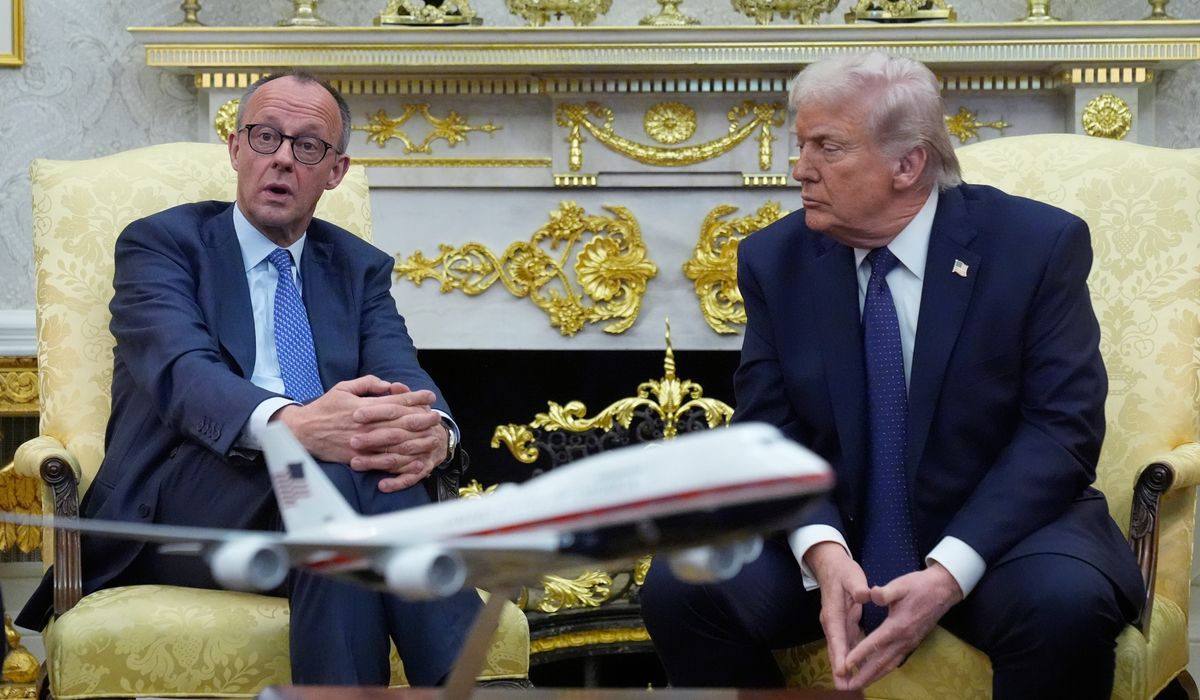
President Donald Trump warned he might cut back the U.S. military footprint in Germany, escalating a public dispute with Chancellor Friedrich Merz and signaling tough leverage over NATO burden-sharing and bilateral disagreements.
President Trump on Wednesday made a pointed move, saying he could reduce the U.S. military presence in Germany as his dispute with Chancellor Friedrich Merz continues. The remark landed in the middle of ongoing tensions over defense commitments and broader policy differences. Trump framed the threat as part of a broader push for fairness from allies.
The complaint is familiar to anyone who’s watched the last several administrations: too many allies rely on U.S. security guarantees without matching American investment. Republicans argue that using troop posture as leverage is practical, not petulant. That line of thinking treats military basing as a bargaining chip in diplomatic and fiscal negotiations.
From a Republican perspective, the core issue is simple — allies need skin in the game. Pressuring Germany on defense spending and strategic posture isn’t personal, it’s practical. If Washington can use its presence to push NATO partners toward 2 percent commitments and better burden-sharing, it’s a tool worth wielding.
There are real-world consequences to shrinking the footprint, which is why the threat carries weight. Troop reductions change local economies and military readiness, and they reshuffle how the United States projects power in Europe. Those outcomes are part of the calculation, not an afterthought.
Germany and the United States have deep economic ties, but political differences have widened the gap on security and energy policy. That widening gap makes basing decisions more than a military question — they’re a lever in a broader relationship. Trump’s approach treats basing as an instrument to correct policy mismatches.
One repeated Republican critique is that Germany has lagged behind NATO’s spending target for years, even after recent increases. Pressuring Berlin to meet agreed commitments is framed as enforcing fairness rather than lecturing an ally. The underlying message: commitments mean something, and missed ones should prompt action.
Trump’s pattern of behavior around bases isn’t new; he’s used the prospect of redeployment to extract concessions before. That strategy flows from a negotiating style that prioritizes immediate leverage and tangible outcomes. For supporters, it’s how you get allies to stop kicking the can on defense obligations.
On the ground, any real drawdown would ripple through U.S. military families and local economies near bases. Moving people and equipment is costly and complex, and commanders do not act lightly. Still, Republicans see the short-term disruption as acceptable if it yields long-term changes in burden-sharing.
Allies and critics warn about the message this sends to NATO partners and potential adversaries, but the Republican stance is clear: commitment and capability matter more than symbolic permanence. The U.S. remains committed to NATO, but it expects reciprocal effort and investment. That expectation is framed as strengthening the alliance by making it fairer and more capable.
The domestic political angle is also obvious: Republicans favor a posture that prioritizes American taxpayers and strategic advantage. Cutting unnecessary costs while pressuring partners to carry more fits a conservative ledger. It’s an argument designed to resonate with voters who want allies to pull their weight.
Berlin will have choices — either accelerate defense spending and policy shifts or risk a recalibration of American forces in Europe. Republicans would view any German moves toward higher spending or deeper cooperation as wins for allied deterrence. If Germany acts, it would validate the use of leverage as a diplomatic tool.
Strategically, any change in basing requires thinking about Russia and European security dynamics. Repositioning forces could focus on forward presence in the eastern flank or on rapid-reaction capabilities across the continent. Republicans emphasize nimble, capable forces rather than static guarantees that invite exploitation.
Operational options include rotating units instead of permanently stationing large formations or bolstering partnerships with eastern European allies. Those approaches preserve deterrence while making hosting countries demonstrate commitment. It’s a flexible alternative that suits a results-oriented worldview.
In the immediate run, expect sharper diplomatic talks and closer scrutiny of Germany’s defense choices, with Washington pushing for measurable change. The threat to withdraw is part of a broader pattern: using American leverage to demand fairness and effectiveness from allies. How Berlin responds will set the tone for the next phase of transatlantic relations.

