

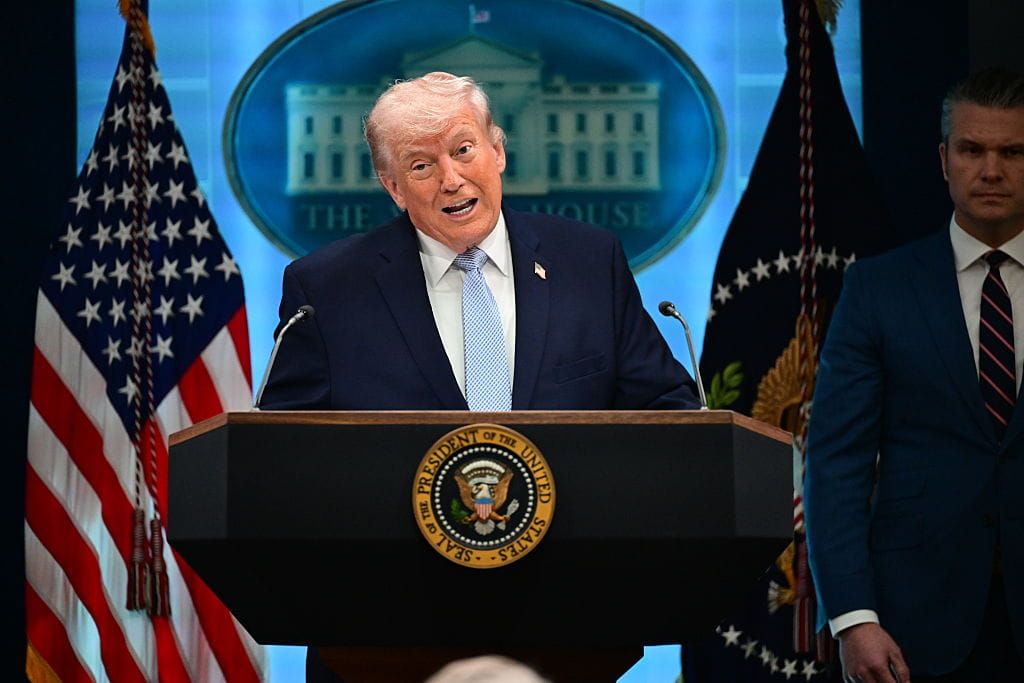
President Trump has proposed a new pathway to exercise war powers that aims to give the executive more flexibility for rapid, limited military actions while pushing Congress to respond with clear rules; the move rekindles the age-old Article I versus Article II fight over who gets to start or authorize force, raises legal and political risks, and now puts the ball squarely in Congress’s court as lawmakers weigh whether to endorse, constrain, or challenge this approach (May 4, 2026).
The proposal is straightforward in political terms: restore operational freedom to the commander in chief while asking legislators to codify boundaries. Republicans will argue that commanders need speed and clarity to deter enemies and protect Americans, and that past Congressional drift left a vacuum Congress must fill. At the same time the idea invites a constitutional showdown about separation of powers and the role of statute versus executive prerogative.
Supporters say the current system ties the hands of commanders and blurs responsibility, especially when threats emerge quickly across multiple theaters. Critics counter that any effort to sidestep Congress risks unchecked power and dangerous precedent. The debate is less academic now and more practical because the administration has signaled it will act and Congress must react.
One key element is notification and limits: a president could claim authority to use force for narrow, defined purposes while promising to notify Congress and seek retroactive authorization or new legislation. That framework is meant to keep operations lawful and politically sustainable without waiting for slow-moving committees and floor calendars. Yet notification alone may not satisfy members worried about surrendering a core constitutional role.
From a Republican perspective the better path is clear rules that preserve presidential agility while protecting Congressional oversight and funding powers. Lawmakers can draft sharper statutory language that defines thresholds, timelines, and reporting requirements so that the White House has the tools it needs and Congress retains meaningful review. That balance would force both branches to own outcomes instead of punt responsibility to the courts or to public opinion after a crisis.
Congress faces a few realistic options: pass targeted authorization that narrows scope, write a broader statute that redefines emergency authority, or use appropriations and hearings to exert leverage without new law. Members may also pursue litigation if they believe the executive has overstepped, but courts often decline to intervene in thorny political-branch disputes. Ultimately, leverage comes from funding and oversight, not always from courtroom wins.
There are real foreign policy stakes tied to how this plays out, including the risks of miscalculation and escalation. Allies and adversaries will read any change in U.S. practice as a signal about resolve and procedures. Republicans will note that clear, credible authority can strengthen deterrence; opponents will warn that loosened restraints could invite unilateral actions with costly blowback.
Legal history matters here. The post-9/11 Authorizations for Use of Military Force and subsequent interpretations set precedents that administrations of both parties have relied on to justify a wide range of operations. Rewriting the practical boundaries now without a strong statutory anchor could leave the next president with even more latitude. That concern motivates calls for Congress to take responsibility and set durable terms.
Political dynamics in Congress will shape any outcome: a unified GOP caucus could give the president legislative cover, while a divided chamber will force compromises that may weaken the executive’s claims. Democrats will press for strict guardrails and public accountability, and independents will weigh constituent views on military risk. The decision will reflect not only legal arguments but also electoral and strategic calculations.
“It’s up to Congress now to make a choice.” That sentence captures the point: the president has presented an option, and it is Congress that must accept, revise, or reject it. Republicans who favor strong national defense should push for a measured, statutory framework that preserves decisive action while reasserting Congress’s constitutional role, making sure the next crisis does not become a test of institutional failure.

