

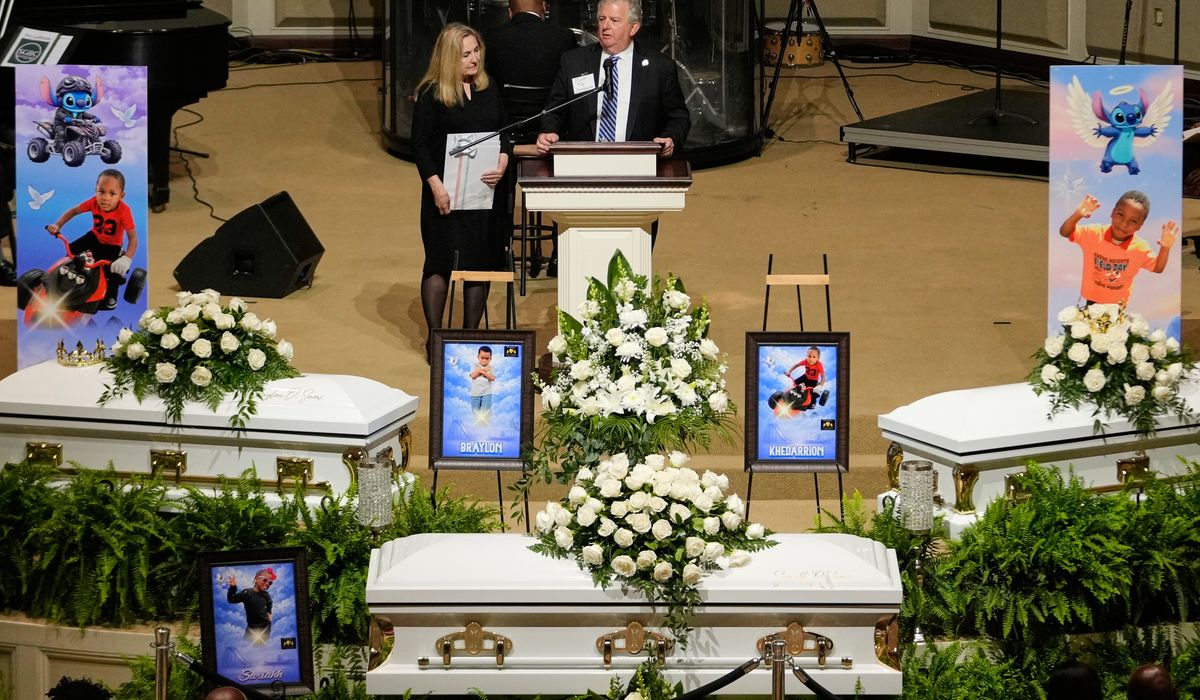
Community leaders and elected officials gathered to mourn eight children killed in a mass shooting in Louisiana, offering prayers, tributes, and calls for healing amid shock and grief.
Faith leaders and politicians paid tribute at a funeral Saturday to eight children who were killed in a mass shooting last month in Louisiana. The scene brought together people from across the region who wanted to honor the lives lost and stand beside the families left behind. The tone was solemn but determined, with clergy and civic figures taking turns to remember the children as individuals with names, routines, and futures now cut short.
The memorial service mixed scripture, silence, and personal stories. Speakers described everyday moments that made the children who they were, from schoolroom laughs to family dinners, and those memories filled the room more than political arguments did. Attendees leaned on ritual and shared grief to keep the focus on the children rather than the chaos that caused their deaths.
Local officials who attended spoke in measured terms, acknowledging the limits of their words in the face of such loss. They offered condolences and pledged to support the grieving families with counseling resources and practical help. The presence of politicians underscored how the tragedy reached beyond private sorrow into public concern about community safety and support systems.
Faith leaders framed the funeral as both an act of mourning and an expression of solidarity. Prayers and scripture passages were used to console the bereaved and to call for resilience among a shaken population. People spoke of the need to rebuild trust and protect the most vulnerable, especially children, while trying to make sense of a violent act that has left many questions unanswered.
Community volunteers and neighbors stepped forward to help with immediate needs, and the funeral itself became a focal point for collective care. Meals, rides, and offers of childcare multiplied in the days after the service, showing how ordinary acts of kindness can ease practical burdens. Those gestures also reinforced a simple message: the community will not abandon the families facing unimaginable loss.
Among the conversations at the event were quiet mentions of longer-term responses, such as improving mental health access and strengthening school safety measures. Attendees debated what steps could realistically reduce the chance of another such event, balancing urgency with the recognition that quick fixes are rare. Even so, people agreed on one immediate priority: ensuring that support systems are in place for children and families dealing with trauma.
Grief also brought questions about how public officials and institutions respond after violent events. Many in the room expected investigations to continue and for law enforcement to provide updates as they are able. Meanwhile, community leaders insisted that accountability should go hand in hand with compassion, so that policy responses and social support move forward together.
Practical concerns were addressed alongside spiritual comfort; counselors were available at the service and information was shared about ongoing aid. Schools coordinated with social services to identify students who might need extra attention, and local nonprofits mobilized to provide resources where needed. Those efforts aimed to stabilize daily life for friends and relatives still reeling from the tragedy.
Voices of family members resonated through the room, offering brief memories that put names to the headline figures. Those remembrances made clear that the eight children were not statistics but loved individuals with hopes, humor, and futures that mattered to many. Attendees carried those stories out of the sanctuary, determined to keep the children’s lives central to any response the community pursues.
As the funeral closed, people lingered in small clusters, sharing hugs, examining photos, and planning next steps for support. The mood shifted from formal ritual into hands-on care, with volunteers lining up to coordinate assistance and clergy organizing follow-up visits. In a city stunned by violence, the service served as both a goodbye and a point of departure for collective efforts to help the families and protect other children from similar harm.

