

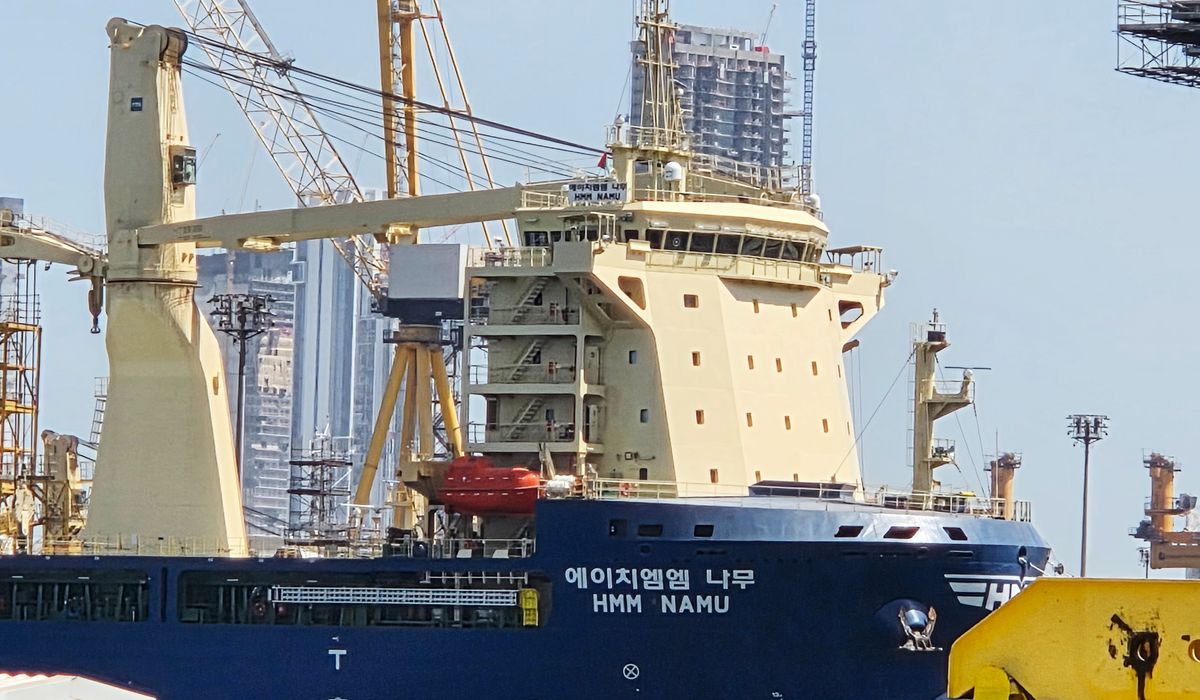
New images and technical data released about hull damage to a South Korean-operated tanker from May 4 in the Persian Gulf show patterns consistent with strikes by two unmanned aerial vehicles, and analysts say the evidence points toward Iranian involvement.
The newly released visual and sensor data describe punctures and scraped metal on the tanker’s hull that line up with small, high-velocity impact signatures rather than with a single large explosion or a mine. Photographs and telemetry shared with analysts reveal two discrete strike points along the vessel’s starboard side, and the configuration suggests air-launched weapons rather than underwater devices. Officials reviewing the material note timing, angle and fragmentation consistent with unmanned aerial vehicles delivering shaped charges or small guided munitions.
Open-source analysts and naval experts who viewed the images flagged the coordination implied by two simultaneous impacts, a tactic Iran has used before to complicate interdiction and attribution. The strike profile and the flight paths reconstructed from nearby sensor data were described as matching capabilities familiar from Iran-backed drone units. Observers stressed the operational pattern fits recent Iranian maritime harassment campaigns, which have aimed at deterring freedom of navigation and pressuring regional rivals.
South Korea’s involvement as the tanker operator adds a diplomatic layer that complicates regional responses, since the vessel was not a U.S.-flagged ship but the incident occurred in a strategically sensitive waterway. Seoul has moved cautiously, balancing commercial ties and energy security with its need to safeguard ships and crew in volatile waters. The data release appears intended to push the issue into public view, prompting allied governments to take note while officials parse legal and military options for deterrence and protection.
Military analysts point out that twin-drone strikes are tactically attractive because they force defenders to split their attention and resources, raising the odds one strike will succeed. The hull damage images show localized breaches and burn patterns that fit small explosive charges mounted on drones, rather than blast effects from a torpedo or large missile. That distinction matters for both attribution and response planning, since air-launched tactics call for different intercept and surveillance postures than sea mines or submarines.
Commercial shipping insurers and private maritime security firms have already reacted to the episode, adjusting risk ratings and routing advice across parts of the Persian Gulf and nearby choke points. Market consequences can be swift: higher premiums, altered tracks for tankers and a general chilling of maritime traffic that raises costs for energy buyers and sellers. For operators, image-based forensic work like this shapes decisions on escorts, speed and port calls until real deterrence measures are clear.
From a policy perspective, the incident reinforces long-standing Republican concerns about confronting Tehran’s disruptive behavior with credible, tangible deterrence rather than relying solely on diplomacy or ambiguous rebukes. The pattern of harassment, when demonstrated by concrete forensic evidence, argues for tighter surveillance, faster attribution and visible consequences to change calculations. Lawmakers and defense planners will likely point to the data as justification for stepped-up cooperation with regional partners to protect shipping lanes and to impose costs on actors who weaponize drones at sea.
Investigators will continue to comb imagery, signal intercepts and any recovered fragments to build a chain of evidence that can withstand legal and diplomatic scrutiny. Meanwhile, commercial operators and allied navies are watching for whether these releases spur a stronger, coordinated posture in the Gulf or simply add another public data point to a long record of maritime incidents. The new material sharpens the debate over how to deter such attacks and demonstrates the role of imagery and open-source analysis in modern attribution.

