

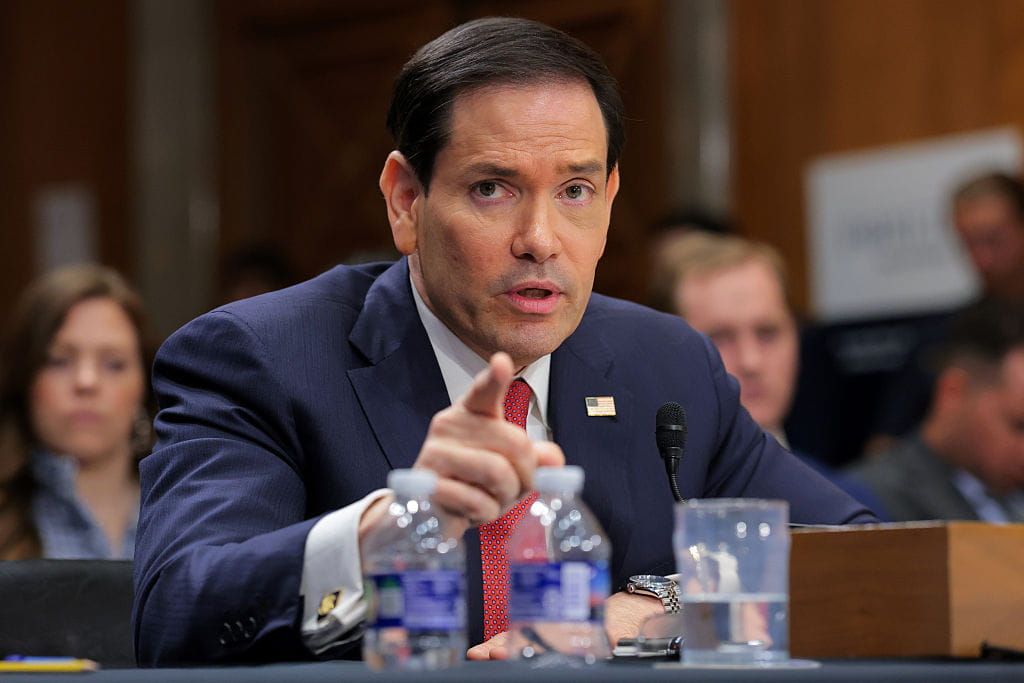
Secretary of State Marco Rubio faced Congress to lay out a foreign policy agenda focused on the rising instability in the Middle East and the dangers posed by Iran, and he pushed back when members of the other party pursued trivial lines of questioning.
Marco Rubio appeared before lawmakers to explain a Republican plan for a firmer U.S. posture on global threats, with Iran at the top of the list. He framed the discussion in terms of deterrence, protecting American forces, and supporting regional partners. The hearing shifted between serious strategic debate and partisan theater.
Rubio did not shy from calling out what he saw as misplaced priorities from some Democrats, who steered portions of the hearing toward the president’s sleep schedule and even his shoes. “Rubio strikes back at unserious questions on sleep and shoes.” That line captured the contrast between substantive national security concerns and the political gotcha tactics on display that day.
The Secretary emphasized that Iran remains a central threat to American interests, using proxies and missile programs to undermine stability across the region. He argued for tightening economic pressure and expanding intelligence partnerships to blunt Tehran’s reach. Rubio stressed that deterrence requires both clear policy signals and credible capabilities.
On the war in Iran, Rubio outlined a pragmatic stance that rejects both isolation and unchecked escalation. He said policymakers must weigh options that protect civilians while denying Iran a path to greater power projection. The Republican view he presented favors calibrated responses that impose costs on Tehran without dragging the United States into open-ended occupations.
Rubio also pushed back against narratives that portray firmness as reckless, insisting that strength is the best path to avoid larger conflicts. He pointed to the need for robust alliances and a readiness to defend U.S. interests, arguing that deterrence prevents wars from starting in the first place. The hearing served as a reminder that foreign policy is ultimately about choices between risks, not a search for political theater.
When Democrats attempted to frame the debate around optics and personal critiques, Rubio redirected attention to tangible policy outcomes, such as missile interdiction, sanctions enforcement, and battlefield intelligence sharing. He urged Congress to fund capabilities that let the military and diplomats act in concert. The underlying message was that partisanship cannot be an excuse for failing to equip the country to face real dangers.
Outside the room, the political calculation was visible: some lawmakers used the hearing to score points and headline-grab, while others pressed for specifics on troop posture and aid to partners. Rubio’s testimony aimed to put those specifics on the record and force a vote on a coherent strategy. He challenged colleagues to measure their questions by their contribution to national security policy rather than their potential for viral clips.
The hearing left clear choices for Congress: double down on deterrence and targeted pressure, or risk inviting miscalculation by Tehran and its proxies. Rubio advocated plans that combine diplomacy with leverage, insisting that a weak or confused American response would encourage broader aggression. For Republicans watching, his testimony was a call to prioritize durable policy over performative inquiry.
Public attention may fixate on the more theatrical moments, but the stakes Rubio raised are sober and enduring. Lawmakers must decide how to translate those stakes into budgets, authorizations, and oversight. The hearing was a test of whether Washington will rise to meet the threats or continue to prefer sound bites over strategy.

