

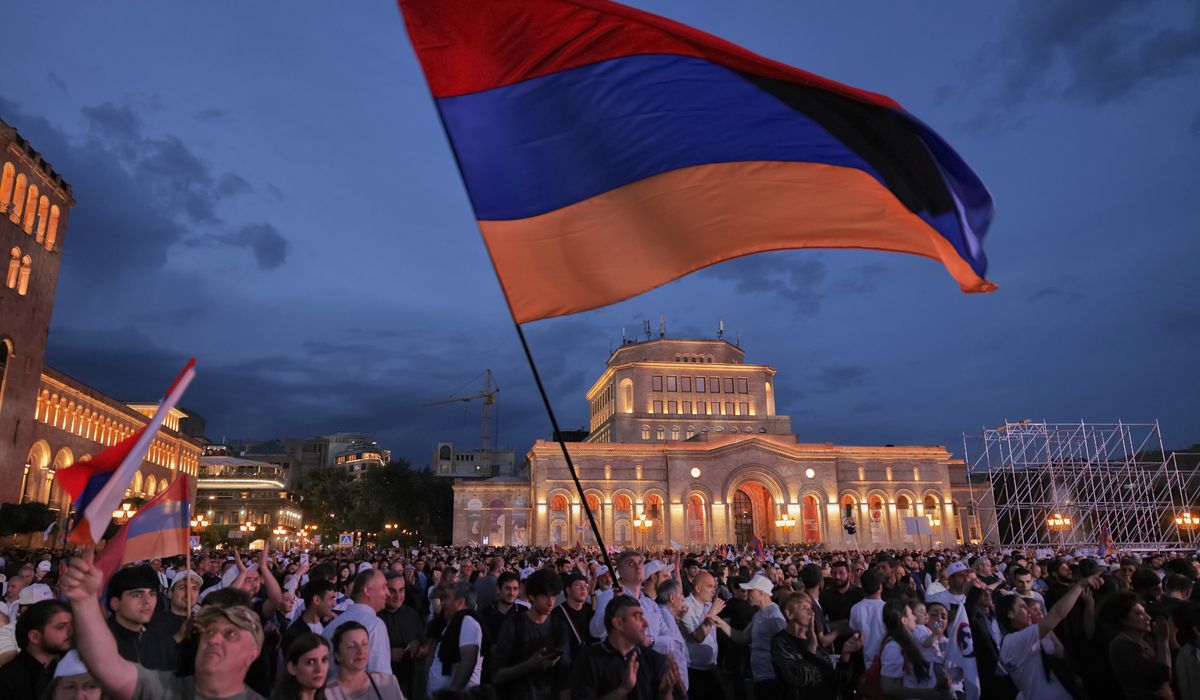
Armenia’s parliamentary elections Sunday will be a vote on its geopolitical future as incumbent Prime Minister Nikol Pashinyan seeks closer relations with the European Union and the United States.
The vote is being framed as a choice about alliances, and that framing matters. Voters are weighing whether to lean toward deeper ties with Western institutions or to preserve the old balance with Russia that has long defined regional security. From a Republican perspective, the question is straightforward: which path best secures Armenia’s sovereignty and the safety of its people.
Nikol Pashinyan has pushed a clear agenda favoring closer relations with the European Union and the United States. That pivot promises stronger economic links, potential investment, and diplomatic backing, but it also raises immediate security concerns. Washington and Brussels can offer political support and sanctions leverage, yet neither has the same military footprint in the South Caucasus that Russia maintains.
Russia remains a major player in the neighborhood with long-standing security arrangements and influence inside Armenia. For many Armenians, Moscow represents a known quantity when it comes to peacekeepers, arms, and a regional counterweight to neighbors. Republicans who favor a robust U.S. foreign policy see this as an opportunity to expand American influence, not to abandon Armenia to risky experiments without clear military assurances.
Economic considerations are central, too. Closer ties with the EU and U.S. could open markets, modernize infrastructure, and attract private capital. Those gains, however, will take time and require stable governance and predictable enforcement of contracts and property rights. Republicans typically stress that economic alignment should be paired with tangible security guarantees so reforms are not pursued on the backs of citizens left vulnerable to coercion by hostile neighbors.
Security worries are not hypothetical. Recent border clashes and the unresolved status of territory near Armenia have kept defense on the front pages and in voters’ minds. A pro-Western tilt may improve diplomatic cover, but it will not instantly supply air defenses or soldiers on the ground. From a Republican stance, that means U.S. policy toward Armenia should be pragmatic: bolster Armenia’s defenses while strengthening economic reform and transparency.
Democracy and rule of law are part of the debate, too. Pashinyan rose to power promising democratic change and accountability, a message that resonates with voters tired of corruption. Republicans will applaud transparency and competitive elections, yet they will also demand that democratic gains be matched by effective governance. Strong institutions reduce the chance that any geopolitical realignment becomes a liability instead of an asset.
The diplomatic balancing act will be tricky. Armenia must navigate pressures from Moscow, influence from Tehran to the south, and the ambitions of neighboring states. Republican policy must be clear: support allies who choose freedom and market reforms, and back that support with real tools. That means targeted security assistance, sanctions deterrents, and a visible economic partnership that creates tangible benefits for ordinary Armenians.
Ultimately, the parliamentary vote will shape Armenia’s direction for years to come. Voters are not just picking parties; they are choosing how their country will relate to great powers and regional neighbors. Republicans urge that choice be met with steady American leadership offering both security assistance and a commitment to the kinds of reforms that let Armenia thrive independently.

