

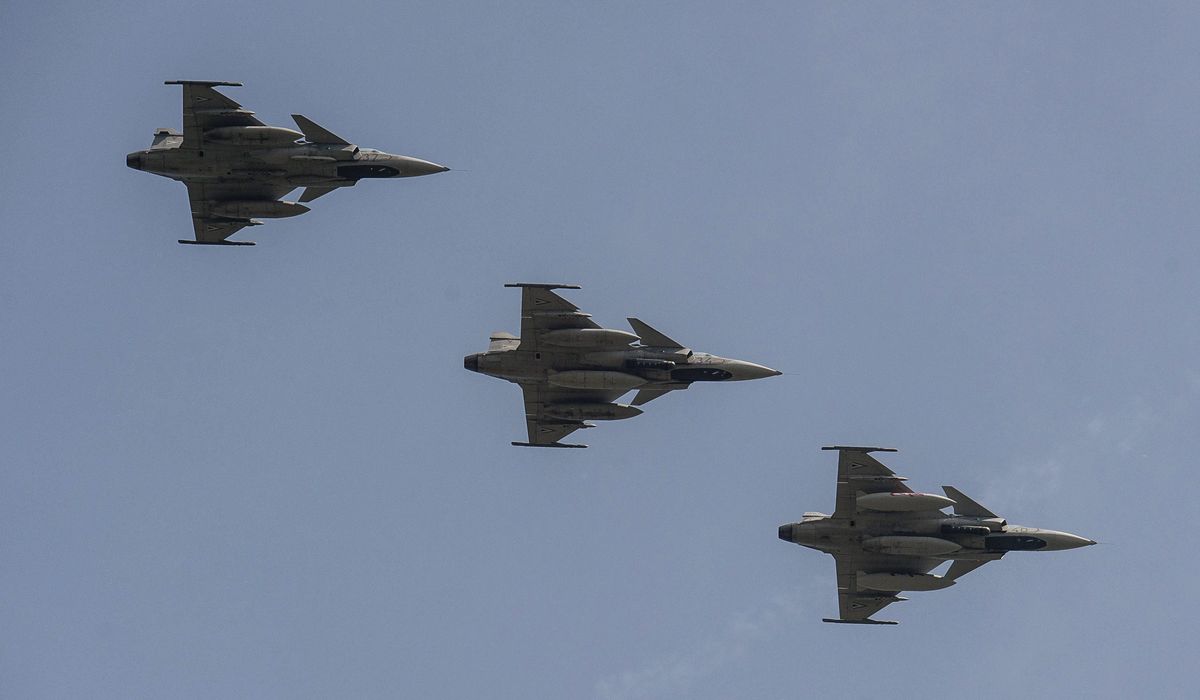
This article profiles a Swedish jet built for highway operations and minimal ground support, and explores how those features could shape air operations and logistics in Ukraine.
A Swedish jet that can take off and land on ordinary highways and be serviced on the ground with a skeleton crew is expected to become the backbone of Ukraine’s air war against Russia. That capability changes the playbook for basing, repair cycles, and force survivability. It also forces planners to rethink how air power is dispersed across a contested landscape. The core promise is flexibility without heavy infrastructure.
Being able to use highways as runways lowers dependence on fixed air bases that are obvious targets. Quick change of location reduces the risk of concentrated strikes and complicates the enemy’s targeting. Dispersal also shortens response times for front-line support when aircraft can operate closer to contested areas. The trade-off is a new set of logistical and command challenges to keep operations coherent.
Servicing aircraft with a skeleton crew on roadside strips shifts maintenance culture toward simplicity and speed. Fewer hands and lighter equipment mean repairs and turnarounds happen faster and with less exposure. That style of support is suited to a fight where infrastructure is scarce or under constant threat. It also demands robust, modular support kits and streamlined routines for routine checks and armament swaps.
Highway operations impose design and operational constraints on both aircraft and ground teams. Planes need durable landing gear, compact support vehicles, and weapons that can be loaded without heavy cranes. Ground teams must train for rapid camouflage, quick-repair techniques, and fast refueling under pressure. These requirements push manufacturers and militaries toward pragmatic, maintainable solutions rather than exotic complexity.
From a survivability standpoint, highway-capable jets benefit from unpredictability. When aircraft can appear at improvised strips, adversaries face a harder time forecasting flight paths and sortie rates. This raises the cost of enemy air defense coverage and forces them to disperse assets. It can also blunt systematic suppression efforts that rely on known base locations.
On the other hand, operating outside established bases brings new vulnerabilities, like limited shelter from artillery and limited options for major repairs. A damaged engine or complex avionics failure still requires hangar facilities and specialized teams. Commanders must balance the tactical advantages of dispersed basing against the strategic risk of cumulative maintenance shortfalls over time. Logistics pipelines must adapt to deliver parts and munitions to improvised locations.
Training shifts as well: pilots and crews need familiarization with short-field techniques and quick-turn operations that differ from standard air base routines. Ground crews must practice fast-arresting measures, emergency recovery, and rapid refueling under austere conditions. Regular drills that simulate highway strip operations will be essential to maintain tempo. Familiarity reduces mistakes when real missions stretch personnel thin.
Procurement decisions are affected because militaries will favor platforms optimized for ease of maintenance and operational flexibility. That can influence future aircraft acquisitions, spare-part inventories, and contractor support contracts. Policymakers and defense planners will weigh the advantages of dispersed operations against long-term sustainment costs. Simple, rugged design often wins in contested environments where complexity becomes a liability.
The introduction of highway-capable jets also shifts how allies coordinate support, from shared maintenance protocols to distributed logistics hubs. Interoperability becomes more important when aircraft operate from unconventional locations and need rapid resupply. Shared standards for munitions, fuel, and repair procedures reduce friction in coalition settings. This means planning at the alliance level as much as at the national level.
In practice, turning highway operations into a reliable backbone requires steady adaptation across maintenance, training, logistics, and command systems. The capability offers a major tactical edge, but it is not a silver bullet; success hinges on disciplined procedures and an evolving support network. As tests and early deployments proceed, lessons learned will shape how widely this model spreads in future conflicts.

