

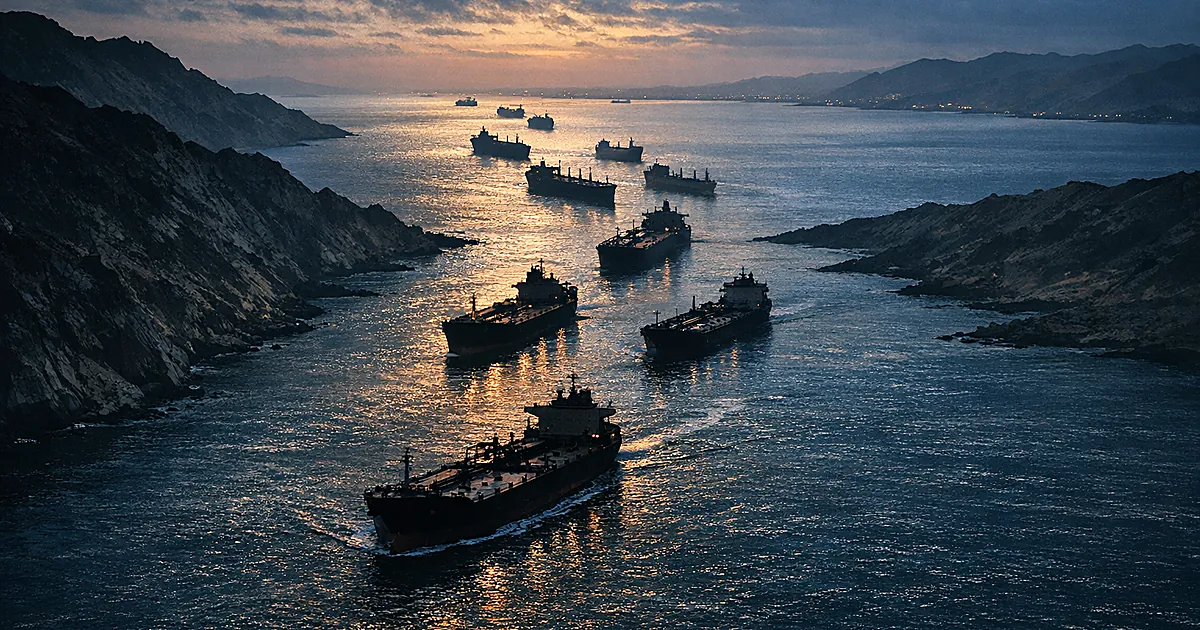
The Trump administration offered Iran access to frozen assets to head off a toll scheme in the Strait of Hormuz, but Tehran refused and publicly asserted control of the waterway.
The administration proposed access to roughly $100 billion in frozen overseas funds, including about $6 billion in Qatar, as part of a deal meant to ease tensions after a memorandum of understanding. Iranian negotiators turned that offer down, and a deputy foreign minister returned from Doha declaring the waterway “under Iran’s command.” The rejection exposed how far apart Washington and Tehran remain on the key global energy chokepoint.
Iran is pressing to charge passage fees through the Strait of Hormuz, a demand the United States and Gulf Arab partners have rejected outright. U.S. envoys and advisers engaged in indirect talks in Qatar to try to bridge the gap, but Tehran chose leverage over immediate economic relief. The posture on the strait has already produced a sharp drop in commercial traffic and rising global anxiety.
Before the conflict began on February 28, more than 100 ships transited the strait daily, carrying roughly one-fifth of the world’s oil supply; by last week that number fell to 75 ships a day, and on Wednesday it dropped to 43. That decline tracks the risks Tehran has signaled, with Iranian forces warning that any vessel outside routes they approve would face an “immediate and powerful” response. Those are not the words of a partner seeking cooperation; they are the words of a regime enforcing a tollbooth at gunpoint.
Iran claims such fees would pay for “maritime security and related services,” but the international community never asked for those services. Tehran hopes the tolls could raise as much as $40 billion a year, providing a major revenue boost for a sanctions-hit economy. The choice to demand payments instead of accepting frozen funds amounts to a strategic bet on coercion over compromise.
Opposition to the toll plan stretches beyond Washington. The International Maritime Organization warned that tolling international straits would set “a dangerous precedent,” and major shipping nations rejected the idea as incompatible with maritime law. As Senator Marco Rubio put it, “It’s an international waterway. No country is allowed to charge tolls or fees on an international waterway. That’s existing international law,” and the United States rejects any reading of the agreement that would permit such charges.
President Trump weighed in directly on his platform: “There will be NO TOLLS in the Hormuz Strait for 60 days during the Cease Fire Period, and there will be NO TOLLS after the 60 day period has expired.” That blunt message underscores an American position unwilling to accept a permanent Iranian claim on a major transit route. The apparent disagreement over a single clause in the memorandum of understanding highlights how fragile any deal with Tehran remains.
Oman offered a possible compromise: a voluntary fund paid by oil producers and shipping companies to cover services without sending money straight to Tehran. Tehran rejected the approach because it would forfeit direct control and revenue, and U.S. officials worried the fund could indirectly benefit the regime. The result left no regional partner willing to endorse Iran’s toll plan and isolated Tehran diplomatically from its Gulf neighbors.
Former Pentagon official Alex Plitsas explained the fallout bluntly: “Iran’s strategy of attacking GCC states as it means to put pressure on the United States absolutely backfired and set relations back with their Gulf neighbors by decades.” That breakdown helped harden a regional coalition against any scheme that hands Tehran leverage over shipping. Isolation limits Tehran’s ability to turn coercion into a lasting economic gain.
The United States offered economic relief but also warned of legal and sanctions risks for companies that pay Iran’s demands. Treasury guidance cautioned that U.S. persons and U.S.-owned or -controlled foreign entities are generally prohibited from transacting with the Government of Iran, and reported payments—sometimes described as a $1-per-barrel fee with some ships paying up to $2 million—could trigger sanctions exposure. That warning aimed to deter private actors from legitimizing Tehran’s extortion.
Tehran has tried to carve out favored partners, naming five “friend” nations for special treatment while threatening others with disruption. Iran’s ambassador to India said, “You can ask the Indian government if we have charged anything up to now.” That public denial clashes with U.S. charges of extortion and with orders to interdict vessels that have paid tolls, revealing the scheme’s political selectivity rather than any neutral service provision.
“Iran is trying to open the strait on its own terms and does not want to relinquish what leverage it has gained.”
That assessment captures the core problem: disruption is cheap, but running legitimate, stable transit requires legitimacy and cooperation Tehran lacks. Sanctions, regional pushback, and international law constrain Iran’s ability to turn coercion into a durable revenue stream. The administration has shown restraint in the past, pausing a planned strike at the request of Gulf allies, but patience has limits when Tehran rejects substantive offers.
The Doha talks ended without any public breakthrough beyond Tehran’s defiant position, leaving open questions about authority for the asset offer and what, if anything, Iran might accept short of full toll control. The numbers are stark: a halted flow of ships, billions offered and refused, and a regime betting that control of the strait will force the world to pay. Iran chose a tollbooth over a path to relief, and the consequences for commerce and security will play out in real costs for consumers and allies alike.

