

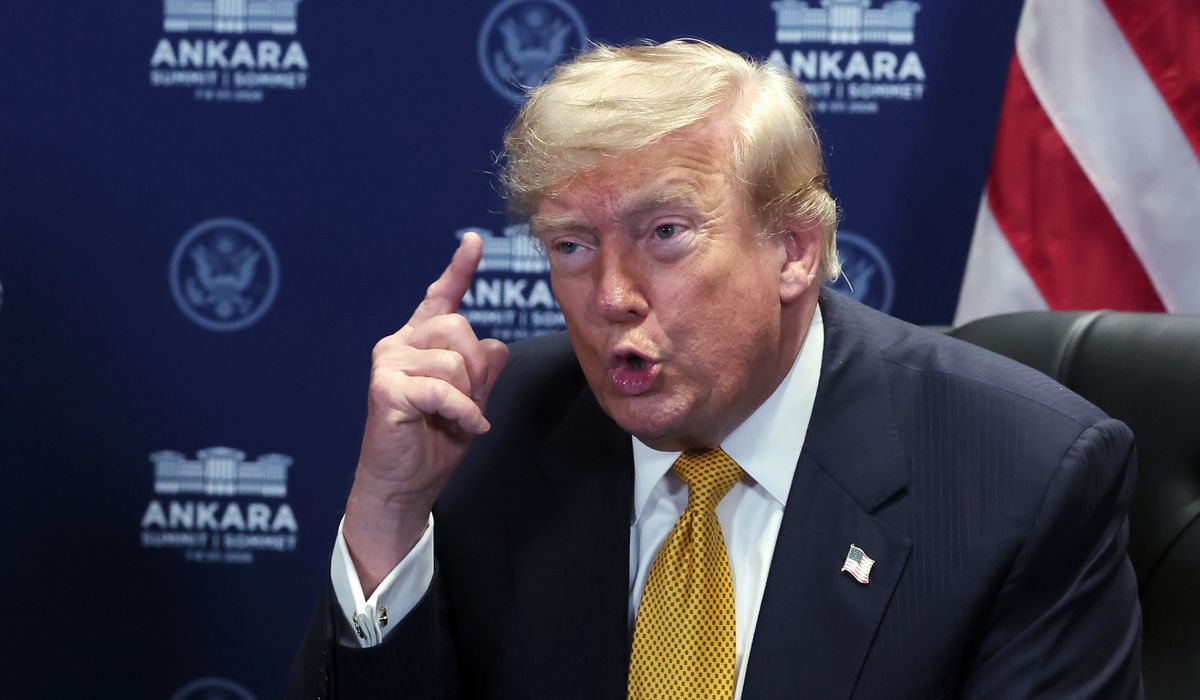
President Trump opened the second day of the NATO summit Wednesday by threatening to cut off trade with Spain over what he called lackluster defense spending and its refusal to cooperate on Iran, setting a confrontational tone among allies.
That statement landed early and deliberately, the kind of blunt leverage Trump favors when allies fall short of shared commitments. He framed trade as a tool to force better burden sharing and more constructive stances on Iran, signaling that economic ties can hinge on defense and diplomatic cooperation. The approach was unmistakably transactional and unapologetic.
At the center is a long-running Republican critique of NATO: too many members expect American security guarantees without matching spending. Trump made that critique concrete by linking Spain’s spending and Iran policy to potential trade consequences, pushing the idea that commitments need consequences. It’s a simple bargaining posture meant to shake complacency.
For Republicans who back a firmer U.S. posture, tying trade to allied behavior is logical and effective. If allies know access to U.S. markets depends on standing with Washington on defense and Iran, they have a stronger incentive to meet NATO targets and coordinate foreign policy. That pressure can produce faster outcomes than quiet diplomacy alone.
There are risks, of course: using tariffs or trade limits can spark tit-for-tat measures and disrupt global supply chains that benefit American workers. Still, the Trump view prioritizes strategic clarity over the possibility of temporary economic friction, arguing that a secure alliance ultimately supports a healthier economy. Democrats and career diplomats may call it blunt, but the goal is to secure results.
Spain’s posture on Iran and its defense budgets became the focal point because those are easily communicated grievances during a packed summit. Public pressure and headlines force other capitals to react, either by raising defense spending or by recalibrating their Iran policies to avoid economic fallout. In NATO politics, reputation and optics matter, and Trump leveraged both.
How NATO responds will test the alliance’s cohesion. Some members will move to placate Washington with promises and incremental funding increases, while others may balk at linking trade and security so explicitly. The next days of the summit will reveal whether threats translate into tangible policy shifts or simply generate diplomatic resentment.
From a Republican perspective, electing to use every available lever makes sense when decades of uneven burden sharing have left the U.S. bearing a disproportionate load. Rather than subsidizing weaker commitments, the strategy pushes for fairness and reciprocity with allies who benefit from American security guarantees. That argument resonates with voters tired of open-ended obligations.
On Iran specifically, coordination among NATO partners is valuable because a fractured response weakens deterrence and emboldens adversaries. Threatening trade is intended to produce a unified front, or at least clearer calculations from nations that might otherwise avoid tough choices. The tactic reflects a belief that national interests are best protected by leveraging American economic influence.
Whatever the outcome, Trump’s move reshapes the summit’s conversation from abstract commitments to concrete consequences, forcing members to decide whether they will absorb short-term diplomatic heat or alter long-term policies. Allies watching closely will weigh the costs of continuing current practices against the pressures now placed on defense budgets and Iran cooperation. The stakes are ultimately about alliance credibility and who pays for it.

