

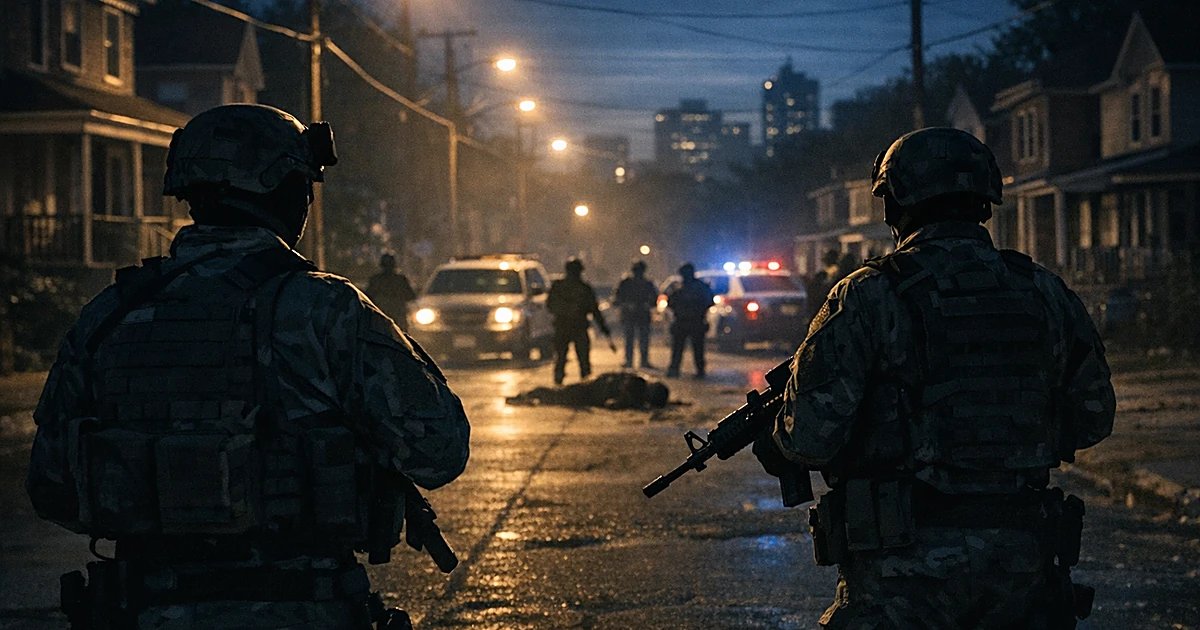
Two Tennessee National Guard troops shot and killed a 20-year-old man during a predawn foot chase in Memphis, prompting a Tennessee Bureau of Investigation probe and renewed debate over the federal-state Memphis Safe Task Force and its rules of engagement.
Early Sunday around 4 a.m., Tennessee Bureau of Investigation officials say two National Guard troops fired during a foot chase that left 20-year-old Tyrin Johnson dead. Memphis police reported that officers and Guardsmen joined a response to reports of a man with a handgun who had fired shots in the area, and that Johnson turned his weapon toward the guardsmen before they fired.
The TBI opened a formal investigation and has not publicly identified the two guardsmen involved. Details about how the encounter escalated remain limited, and the National Guard has been quiet publicly while the probe proceeds.
The shooting happened while the Memphis Safe Task Force is active in the city, a joint federal, state, and local initiative launched last September and highlighted by the Trump administration. Roughly 1,472 National Guardsmen remain deployed in Memphis under Title 32 orders, meaning the governor controls their movements while the federal government covers the cost.
Tennessee Gov. Bill Lee supported sending troops, while some local leaders pushed back and litigated the deployment in court. Memphis Mayor Paul Young, skeptical of the guard presence, offered a brief public statement: “The incident is under investigation by the Tennessee Bureau of Investigation, and we will allow that process to conclude before making additional comments.”
State Sen. London Lamar pressed for a quick, transparent inquiry and more clarity about when the National Guard can use lethal force. She stressed what many in the community want to know: when and how troops are authorized to fire in encounters like this one.
“I think that a lot of people want to know what actually happened to cause the National Guard to use their deadly force.”
Lamar also argued the deployment was imposed from above rather than requested locally, saying the national guard was a state and federal decision, not a local one. She warned the public was told the influx of authorities would curb crime, yet violent incidents continue.
“I think people need to realize the local authorities didn’t ask for the national guard to come. It was a state decision by our governor and President Trump, and so it was sold to everyone that when all of these authorities come into our city, that crime will cease,” she said. “And unfortunately, crime is still happening.”
Those concerns sit next to data that complicate the narrative: citywide figures show an almost 40 percent year-over-year reduction in crime and a nearly 35 percent drop downtown, while the task force reported more than 10,000 arrests and 1,708 firearms seized as of June 10. Whether one shooting undercuts those gains is a separate, narrower question from whether the mission has moved the needle.
The ACLU of Tennessee called for a “full, transparent, and independent accounting of exactly what happened when Tennessee National Guard troops opened fire on a civilian” and pointed to two earlier fatal encounters involving federal agents that remain under TBI review. ACLU leadership argued the presence of outside officers can erode accountability and community trust.
“People who are not from Memphis are coming in, don’t know the community, don’t have any ties or any accountability to this community, and are just being allowed to exert power in a way that really destabilizes the community and really undermines daily life.”
Federal law enforcement shootings are not confined to Memphis; armed confrontations carry risk for any agency operating in dangerous conditions. The sequence of events here — a foot chase, a reportedly armed suspect, a claim that the suspect turned a weapon toward troops — raises standard tactical and legal questions that investigators will address.
The broader deployment strategy is national in scope: about 120 Guard troops serve in New Orleans and roughly 5,000 Guard troops have been stationed in Washington, D.C., many from Republican-led states. Analysts have offered mixed findings on whether such deployments affect violent crime rates, but the Memphis numbers cited by supporters are substantial and politically salient.
The TBI investigation must establish key facts: did Johnson fire at the guardsmen or merely point his weapon; what rules of engagement applied; and were there independent witnesses beyond participants and officers on scene. Those factual determinations will decide whether this was a lawful, tragic use of force or something that requires accountability.
Johnson’s death is the third fatal encounter linked to task force activity since May, though two earlier incidents involved federal agents rather than Guard members and remain under review. The presence of outside forces in a city with a long history of violent crime creates friction; distinguishing systemic issues from the inherent hazards of aggressive enforcement is precisely the job of investigators.
What Memphis needs now is a clear, timely investigation that answers the outstanding questions without turning every use of force into a political cudgel. The task force’s results and the rules governing force must both be part of a public discussion grounded in facts rather than assumptions.

