

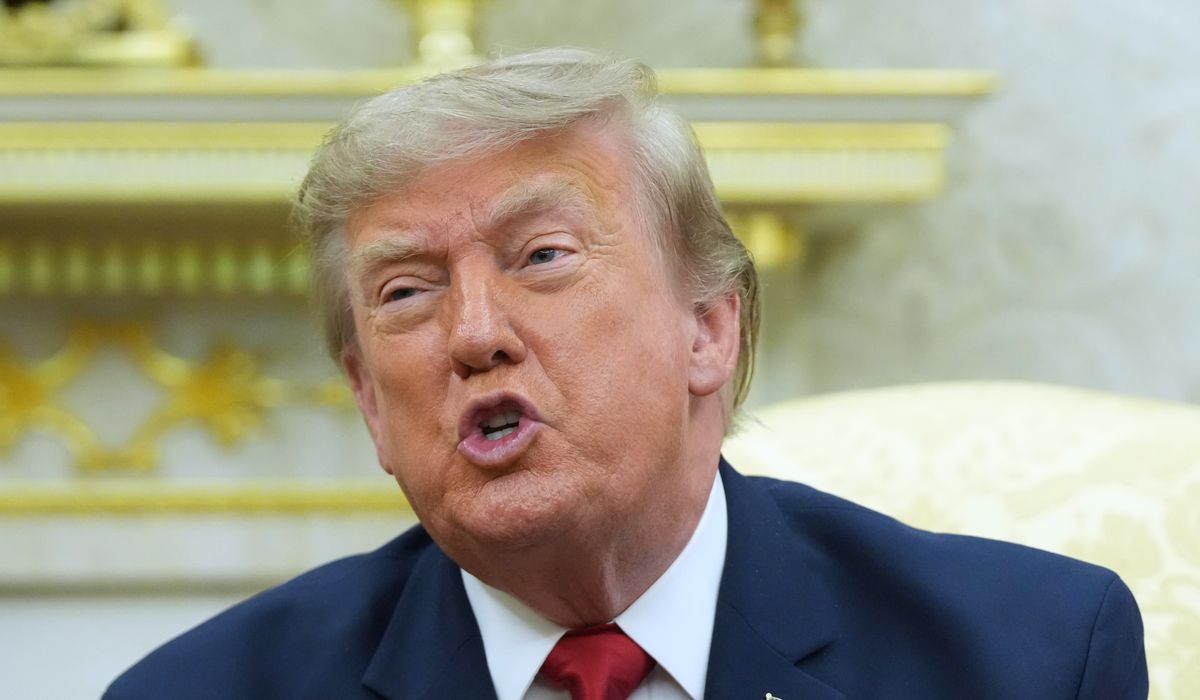
President Donald Trump has said Immigration and Customs Enforcement should keep doing traffic stops after recent fatal shootings, a stance that appears to clash with a new directive to halt those stops and has reignited a debate over enforcement priorities and public safety.
Trump’s comment lands in the middle of a tense policy debate: after several fatal shootings, the president urged that ICE continue traffic stops, even though officials rolled out guidance to pause them. That split between a commander in chief’s direction and a fresh internal policy creates immediate questions for enforcement teams on the ground. The tension is clear and it matters for how agencies operate day to day.
ICE has long used traffic stops as one of many tools to find immigration violators, and supporters argue they are effective in protecting communities and removing criminal elements. When an agency is pulled back from routine enforcement, gaps can appear that bad actors exploit, and families pay the price. Those concerned with public safety see this as a basic tradeoff: enforcement actions help prevent further tragedies.
Stopping traffic stops as a blanket policy can send mixed signals to agents who are trying to follow both the law and leadership guidance, and that confusion erodes morale and effectiveness. Clear rules are essential for officers making split-second decisions on the road, and a directive to halt a common enforcement tactic must come with alternative plans. Without alternatives, the pause looks less like careful reform and more like retreat.
From a conservative viewpoint, the priority is straightforward: protect citizens and back the people who keep streets and neighborhoods safe. That means practical, predictable enforcement that focuses on criminal actors and respects constitutional checks. Public safety and rule of law should be the measuring stick for any change in enforcement practice, not political theater or symbolic gestures.
At the same time, reliable oversight is important so that traffic stops do not become an unchecked tool of abuse. Republicans who support law and order also insist on accountability and clear parameters to prevent profiling and protect civil liberties. Targeted enforcement paired with transparent oversight preserves both safety and individual rights, and it restores public trust in federal actions.
Policy inconsistency can also play into politics, where opponents weaponize confusion and supporters demand clarity. When leaders offer conflicting signals, local law enforcement and federal agents bear the brunt of operational uncertainty. That tension makes it harder to build the kind of coordinated approach that actually reduces violence and removes dangerous offenders from the streets.
Trump’s statement serves as a directional call to keep enforcement tools available, and many on the right will see that as a necessary correction to any approach perceived as soft on crime. It’s a reminder that for voters who prioritize safety and order, practical enforcement measures are nonnegotiable. Officials should prioritize strategies that demonstrably reduce risk and bring swift, lawful consequences for violent behavior.
The path forward should be simple: issue clear, consistent guidance that balances enforcement with safeguards, then measure results and adjust based on outcomes. Agencies must be able to protect communities without sacrificing civil liberties, and leaders should give them the tools and direction needed to do that work. The debate sparked by a pause in traffic stops and the president’s opposing instruction is far from settled, and implementation will reveal which approach better protects Americans.


1 Comment
Two things for innocent people to keep from getting killed or injured in any ICE operation: 1) Don’t hang out with illegals, especially violent illegals. 2) Don’t involve yourself in ICE or any other law enforcement operations. I know, that’s too much common sense for leftists or other illegals to understand.