

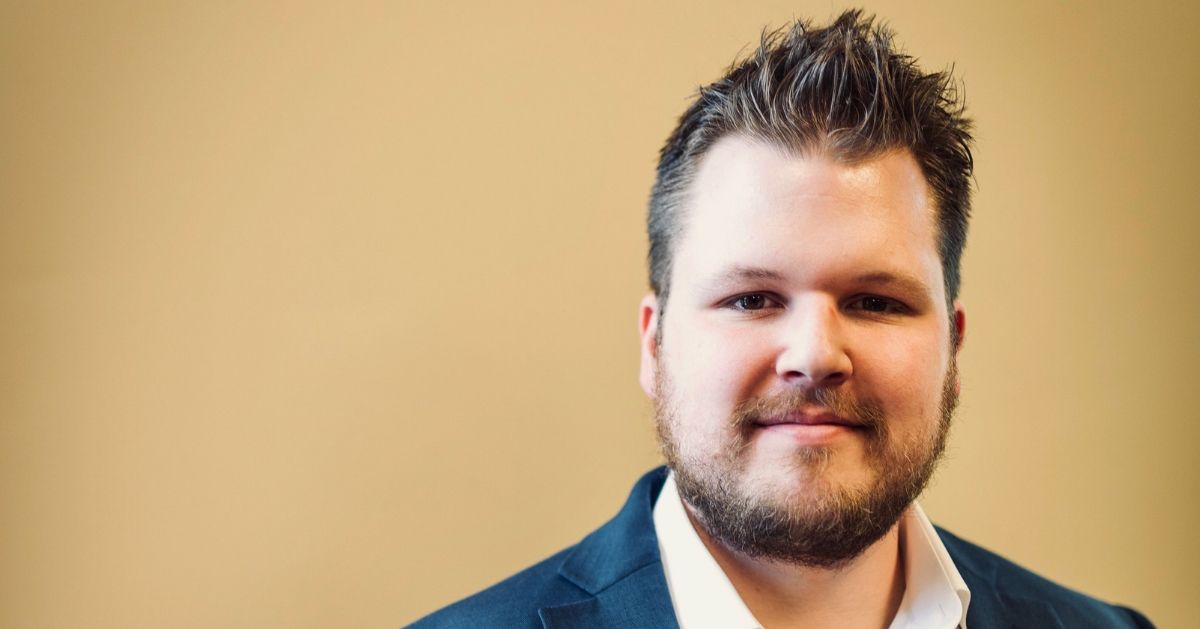
A close look at Abdul El-Sayed’s Michigan Senate bid, examining his self-presentation, his network of supporters and donors, and the controversies shaping the primary contest.
Abdul El-Sayed presents himself as a regular Michigan doctor who wants money out of politics, saying “I am not somebody who is a socialist.” He markets himself as a sensible alternative eight days before the August 4 primary, a man of the people running against the machine.
But donors, friends, family, and his own public statements sketch a different picture—one that has drawn heavy outside spending and sharp scrutiny. A pro-Israel group is spending nearly $30 million against him in what has become the group’s largest bet on a single race ever, and that spending is driving questions voters should hear.
The race is tight, with the RealClearPolitics average showing Representative Haley Stevens ahead, 45 percent to 41 percent, a margin narrow enough to put Michigan’s Senate seat in play. That proximity helps explain why organizing and money have surged into the state from national groups on both the left and the right.
El-Sayed insists he is no socialist, telling CNN, “I am not somebody who is a socialist. I believe in capitalism, I just believe that capitalism has to be regulated.” Yet local socialist organizers have billed him as “a longtime friend of Detroit DSA” after he headlined their 2019 dinner and posed with Representative Rashida Tlaib, and he later headlined another fundraiser that raised $10,000 for the chapter.
The national Democratic Socialists of America have shifted organizers and money into Michigan to back him, and high-profile progressive figures have endorsed him. Alexandria Ocasio-Cortez and Bernie Sanders have publicly supported his bid, and one left-wing host dubbed the moment “It’s DSA summer.”
El-Sayed frames his message around inequality, asking why “we have a trillionaire when the rest of us can barely afford groceries or healthcare.” That rhetoric clashes with his personal display of luxury: campaign footage this year shows him wearing a $15,000 Rolex-style diver and a $10,000 Omega Speedmaster, items detailed publicly piece by piece.
He has criticized doctors who refuse Medicaid patients as treating people like a “half citizen,” while his wife runs a cash-only psychiatry practice that does not accept Medicaid. Public filings and a partial tax release place El-Sayed among the top one percent of Michigan earners, a fact that complicates his populist pitch.
On national security and political violence, El-Sayed’s language has raised alarms. At a 2025 campaign event he asked, “What happens when people are in pain?” and described attackers as people who must “feel” a “lack of agency” to do “something so insane.” Those comments have been seized on by critics as minimizing violent acts.
On the twentieth anniversary of September 11, he posted that he mourned “3K lives” lost in New York and then said he would mourn “~1M lives” across three countries, blaming “my country” and calling it “ignorant.” His campaign spokesman insists he “has always unequivocally condemned” the attacks, but the deleted posts remain part of the record.
El-Sayed often routes policy debates back to Israel, and at a July primary debate he blamed high gas prices and American foreign policy on the Jewish state, saying, “There is one man who’s been wanting this war fought,” and identifying “the prime minister of Israel.” When pressed about antisemitism within the Democratic Party, he pivoted to accusing Israel of “apartheid and genocide” and told the debate stage, “If you want your politics dictated to you by AIPAC or Chuck Schumer, then I’m not your guy.”
His campaign promise to take money out of politics sits oddly next to his largest outside support. Tayeb Jukaku, his father-in-law, has given $300,000 this year to Fighting for Michigan, the super PAC boosting El-Sayed. Jukaku helps lead the Islamic Society of North America, an organization federal prosecutors once named an unindicted co-conspirator in the Holy Land Foundation case that involved $12 million sent to Hamas.
Representative Haley Stevens called attention to that relationship onstage, saying, “He’s great at covering up that his father-in-law is running his super PAC.” The candidate has declined to lean into that explanation publicly, and his opponents have made the donor tie a central point of attack.
Radical views in his family further complicate the picture. His sister, Eman Abdelhadi, has written about America’s “transition out of capitalism to a stateless, communized society” and campaigns openly to “abolish the police.” She was charged with felony aggravated battery after an incident at an anti-ICE protest and called herself “a proud little sister” when he launched his campaign; she appears absent from his warm, family-focused ads.
The left answers these details as partisan smears or Islamophobia, but the documents and public posts are on the record. When a private strategy call leaked, El-Sayed labeled the outlet “rightwing” and said it “may have illegally and unethically obtained” the audio, calling it a “distraction,” while his campaign also used the term “diversion” to describe the leak.
Michigan voters will pick their nominee on August 4, in a state Donald Trump carried in 2024, with organizing and money already reshaping the contest. National progressive groups have moved into Michigan because they see an opportunity, and opponents on multiple fronts are amplifying the records and statements that have followed El-Sayed onto the campaign trail.

