

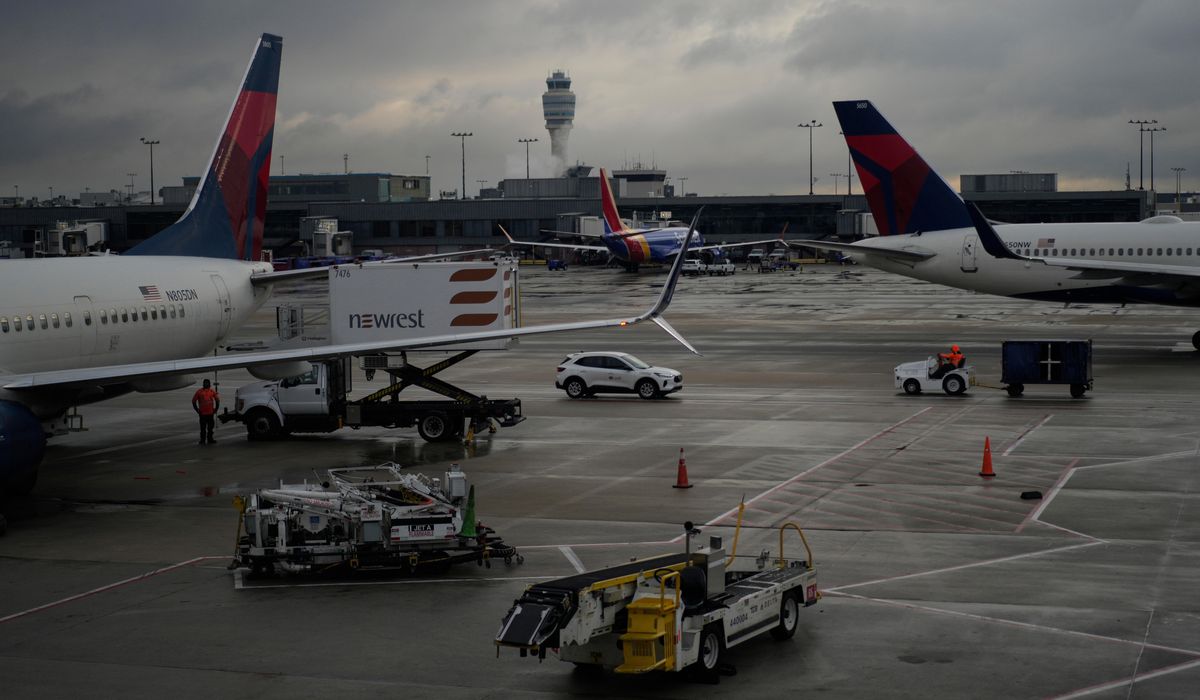
Two Delta Air Lines aircraft triggered anti-collision alarms at Atlanta after one jet on final approach came too close to another that had just departed, prompting an urgent response from pilots and air traffic control and a review by authorities.
The incident unfolded at one of the busiest airports in the country, where tight sequencing and high traffic volume make margins for error small. Passengers and crew reported alarms and a tense few minutes as the two flights took evasive steps guided by on-board systems and instructions from controllers. Airports like Atlanta rely on strict procedures and technology to keep operations moving safely even when something goes wrong.
Anti-collision alarms went off in two Delta Air Lines planes in Atlanta after one plane, trying to land, got too close to the second, which had just taken off.
The alert the crews heard comes from the Traffic Collision Avoidance System, known as TCAS, which is designed to give pilots clear, last-second guidance when aircraft paths converge. TCAS issues both traffic advisories and resolution advisories that tell pilots whether to climb or descend to avoid another airplane, and crews train regularly to follow those commands without hesitation. In this case, the technology did exactly what it was built to do, and the pilots followed procedures to separate the aircraft.
Air traffic controllers at the tower also play a role when events like this occur, monitoring radar and listening to pilot reports to untangle conflicts and restore normal traffic flow. Controllers can issue directives to change speed, altitude, or runway assignments, and they coordinate closely with adjacent facilities to quickly manage any ripple effects. Following the alarms and corrective maneuvers, controllers focused on sequencing aircraft safely and clearing the backlog that built up during the interruption.
Delta Air Lines confirmed the alarm activation and said the flights landed and departed without injury, emphasizing that safety systems and trained crews worked as expected. Airlines generally cooperate with federal investigators when near-miss alerts happen, providing flight data and crew statements to help regulators determine root causes. The Federal Aviation Administration routinely reviews incidents like this to see whether procedure changes, airspace adjustments, or further training are needed to reduce recurrence.
Officials will look at factors such as aircraft speed, approach vectors, runway occupancy timing, and communication logs between pilots and controllers to piece together what led to the proximity. At busy hubs, small deviations in timing can cascade into significant conflicts, which is why strict runway crossing procedures and minimum separation standards exist. Investigations can take time, but they aim to identify precise causes rather than assigning blame before the facts are clear.
For passengers, a near-collision alarm is alarming even when systems work exactly as intended, and airlines are mindful of the need to provide clear information and calm. Flight attendants and crew are trained to manage passenger anxiety and keep people informed while maintaining focus on operational priorities. In the minutes and hours after such events, airlines and airports also review passenger connections and rebookings to limit disruption.
Atlanta’s role as a major connecting hub means any operational hiccup can have outsized effects on schedules across the country, so minimizing recurrence is a high priority for carriers and airport officials. Airports use surveillance data, taxiway/runway scheduling software, and continuous communication with airlines to tighten windows between departures and arrivals without compromising safety. When an incident occurs, those systems and the human operators behind them get scrutinized to prevent a repeat.
Beyond procedural fixes, the industry continuously evaluates technology upgrades such as improved surveillance, automatic dependent surveillance-broadcast data sharing, and runway incursion detection systems to enhance situational awareness. Many of these tools help controllers and pilots see the same operating picture, reducing the chance that two aircraft will converge unexpectedly. Investments in training and tech are ongoing because the cost of complacency is too high in crowded airspace.
Regulators, airlines, and airports will all be watching the investigation outcome to decide whether policy tweaks are necessary, and meanwhile crews will keep relying on TCAS and established protocols to protect passengers. The last line of defense in such moments is the combination of reliable systems and disciplined professional response, which together turn potential disasters into managed incidents. Airports and carriers alike stress that safety remains the guiding priority whenever operations are disrupted.

