

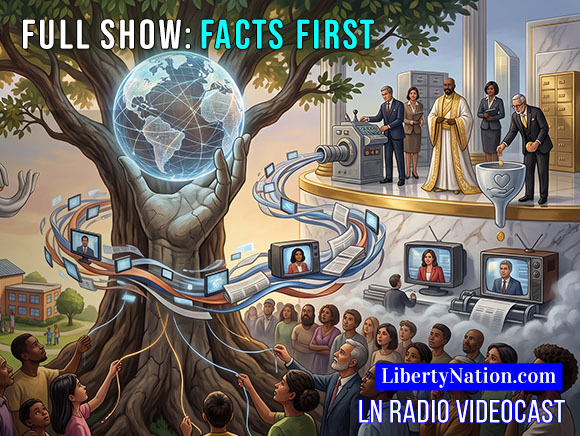
Liberty Nation’s LN Radio episode pulls back the curtain on a media trust crisis, arguing that mainstream outlets and billionaire-funded initiatives prop up predictable narratives while failing to earn genuine public confidence.
This episode of Liberty Nation News points a finger at entrenched media incentives and philanthropic efforts that promise reform but deliver spin. It treats the trust problem as structural, not merely a few bad headlines, and places the debate squarely in the context of who pays and who benefits. The conversation landed on the failures of top-down fixes and the habit of powerful institutions protecting their image.
Reporters and editors face career pressures to align with prevailing narratives, which makes honest mistakes less likely to see daylight and independent angles less likely to get space. When outlets chase clicks, influence, and government access, the result is predictable coverage that serves elites more than readers. That kind of media environment erodes confidence even among people who still want reliable information.
Billionaire philanthropy has thrown big money at trust-building schemes, sponsoring research centers, training programs, and so-called independent projects with flashy names. Those programs often come with strings, explicit or implied, and they rarely change the incentives that push reporters toward groupthink. Money can create the appearance of reform without fixing the root cause: ownership concentration and editorial dependence on elite networks.
Consolidation makes this worse, because a smaller number of owners means fewer editorial philosophies and more pressure to toe a single line. Fact-checking outfits and content partnerships can sound like safeguards, but they also become gatekeepers when funded or shaped by the same players who benefit from controlling the story. Transparency about funding and influence is a start, but it must be paired with structural changes if trust is to be rebuilt.
The consequences of doing nothing are obvious: citizens grow cynical, turnout and engagement shift, and political debates degrade into shouting matches rather than reasoned contests of ideas. Distrust funnels into tribalism, and when the public suspects a coordinated message machine, they look for alternative sources that are often worse and less reliable. That cycle ultimately punishes the kind of civic life a free society needs.
Plain moments from recent public hearings underline the gap between rhetoric and responsibility, where institutional phrases become shields rather than explanations. One of the sharp lines heard in other coverage captured that disconnect perfectly: “The Science” pleaded the Fifth. That phrase has become shorthand for a larger problem—when institutions answer with slogans instead of specifics, they leave citizens with more questions than clarity.
A Republican perspective here is clear: reform should strip away elite protection and reward competition, transparency, and accountability. Supporters of a free press should favor local ownership, diverse entry points, and clearer disclosures about funding sources instead of centralized, donor-driven labs that manufacture consent. Real trust comes from a marketplace of ideas where reputations are built on consistency and facts, not on foundations that buy influence.
Fixing the trust deficit will be messy and will require people inside and outside media to accept trade-offs that powerful institutions resist. That means encouraging new players, resisting the temptation to outsource media oversight to wealthy patrons, and insisting that outlets answer for repeated errors and unexplained omissions. The episode leaves viewers with one durable truth: trust cannot be legislated into existence by donors or declared by pundits; it must be earned through transparency and real accountability.

