

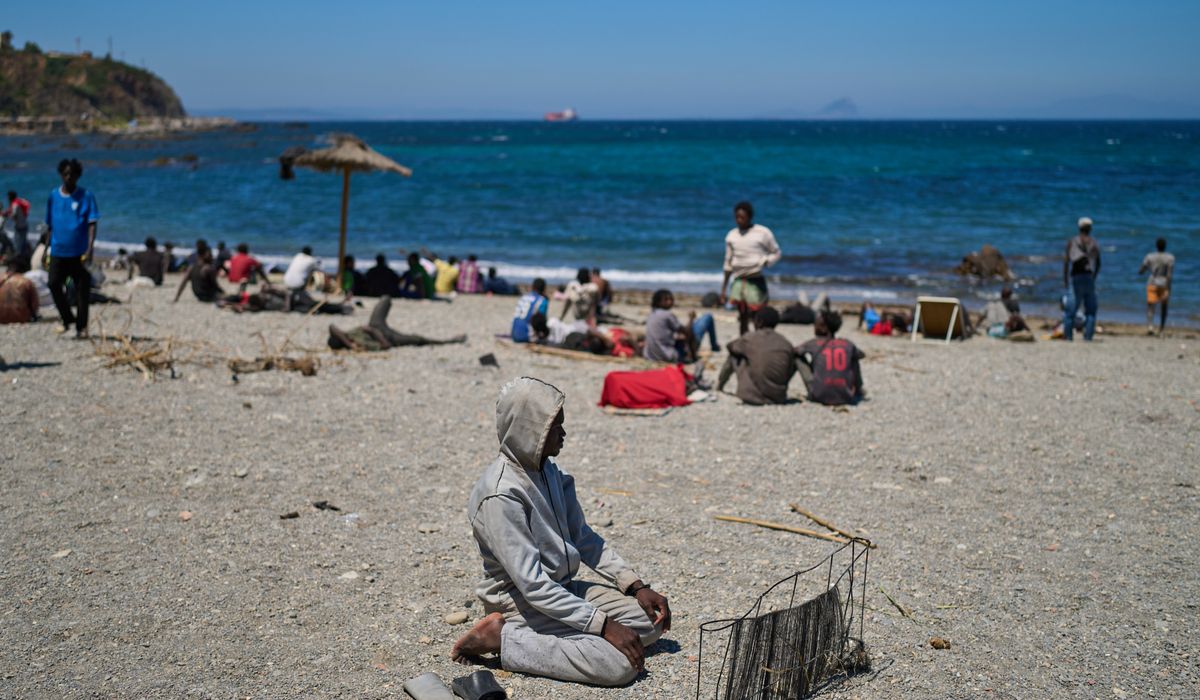
Young migrants risk dangerous sea crossings to reach Spanish Ceuta, arriving exhausted and uncertain about what comes next.
Small groups and lone travelers keep arriving in Ceuta, drawn by the legal and geographic distinction that separates the Spanish enclave from the rest of Morocco. Local officials and humanitarian groups are juggling urgent needs: shelter, food, medical checks and legal orientation for people who land after perilous sea journeys. The human stories are immediate and raw, and they point to larger migration patterns across the Mediterranean and nearby coasts.
Dikra, a 20-year-old migrant from Morocco, had spent five days in Ceuta by Sunday after swimming to the Spanish territory with her younger sister and cousin. That single sentence captures the blend of danger, family ties, and quick decisions that often push people into improvised sea crossings. Nights in makeshift reception spots and thin mattresses contrast sharply with the physical effort of reaching shore.
The sea crossings are brief in distance but long in consequence, with waves, currents and cold adding real risk even on short trips. Many who attempt the route do so without life vests or reliable boats, relying instead on floating devices, tide knowledge or sheer luck. Survivors often arrive hypothermic, exhausted and in need of basic medical attention.
Authorities on both sides of the border deal with the immediate logistics of arrivals while also trying to slow risky attempts at irregular migration. Patrols, rescues and coordination with NGOs aim to prevent drownings and to process people quickly. Still, limits on shelter capacity and bureaucratic backlogs mean some individuals spend days waiting for legal interviews and placement.
Humanitarian organizations emphasize the need for humane treatment and rapid medical screening, especially when minors or pregnant people are involved. Field workers often set up triage points to check for dehydration, injuries and other urgent conditions. The first 48 to 72 hours are critical for both health and legal orientation.
Local residents and volunteers frequently step up to provide blankets, food and warm drinks, turning community centers into temporary reception hubs. Their efforts fill gaps when official systems strain under sudden inflows. But volunteer networks can only do so much without steady funding and formal coordination.
On the legal side, arrivals face a complex path: age determinations, asylum questions, and potential transfers depending on nationality and residency claims. Some people hope to apply for asylum in Spain, while others want to reach family already elsewhere in Europe. The process can be slow, and uncertainty adds to the mental and emotional strain migrants already carry.
Smugglers and opportunists exploit desperation, charging high fees for risky passages or arranging transport with no guarantees of safety. Those networks are often embedded in broader local and regional economies, making enforcement difficult without international cooperation. Efforts to crack down on smugglers aim to reduce harm but rarely eliminate the underlying drivers of migration.
Economic hardship, limited local opportunities and family pressures remain central reasons why people leave their homes, even for short and dangerous routes. For many, the gamble of trying to reach Ceuta is fueled by the chance of a new start or support from relatives abroad. Each arrival carries a backstory of hope mixed with very real peril.
Health services and social workers try to offer immediate support while NGOs push for clearer, faster pathways to determine legal status. Mental health care is often in short supply, yet essential for people who have faced trauma during transit. Coordinated responses aim to move people into stable arrangements as quickly as possible.
Regional diplomacy and cross-border communication are part of any long-term solution, with Spain, Morocco and EU partners discussing how to manage flows and improve safety. Practical measures include search-and-rescue improvements, legal migration channels and development programs to expand opportunities at home. Such policies take time to shape and require resources and political will.
Until then, Ceuta remains a point of arrival where human resilience meets administrative reality, and where simple stories like Dikra’s reflect a much wider pattern. People continue to risk the water, and local responders keep working to make those arrivals less dangerous and more humane. The scene onshore is both immediate care and an ongoing test of systems built to manage sudden human movement.

