

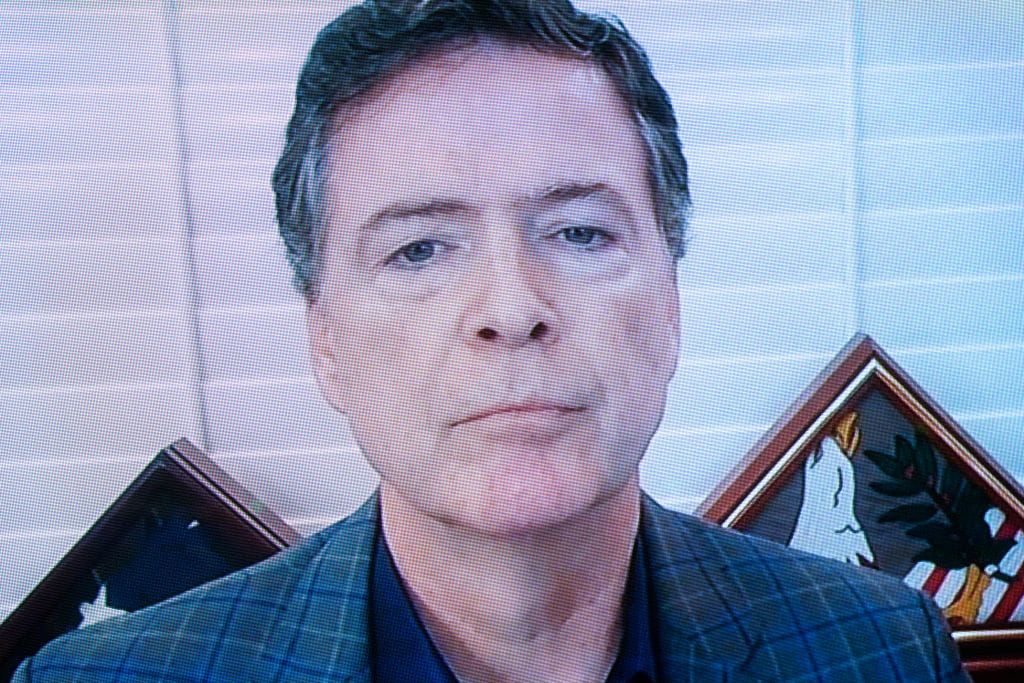
Memos made public in early August 2026 show the FBI opened a full probe into President Donald Trump after he fired James Comey, raising fresh questions about agency overreach and the reach of what many call the Deep State.
The newly released memos, provided by the White House Government Transparency Task Force on Aug 6, 2026, describe an internal decision to open an investigation codenamed “Oxferd Comma.” That odd name, including its apparent misspelling, has fueled suspicion that the Bureau chose a label designed to frustrate records requests. The documents say the probe began after Comey was dismissed and tie the action directly to concerns about Russian connections.
One internal communication set out the Bureau’s sweeping justification in blunt, legalistic language and even named obstruction as a possible line of inquiry. The exact language used by agents is chilling in its reach, because it claims an articulable basis to investigate a sitting president. That assertion elevates administrative curiosity into a formal criminal and national security inquiry.
“The FBI is opening a full investigation based on an articulable factual basis that reasonably indicates that President Donald J. Trump may be or has been, wittingly or unwittingly, involved in activities for or on behalf of the Government of the Russian Federation which may constitute violations of federal criminal law or threats to the national security of the United States.”
The quote above appears in memos contemporaneous with the launch of “Oxferd Comma” and was highlighted in reporting by Just the News. Taken at face value, that sentence shows the Bureau set a very low bar for investigating the president, a step that should alarm any defender of separation of powers. Republican critics argue this was less an investigation than an institutional response driven by bias.
Beyond the legal text, the memos include an instruction to “seek to determine whether President Trump and others yet to be named obstructed and/or conspiracy to obstruct any associated FBI investigation.” That phrasing broadened the probe’s scope to include obstruction theories and unnamed targets. It effectively gave the FBI the authority to treat ordinary presidential actions—like firing a director—as potential criminal acts.
Republican observers point out that every president has the authority to remove the FBI director, a fact that underlines how unprecedented it was for the Bureau to interpret the firing as potential collusion with a hostile power. The optics here are bad: the agency that reports to the executive was investigating its boss over an act the president was explicitly empowered to perform. That contrast is what has driven accusations of weaponization.
The story also touches on what many call the Deep State, the idea that parts of the federal bureaucracy operate with loyalties separate from elected leadership. The FBI has often been cast as the spearhead of that network, and these memos reinforce the concern among conservatives that career officials can pursue partisan ends under a cloak of national security. The result is lasting distrust across wide swaths of the electorate.
Critics name other actors who fed the broader narrative, including a former CIA director who privately warned the Obama White House in 2016 that the Trump-Russia story may have been driven by political opponents. Those warnings, and the documents that later emerged, suggest parts of the intelligence community viewed the episode as a political campaign rather than solid intelligence. That history matters for how people judge the memos now.
Most striking is that, despite the scale of the episode and the political fallout that followed, few officials involved have faced meaningful accountability. Some lost jobs or suffered electoral defeat, but there has been little in the way of criminal charges or formal sanctions. For many on the right, the gap between perceived wrongdoing and institutional consequences is the heart of the scandal.
The memos amount to a fresh chapter in a saga that many Republicans view as the biggest political abuse of institutions in recent memory. They will likely deepen demands for clearer limits on investigatory authority and sharper protections for the presidency. At minimum, these documents force a reckoning about how and when federal law enforcement should investigate elected leaders.

