

A federal court ruling in early August 2026 opened the door for Americans covered by a Texas injunction to buy suppressors and other formerly regulated NFA items without registration, two buyers immediately completed purchases just after midnight, and the Department of Justice declined to appeal within the short window given—raising questions about whether the oldest federal gun-control law will wither away or be preserved by a cautious administration.
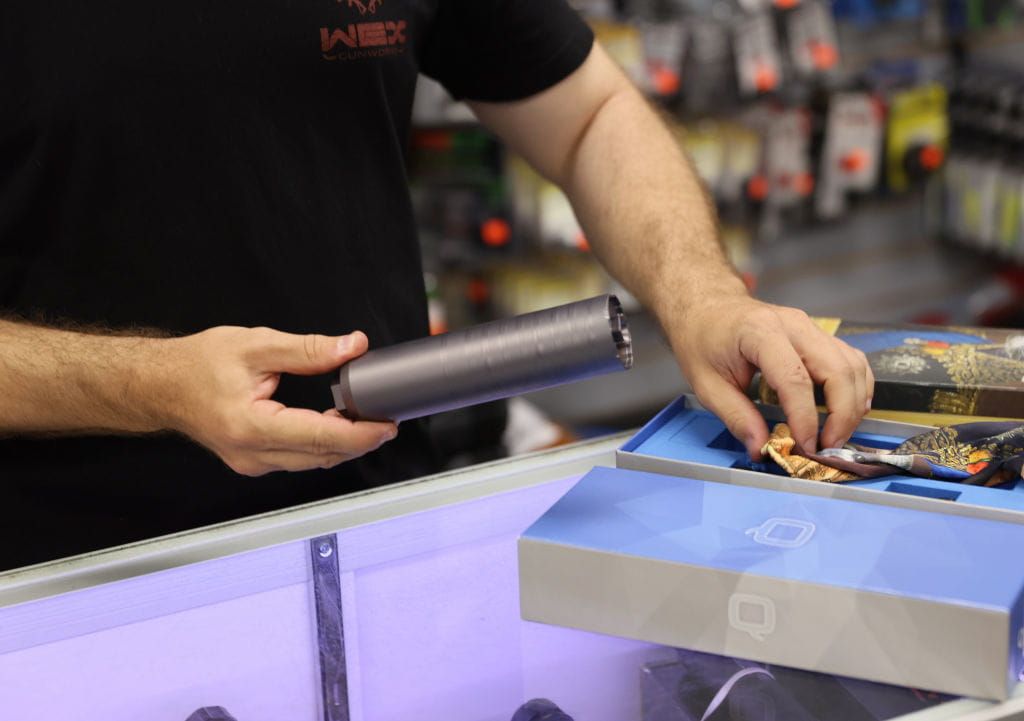
Shortly after midnight on August 13, 2026, two Texans completed the first purchases of suppressors without National Firearms Act registration, taking advantage of a federal injunction that went into effect. The purchases at Silencer Shop in Leander were made by YouTube gun advocate and congressional candidate Brandon Herrera and Texas state Rep. Wes Virdell. According to Rep. Andrew Clyde (R-GA), the Trump administration confirmed that the Department of Justice would not appeal the decision, a move that surprised many on both sides of the debate.
Gun-rights activists celebrated the moment as a major win. “This is the first time in 92 years that any gun owner has been able to do this,” Gun Owners of America Director of Federal Affairs Aidan Johnston told Fox News Digital. “Previously, this would have been punishable by up to 10 years in federal prison and a $250,000 fine per violation. So, this was a big federal law. We took a really big bite out of it.” Those words capture why the ruling feels seismic to advocates who have long pushed back on the NFA’s reach.
Rep. Andrew Clyde, who helped shape the legislative trajectory behind the challenge, called the outcome “literally the greatest Second Amendment win in the history of our country.” He called the day “a monumental day for the country and a monumental day for the Second Amendment,” framing the victory as both symbolic and practical. The jubilation is straightforward: a law that once required federal permission and payment now faces meaningful rollback in certain circumstances.
“When Congress passed the National Firearms Act in June of 1934, what Franklin D. Roosevelt signed into law was not a ban on certain items, as many people seem to think. All involved understood that would be unconstitutional and that, even with anti-gun Democrats holding the trifecta of power in Washington, DC, it wouldn’t pass muster. Instead, a heavy (for the time) tax was imposed on these items, which, therefore, justified a registry to track who had paid said levies.”
That legislative history matters. The NFA began as a tax and registry scheme in 1934, not a flat ban, and it saddled anyone transferring items like machine guns, suppressors, short-barreled shotguns, and short-barreled rifles with a $200 transfer tax at the time. Adjusted for inflation, that $200 in 1934 equates to a price equivalent to nearly $5,000 today, thanks to roughly 2,400% cumulative inflation—an intentionally steep barrier that effectively priced most Americans out of ownership.
The legal pathway that produced last month’s purchases started with a Texas federal court ruling on August 5, 2026. Judge James Wesley Hendrix concluded that because Congress set the transfer tax to zero dollars, the constitutional basis for imposing the registration and permission regime tied to that tax vanished. “By zeroing out the transfer and making taxes for most NFA firearms, Congress eliminated the constitutional basis for the regulations that formerly supported the taxes for those firearms,” Judge Hendrix wrote in his opinion.
Judge Hendrix built in a one-week delay to allow the Department of Justice to file any appeal, and the DOJ was given seven days to decide. It did not appeal, at least not within that short window, which left the injunction in place and allowed immediate transactions for those covered by the order. But the ruling is not a blanket repeal: the injunction is party-specific, not nationwide, and it applies to the named plaintiffs, their members, and customers buying through affiliated dealers.
That limited scope matters because it creates a path forward without forcing an all-or-nothing Supreme Court showdown—at least for now. Gun-rights groups say an appeal would risk escalation to the Supreme Court, where a favorable final ruling could eliminate the NFA’s registration regime nationwide. At the same time, a strategic decision by the administration to avoid appeal can preserve a piece of the law by denying higher courts the chance to make a sweeping decision.
The result is a mix of triumph and limbo. For those able to buy through the venues that fall under the injunction, long-standing restrictions have eased practically overnight. For everyone else, the NFA’s reach and the fate of federal registration requirements remain unresolved and likely to spark further legal and political fights. The next steps—whether more lawsuits, targeted legislation, or a broader court test—will determine if this marks the beginning of the end for the nation’s oldest federal gun-control statute or simply a new chapter in a long-running clash over the Second Amendment.

