

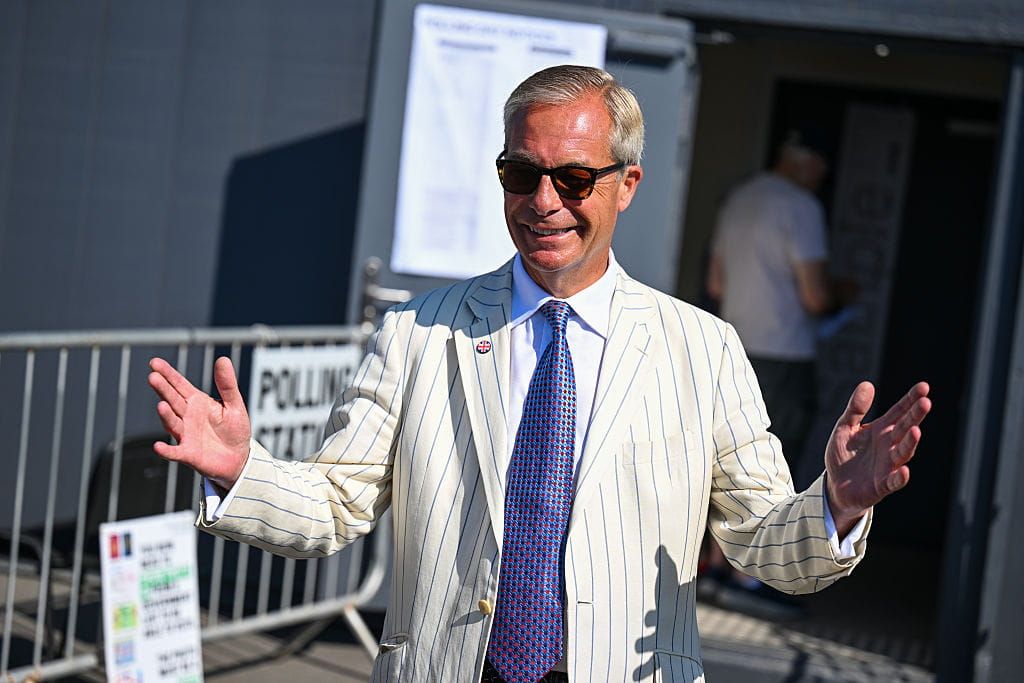
Nigel Farage’s decisive return to Parliament after the Clacton by-election reshuffled the political deck and left the establishment scrambling to control the narrative. He won with 63% of the vote against 33 other candidates, but questions about donations and gifts keep an investigation alive. That mix of a landslide result and ongoing scrutiny has turned the contest into as much a media and institutional battle as a local vote.
Nigel Farage reclaimed his seat in Clacton with a dominant 63% vote share, fending off 33 rivals in what many described as the most contested election of its kind. The victory returns him to the House of Commons and increases both his vote total and his share compared with the 2024 general election. That clear mandate in his backyard is hard to dismiss, even as the larger story plays out in committee rooms. The scale of the win gives Reform UK immediate political momentum.
The by-election followed Farage’s voluntary resignation amid mounting stories about his finances, including donations and gifts he allegedly received before running. He argued that the voters of Clacton — not a scrutiny committee — should decide his fate, which prompted the contest in the first place. Resigning to force the issue put the spotlight on both his accountings and on the principle of electoral judgement. The tactic sharpened the stakes and framed the election as a public verdict on him personally.
One sticking point remains a reported gift of £5 million; receiving such a sum is not illegal, but not declaring it within 12 months of standing is a breach of protocol. The internal investigation into these matters continues despite his return to Parliament, and potential penalties could still follow. If found in breach, the committee could impose a suspension that opens the door to a recall petition and another by-election. The legal and procedural tail of this episode is therefore far from complete.
That possible follow-up contest creates a tactical paradox: if a recall is triggered, Farage would likely be better prepared than any challenger. He spent six weeks campaigning across his constituency gathering fresh voter data and testing messages directly on the ground. If forced into a new fight, he would enter with up-to-date intelligence that rivals lack. In politics, having superior local data can translate directly into electoral advantage.
The established parties reacted by closing ranks and, in many cases, running paper or protest candidates designed to avoid directly opposing Reform. Conservative leader Kemi Badenoch publicly suggested voters support “the Bin,” a nod to the novelty candidacy of Count Binface, who ended up second with almost 27%. That tacit backing shows how mainstream parties can game the optics without officially contesting a fight. The move illustrates the lengths to which establishment actors will go to blunt Reform’s momentum.
Critics have argued the by-election was an unnecessary expense for taxpayers, with published figures around £250,000 cited as the cost of the contest. Yet those same critics were largely silent when Andy Burnham entered Parliament earlier in the year after a party-level change, taking roughly 24,000 votes from a safe Labour seat and assuming leadership without a general election. The juxtaposition fuels accusations of hypocrisy among those who object to Farage’s tactics but accepted similar moves from the political class when it suited them.
Both cases demonstrate how by-elections have become tools for political survival and advancement, one used to retain a seat, the other to accelerate a career. The difference is political judgment, not principle, for many observers who watch the same mechanisms applied selectively. That selective outrage only deepens public cynicism about Westminster’s double standards. For opponents of both men, the procedural similarities are impossible to ignore.
Polling trends add a broader context: Reform UK has topped surveys for roughly 18 months, while Labour enjoyed a modest bump of about 6% after its leadership change. Multiple polls continue to show Reform as a serious contender to be the largest party at the next general election, a reality that alarms both Conservative and Labour circles. Those numbers explain why establishment forces are keen to shape the narrative and contain Reform’s rise before it converts into lasting power.
If Farage navigates the investigation without a damaging ruling and avoids any major gaffes, his path to national leadership becomes plausible within a few years. He remains a potent threat to the Westminster status quo and a disruptive force Conservative strategists once thought they’d control or absorb. The potential political upside for Reform is huge, and the downside for the Conservatives and Labour could be severe if trends hold.
The knives are out for Farage and the institutional push to curtail him is clear, but so too is the public appetite in parts of the country that backed him decisively. That tension between institutional resistance and popular support will shape the weeks and months ahead as the committee finishes its work. Expect the fight over both facts and framing to continue rather than fade away.

