

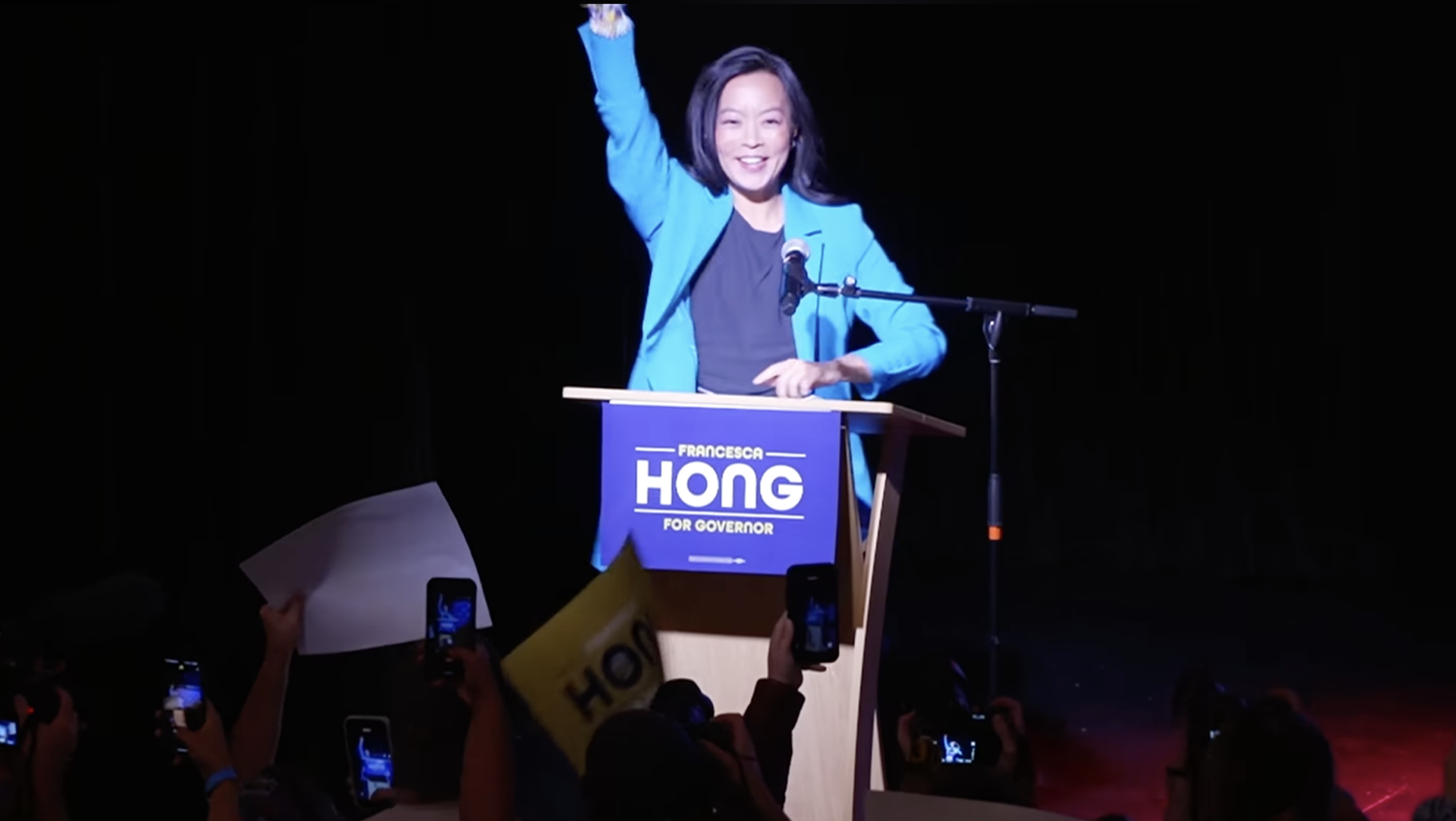
Francesca Hong, once touted by a widely circulated poll as holding a “23-point lead,” wound up falling short in the Wisconsin gubernatorial primary after the firm behind that number turned out to be a sham, and the episode raised sharp questions about sloppy polling, media gullibility, and political theater.
Francesca Hong entered the race with a narrative advantage: a poll claimed she had a 23-point lead over David Crowley. That figure grabbed headlines and reshaped expectations inside and outside Wisconsin. For a brief window it looked like Hong, labeled the failed communist candidate, would easily wrap up the primary.
But the firm behind the headline was not what it seemed; Median Strategies was a fake polling company, and according to reports it wanted to run a “social experiment” to see how people would react. Once that came out, the whole premise of the lead collapsed. Voters and reporters who’d leaned on the number were left holding an explanation that felt flimsy at best.
This matters because polls don’t exist in a vacuum: they change fundraising math, media coverage, and voter psychology. From a Republican perspective, it’s a reminder that left-leaning circles can manufacture momentum narratives that evaporate under scrutiny. When campaigns and newsrooms treat unvetted numbers as gospel, the political conversation gets distorted in real time.
David Crowley’s campaign was the immediate casualty in that messaging war, painted as the underdog by an invented lead. Supporters and donors can be nudged by one flashy data point, and opponents can be lulled into complacency. That dynamic is exactly why campaigns on both sides should insist on transparent methods and verifiable vendors.
What happened with Median Strategies also exposes the media playbook. Outlets chasing scoops amplified the 23-point claim without the kind of background checks that would be standard for a scientific poll. Once the story shifted from numbers to motives — “social experiment” — the coverage had to pivot and credibility took a hit.
There are practical fixes: insist on disclosed methodology, sample frames, weighting, and a track record before you cite a poll as news. Campaigns should call out dodgy vendors instead of amplifying them, and editors should demand reproducible results. This is not about silencing dissenting views; it’s about treating data like evidence instead of theater.
The broader lesson for voters is simple and blunt: don’t hand your judgment over to a soundbite dressed up as science. That lesson cuts both ways, but from a Republican angle it underscores the need for skepticism when the left’s narrative machines produce too-good-to-be-true leads. Facts, not manufactured headlines, should drive decisions at the ballot box.
Finally, the episode will likely echo beyond one primary night, shaping how future campaigns present polling and how newsrooms verify it. If nothing else, the Median Strategies story should make political players more careful about what they credulously promote and what they demand proof for before declaring a race decided.

