

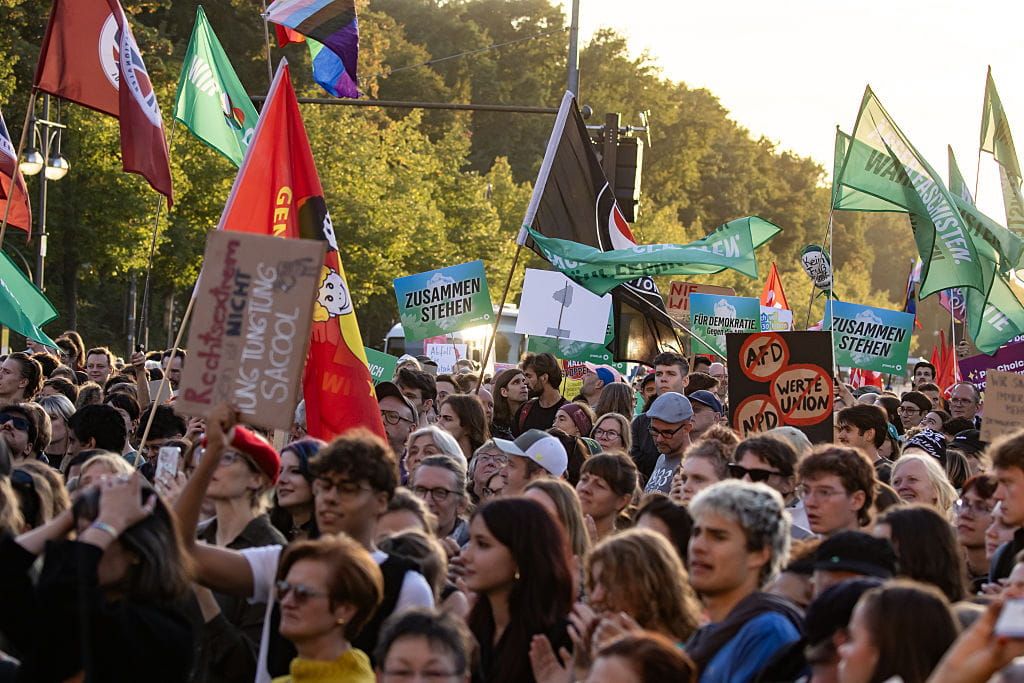
Germany’s recent regional election produced a large win for the AfD that unsettled the political class and sparked fierce debate about who really speaks for voters.
Voters handed the Alternative for Germany a major victory that exposed deep dissatisfaction with the status quo and forced mainstream parties into scrambling damage control. The result shattered assumptions about the stability of Germany’s postwar consensus and pushed once-muted concerns about immigration, sovereignty, and security back onto center-stage. Reactions from elites were swift and, for many, revealing.
“Self-proclaimed defenders of democracy are hell-bent on thwarting the will of the voters.” That line captures the mood in conservative circles watching officials and media treat a clear electoral outcome as if it required correction. Instead of acknowledging why millions shifted their votes, much of the establishment rushed to delegitimize the result and discuss extraordinary measures to blunt the AfD’s influence.
Capitols in Berlin and Brussels reacted as if this were an isolated crisis rather than a symptom of broader political realignment across Europe. For Republicans and conservatives, the takeaway is familiar: when mainstream parties lose touch with voters, ballots tilt toward parties promising order, border control, and a tougher stance on crime and migration. The AfD’s platform tapped those sentiments and translated them into a decisive regional mandate.
Mainstream politicians now face a choice between listening and continuing to ostracize the party that won. Some voices demand exclusion and political bans, while others warn that shutting out elected representatives will only deepen public alienation. The more the center retreats into sanctimony, the more voters will look for parties willing to challenge political correctness and deliver practical solutions.
Security and immigration emerged as central themes in the campaign, and they drove turnout among demographics that once sat out elections. The AfD’s gains are less about ideology in the abstract and more about real-world concerns—crime spikes, pressures on housing, and a sense that national identity is being eroded. Those are issues voters want solved, and they voted accordingly.
Economic questions also matter: inflation, energy costs, and a sluggish growth outlook have chipped away at confidence in established parties. Conservatives argue these problems deserve straightforward answers rooted in market-friendly policy, stronger borders, and clearer national priorities. When voters see elites offering excuses instead of fixes, they look for alternatives with a mandate to act.
The reaction from other European capitals and EU institutions will shape how events play out, because pressure from supranational actors can either inflame or calm domestic politics. Republican observers caution against heavy-handed interventions that treat electoral surprises as threats to be managed rather than messages to be heard. Democracies survive by responding to voter concerns, not by dismissing them.
Media coverage and civil-society responses are already polarizing public opinion, with some outlets emphasizing alarm and others pointing to underlying causes. Conservatives note this pattern: when the establishment is cornered, it often turns to moralizing language instead of policy change. That choice risks making temporary victories for insurgent parties into sustained realignments.
Coalition math in Germany will be complicated by this result, and governing arrangements may shift in ways few predicted months ago. Pragmatism will matter; parties that insist on purity over power may find themselves sidelined while issues remain unresolved. The immediate political jockeying will be messy, but the longer-term question is whether mainstream parties learn to reconnect with voters or double down on exclusion.
For those watching from a conservative perspective, the lesson is straightforward: winning elections requires listening to everyday concerns and offering clear, competent alternatives to the status quo. Dismissing millions of voters as misguided or malicious only deepens the divide and hands momentum to parties positioned as the real-world answer. How Germany responds will reverberate across Europe and shape political debates for years to come.

