

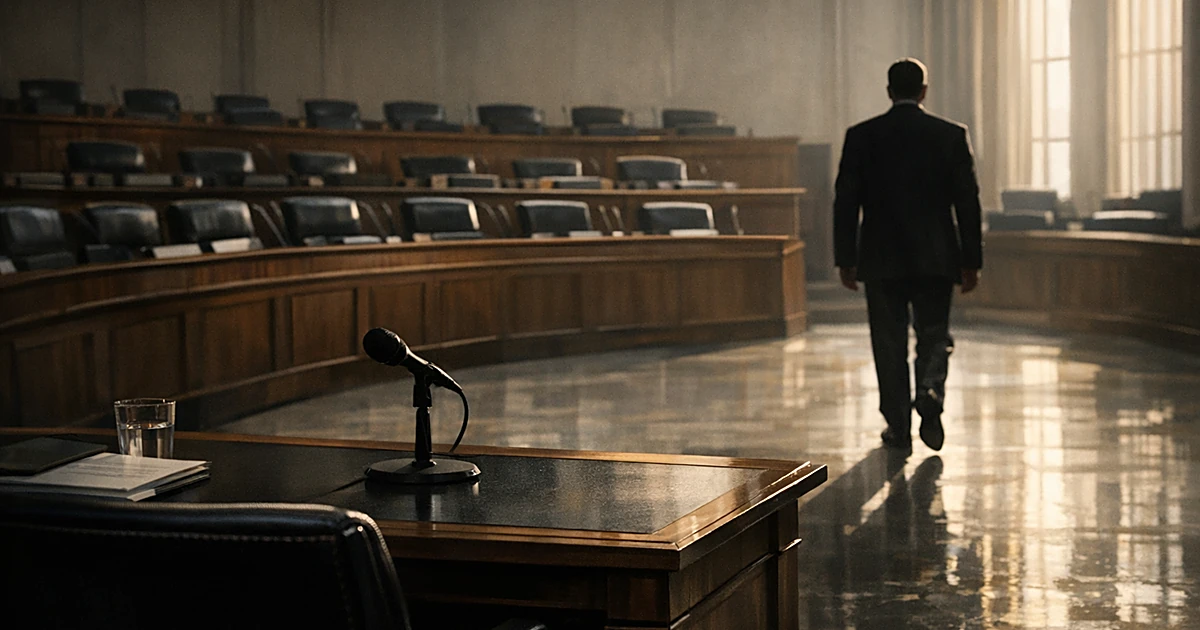
Alan Dershowitz, the Harvard Law School professor emeritus once tied to Jeffrey Epstein, has bowed out of a planned House Oversight interview tied to the committee’s review of Epstein-related files, a move first reported on July 17 and announced without explanation or a clear timetable for the original session.
The withdrawal was reported on July 17, and the committee has not said whether Dershowitz was subpoenaed or had agreed to speak voluntarily. No reason has been given and no rescheduled date has been disclosed, leaving investigators and the public to guess about the motives behind the decision.
Dershowitz is a well-known figure who once represented Epstein, and his refusal to appear places a high-profile dodge at the center of a major congressional inquiry. The panel has already interviewed prominent figures, so a former defense lawyer stepping back raises immediate political and investigative questions.
Accusations against Dershowitz from Virginia Giuffre were a prolonged public controversy, and the reporting notes she later recanted those claims before her death. Dershowitz has pointed to that recantation as part of his defense, but the committee’s interest in his firsthand knowledge of Epstein’s legal network is easy to understand.
The larger probe has not limited itself to rank-and-file witnesses; the Oversight Committee secured interviews with major public figures, including Bill and Hillary Clinton. That contrast makes Dershowitz’s withdrawal stand out: the committee appears willing to press public heavyweights, yet one of Epstein’s former attorneys opted out.
Tension between the committee and the FBI has intensified this episode. A leaked FBI memo reportedly found no evidence of a blackmail scheme tied to Epstein, a finding that some committee members publicly reject. Representative Anna Paulina Luna has characterized Epstein’s operation as a “honeypot operation”, a phrase she uses to describe what she believes the evidence points toward.
The details of the FBI memo—when it was produced, how it leaked, and the investigative methods used—remain largely private. That lack of transparency fuels Republican skepticism of the bureau’s conclusions and feeds the committee’s insistence on digging deeper. The disagreement is not a small turf fight; it cuts to whether the agency’s review was complete and credible.
Whether Dershowitz was going to appear voluntarily or under subpoena matters a great deal. If the appearance was voluntary, his choice to withdraw is legally permissible and politically damaging. If a subpoena was issued, refusal would trigger a higher-stakes legal battle that could drag the investigation into court and consume months of staff time.
The committee faces a clear set of options: accept the withdrawal and move on, reopen negotiations for a new appearance, or escalate by issuing a subpoena and forcing a legal fight. Each path carries consequences—letting it drop would erode confidence in the probe, while a subpoena fight would divert resources and attention from other witnesses and documents.
Epstein’s death in August 2019 left a tangle of unanswered questions about how his operation ran, who enabled it, and what evidence may exist about others involved. The House Oversight investigation represents the most sustained congressional effort to examine those threads, and getting testimony from people close to Epstein is central to that work.
Many details around this specific withdrawal are still missing: Dershowitz has not issued a public explanation, committee spokespeople have not outlined next steps, and the two aides who briefed reporters have remained unnamed. Those gaps keep speculation alive and make it harder for the public to evaluate the committee’s progress.
The political dynamics are messy, with both parties carrying investigative priorities that sometimes collide. Still, when high-profile witnesses cooperate and others do not, it raises legitimate questions about whether accountability is being applied evenly. The committee’s next moves will tell us whether it intends to follow the case wherever the evidence leads or settle for a partial accounting.

