

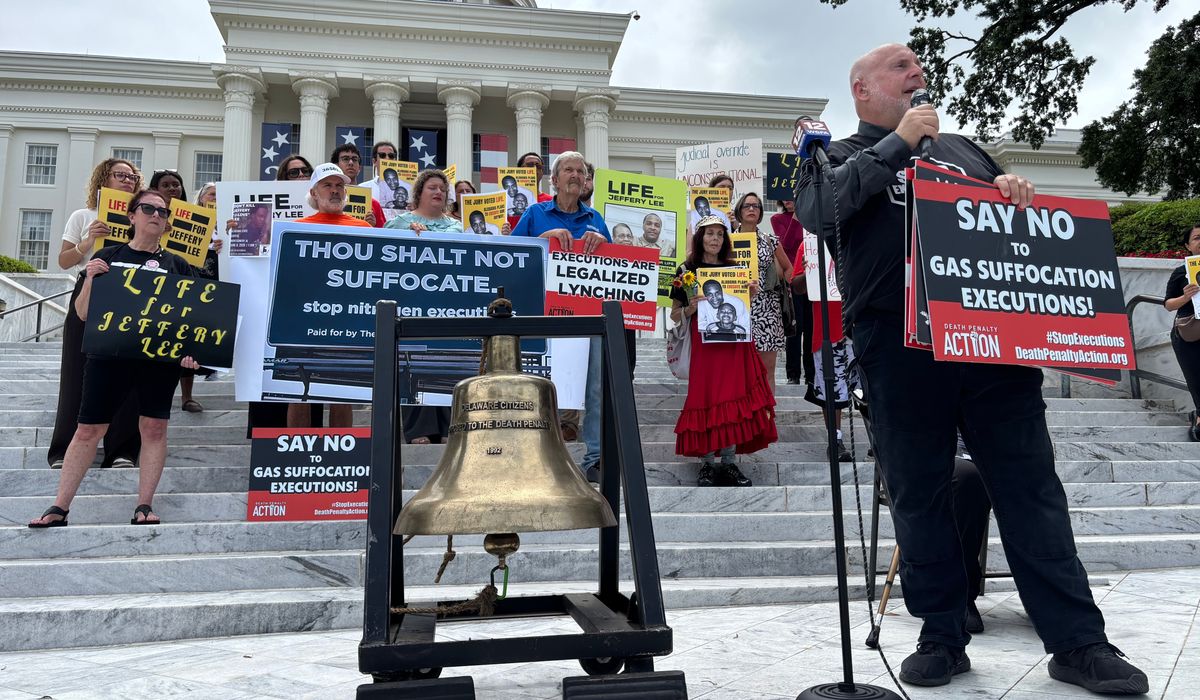
A federal appeals court ruled Monday that Alabama’s nitrogen gas execution method likely inflicts a cruel and constitutionally impermissible degree of suffering on condemned inmates, temporarily blocking its use while litigation continues.
The court’s decision landed in a state already under strain from debates over execution methods and the finality of capital punishment. Alabama had been preparing nitrogen hypoxia as an alternative to lethal injection, arguing the gas would be a cleaner, more reliable way to carry out death sentences. Opponents pushed back, saying the procedure risks suffocation and agonizing distress that would violate the Eighth Amendment.
Those fighting to preserve the death penalty should still insist on humane, constitutionally sound procedures, and that’s what makes this ruling so important from a conservative angle. There is a difference between supporting law enforcement and tolerating methods that could amount to cruel punishment. Republicans who favor capital sentencing want executions done fairly, transparently, and without needless suffering that would give opponents moral and legal leverage.
The state argued nitrogen hypoxia would avoid the problems that have plagued lethal injections, like slow or botched administrations and drug shortages. Officials said nitrogen would bring certainty and reduce the litigation that derails scheduled executions. Critics countered that there is little peer-reviewed evidence on how a nitrogen protocol would actually perform in humans and that the risk of severe, prolonged distress is real and untested.
The appeals court focused on whether the method likely crosses the constitutional line, not whether capital punishment itself is lawful. That legal distinction matters: judges are obliged to weigh the Eighth Amendment while acknowledging that states retain authority to carry out lawful sentences. Conservatives should want courts to respect both the text of the Constitution and the role of states in administering justice, rather than substituting policy preferences for clear legal standards.
The litigation also exposes a messy reality: states keep experimenting with execution methods when older protocols become impractical, and those experiments invite legal challenges. Alabama and other states say they are trying to address practical problems, not invent cruelty. Still, any change in execution technique should be approached with scientific rigor and legal certainty so it does not create the very injustices the system seeks to avoid.
Victims’ families often get lost in these technical fights, and Republicans should not let that happen. The pain and loss of those left behind deserve finality that is lawful and respectful, not drawn out by avoidable errors or methods that courts later find unconstitutional. If a state cannot demonstrate a method is humane and reliably administered, then the system risks doing more harm than justice.
Looking ahead, the ruling will likely push Alabama back to the drawing board while lawyers seek more evidence or alternate protocols. The case underscores the need for clear, objective proof when states adopt novel execution methods. Conservatives should support procedures grounded in medical and procedural transparency that protect constitutional rights and keep the focus on justice for victims rather than on spectacle.

