

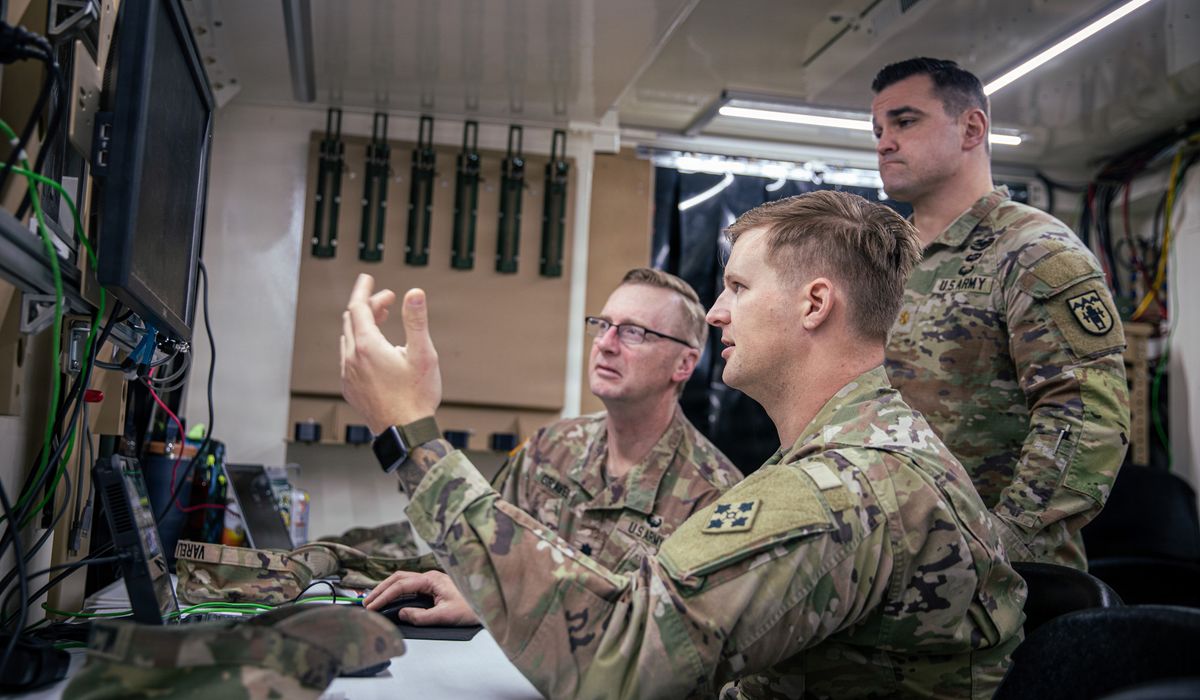
The U.S. Army’s fiscal year budget request makes the Next Generation Command and Control system its top modernization priority, backing that effort with a $4 billion investment and signaling a major shift in how the service plans to connect forces, software, and data on the battlefield.
The Army has put its chips on the Next Generation Command and Control system and backed it with a $4 billion push in the fiscal year budget request. From a Republican perspective, that kind of focused investment shows seriousness about overmatch, but it also demands hard oversight and measurable returns for taxpayers. Modernizing command and control is essential, but big programs can grow costly without tight guardrails. Voters and Congress should expect clear milestones tied to capability, not just optimistic roadmaps.
Command and control modernization sounds technical, but it’s about giving commanders timely, trustworthy information and keeping units coordinated under stress. The Next Generation Command and Control system aims to fuse sensors, shooters, and decision tools into a single, resilient picture. That means software, secure networks, and the ability to operate when adversaries jam or spoof systems. Those are exactly the kinds of capabilities a serious defense posture needs in an era of long-range fires and contested space.
Budgeting $4 billion highlights the Army’s prioritization, but Republicans will want to see efficiency and accountability built into every dollar. Large defense programs have a history of cost growth and schedule slips, so expectations should include modular development, competition among suppliers, and defined exit criteria for contractors. Investment must translate into deployed capabilities that improve survivability and lethality for soldiers. Without those guardrails, taxpayer funds can be sunk into programs that never reach the field.
Private industry has strengths the Army should harness, especially rapid software development and cloud-based data handling. But relying on commercial practices cannot mean lowering the bar for security or interoperability with legacy systems. The Army needs to demand secure, upgradeable designs that plug into existing platforms and can be fielded incrementally. That dual approach—speed from industry plus rigorous military testing—keeps the program honest and useful to troops.
Interoperability across services and with allies is another Republican concern that must be front and center. The battlefield is a joint environment, and any command and control system that locks the Army into proprietary silos will undercut coalition operations. This program should favor open standards and common interfaces so U.S. forces and partners can share data in contested environments. That interoperability delivers strategic advantage without duplicative spending.
Resilience matters as much as capability. The Next Generation Command and Control system must operate in degraded conditions, tolerate cyberattacks, and continue to function if parts of the network are lost. Investing in redundancy, hardened links, and electromagnetic spectrum protection is not flashy, but it is essential. Republicans should push for rigorous red-team testing and documented lessons learned before wider procurement proceeds.
Congressional oversight must balance urgency with prudence: speed up where it delivers battlefield advantage, slow down where uncertainty threatens wasted dollars. Lawmakers should insist on frequent, public-ready briefings on progress against technical milestones and cost baselines. That transparency reassures taxpayers and keeps contractors focused on delivering capabilities rather than extending schedules. It’s the right accountability posture for any large defense investment.
Ultimately, the $4 billion commitment sets a direction that can either sharpen America’s edge or become another budget headline without impact. The Republican view demands both strong defense posture and fiscal discipline, so success will depend on modular contracts, open standards, hardened designs, and relentless oversight. If those elements are enforced, the Next Generation Command and Control system can move from an ambitious plan into a real advantage for soldiers on the ground.

