

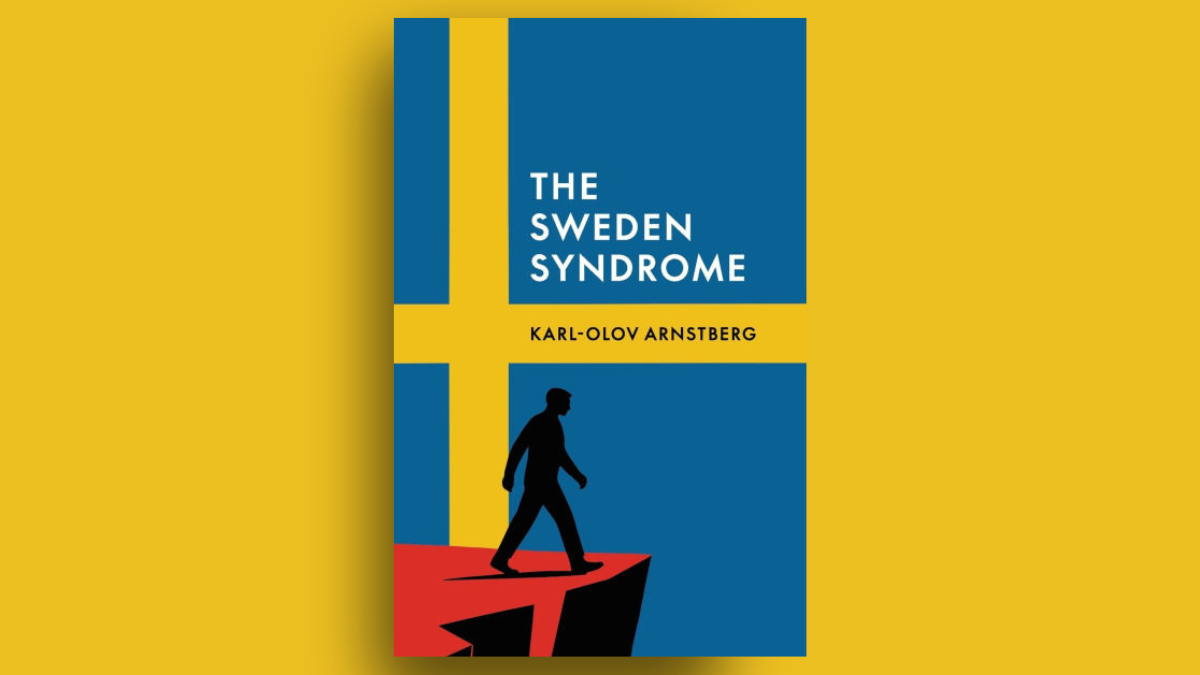
Karl-Olov Arnstberg’s The Sweden Syndrome frames a blunt diagnosis: a mix of leftist policy assumptions and unchecked migration can hollow out a nation’s civic fabric and public order. The book argues that when political elites prioritize ideology over social cohesion, institutions fray and everyday life changes in ways that are hard to reverse. That warning lands as a call to rethink how culture, law, and immigration interact in modern democracies.
Arnstberg lays out a clear line from abstract policy choices to concrete consequences on the streets. He points to decisions that ignore assimilation, treat cultural differences as beyond debate, and rely on punitive measures against critics rather than honest argument. The result, he says, is a steady erosion of norms that once kept public life stable.
One core idea is that a welfare state depends on shared expectations. When people respond to the social contract in radically different ways, trust collapses and support systems strain. Arnstberg shows how generous programs meant to help become politically and fiscally unsustainable if participation, obligation, and respect for rules are not mutual.
The book also critiques a cultural elite that, according to Arnstberg, treats dissent as immoral and facts as negotiable. That elite, he argues, pushes policies that look humane on paper but fail to account for human behavior in diverse societies. When reality diverges from ideology, the gap creates resentment, which politicians and pundits often ignore or excuse.
Crime and disorder are presented as predictable outcomes when law enforcement, schools, and local governance are pulled in different directions. Arnstberg does not shy from uncomfortable examples where areas with weak integration show lower civic participation and higher petty and violent crime. He frames these patterns as policy problems, not inevitable facts of demography.
Another point is the rise of parallel communities that operate by different rules. When parts of a city no longer respond to central authorities, the social contract fragments and public services falter. That fragmentation produces friction between newcomers and long-term residents, which politicians then have to manage or exploit.
Arnstberg is particularly critical of narrative control by media and institutions that prefer a comforting story over hard analysis. He sees a culture of silence around integration problems in which professionals fear speaking out. This environment, he warns, prevents corrective policy and leads to bitter political backlash when citizens finally react.
Throughout, there is an insistence that migration policy must be paired with clear expectations about assimilation and civic duties. Arnstberg stresses that freedom and stability go together: you cannot have one without strengthening the other. Policies that ignore this balance risk producing social and political instability.
The book also challenges the assumption that diversity alone is a public good without conditions. Arnstberg argues that diversity requires institutions capable of managing difference and fostering shared norms. Without that capacity, diversity becomes a source of competition rather than enrichment.
Politically, the work reads as a rebuke to elites who dismiss voter concerns about safety, schools, and housing as racist or small-minded. Arnstberg contends that labeling legitimate worries silences debate and builds mistrust. That dynamic, he warns, accelerates polarization and empowers parties that promise order over ideology.
His analysis does not frame migration purely as a numbers problem; it centers on cultural alignment and enforcement of civic rules. He recommends realistic policy that respects national sovereignty and the need for cohesive communities. The emphasis is practical: integrate, enforce, and set expectations clearly.
Readers on the right will recognize familiar themes: make laws matter, require assimilation, and stop treating dissent as a moral failing. Arnstberg’s book speaks to those concerns with detailed observations and a willingness to point at institutions that failed to adapt. His tone is sharp but focused on consequences rather than rhetoric.
Whether one agrees with every conclusion, the case made in The Sweden Syndrome forces a conversation about trade-offs. It pushes policymakers to ask whether current approaches strengthen or weaken the glue that holds a democracy together. That question matters for any country trying to balance openness with order.

