

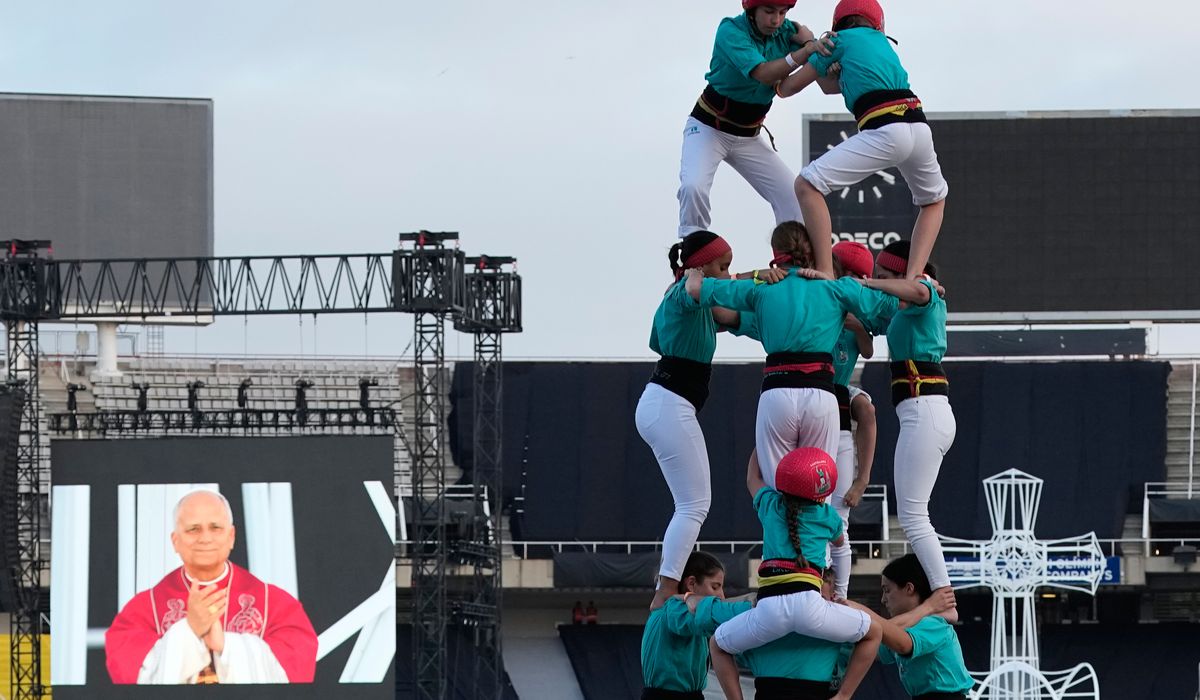
Bruna Vall Galan, 8, climbed to the top of a nearly 33-foot human tower to welcome Pope Leo XIV at the start of his prayer vigil in Barcelona on Tuesday night.
The moment Bruna Vall Galan reached the summit of a nearly 33-foot human tower captured immediate attention across the plaza in Barcelona. Spectators turned their phones and heads as the young girl balanced at the peak of a centuries-old Catalan tradition. The scene marked the opening of Pope Leo XIV’s prayer vigil with a vivid display of local culture.
Human towers, or castells, are a deeply rooted Catalan practice that blends athleticism, choreography, and community trust. Teams of castellers assemble through careful rehearsal and well-practiced roles, building layers of people who brace, climb, and lock together. An eight-year-old at the top is not unusual in these formations; their small size and agility make them ideal for the uppermost positions.
Organizers emphasized safety and preparation ahead of the vigil, with experienced members steering the base and medics on standby. Helmets and spotters are common, and the teams rehearse the ascent and descent until timing is second nature. That preparation helps turn a risky-looking feat into a controlled, rehearsed performance.
The decision to include a castell in the papal vigil underscored a desire to connect a global visit with local identity. For many in Catalonia, the human tower is more than spectacle; it is a statement about solidarity and collective effort. Placing a child like Bruna at the top added a poignant visual: tradition carried literally on the shoulders of the community.
Onlookers responded with a mix of awe and applause as the tower rose and the little climber waved from the top. Photographers chased the story line and social feeds filled rapidly with images of the event. The dramatic contrast between the religious ritual and the athletic human tower made the vigil feel both solemn and celebratory.
Public reaction included praise for the castellers’ skill and concern about the risks for young participants. Advocates for the tradition point out the rigorous training and protective measures that accompany performances. Critics say modern audiences must balance cultural preservation with updated safety standards, especially when children are involved.
For the Pope and visiting dignitaries, the castell served as a localized greeting that required no translation. It communicated community values through action rather than speech: teamwork, balance, and trust from the bottom up. The ritual fit within a night of prayer and reflection, giving Barcelona a distinctly Catalan frame for an international moment.
After the tower came down, the plaza settled back into the rhythms of the vigil, with participants moving on to formal prayers and speeches. Bruna’s climb lingered in people’s memories as a clear, emblematic image from the event. The sight of a child reaching the top of a towering formation left an impression that mixed admiration for skill with awareness of the tradition’s demands.

