

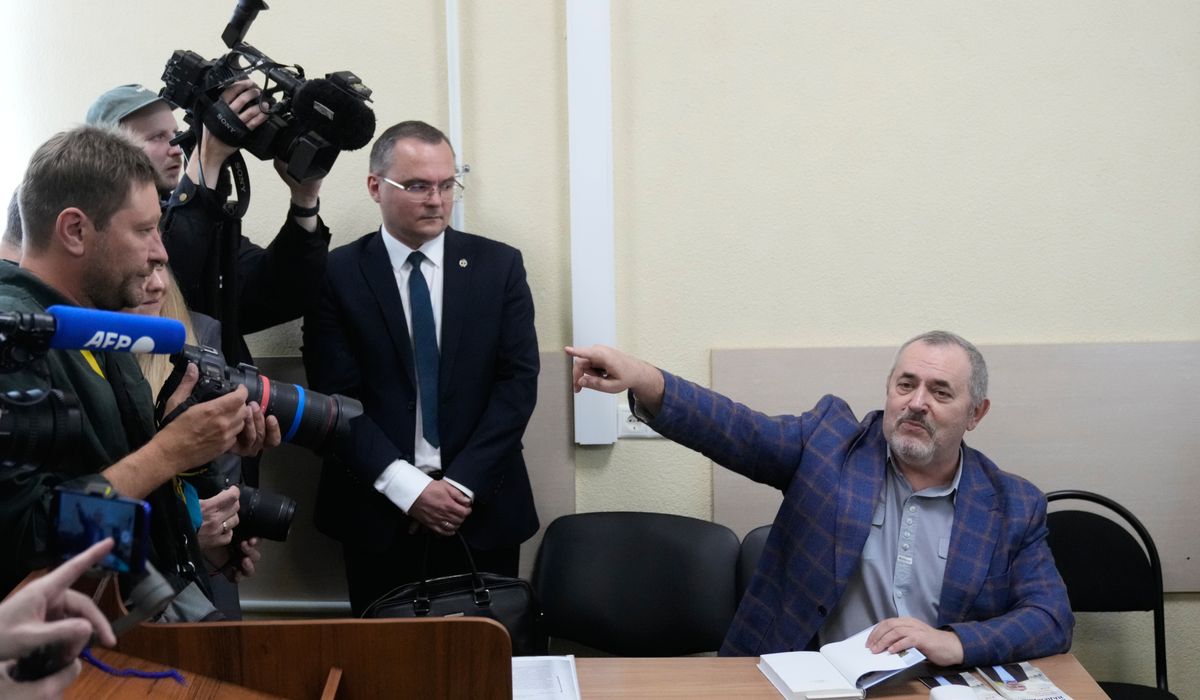
Boris Nadezhdin, an opposition figure who publicly criticized Russia’s war in Ukraine and sought to challenge President Vladimir Putin in the 2024 election, announced Monday that he has left Russia.
Boris Nadezhdin’s departure closes another chapter in a pattern of shrinking space for dissent inside Russia. He had been a vocal critic of the Kremlin’s military policy and tried to build a platform to contest the 2024 vote. His move out of the country came amid growing pressure on opposition figures and independent voices.
Nadezhdin’s profile combined long-term political engagement with a more recent, outspoken stance against the war in Ukraine. That stance made him a target in an environment where public criticism of the Kremlin is met with legal and extra-legal hurdles. Attempting to run as a challenger in 2024 placed him directly in the path of those constraints.
Leaving the country is a familiar outcome for Russian politicians and activists who step beyond the narrow bounds tolerated by the authorities. Many who try to push for alternatives to the ruling clique face courtroom battles, administrative barriers, and a media ecosystem firmly shaped by the state. Exile, whether forced or chosen, becomes a practical route to keep speaking without immediate incarceration.
The context matters. Over the last several years the Kremlin has tightened control over political competition and civic life, tilting institutions to favor entrenched power. That squeeze has sidelined rivals, made independent campaigning nearly impossible, and sent a clear signal to anyone thinking of organizing opposition at scale. In that environment, organizing a credible bid against an incumbent with vast resources and institutional advantage is more symbolic than a level playing field.
Nadezhdin’s criticism of the war in Ukraine put him at odds with the prevailing narrative inside Russia, where dissenting voices face intensified scrutiny. Speaking out on such a central and sensitive policy area increases the risk of being branded unpatriotic or worse, and it often prompts swift administrative reactions. For politicians who want to challenge the status quo, the costs now include legal exposure, restricted travel, and limited access to any meaningful media coverage.
From abroad, former domestic opposition figures can still influence debate and marshal international attention, but that influence comes with trade-offs. Exile allows them to avoid immediate repression and to coordinate with other dissidents and foreign observers, yet it also weakens their on-the-ground networks and hands the narrative advantage to those who remain inside. The Kremlin benefits when opponents are absent from the streets and the ballot boxes at home.
For voters and observers watching Russia’s political landscape, departures like Nadezhdin’s are a clear signal of how narrow the permissible space for disagreement has become. They underline a broader trend where elections and political contests exist in form but are constrained in substance. Those constraints shape not only who can run, but who can realistically be heard within the country’s political system.

